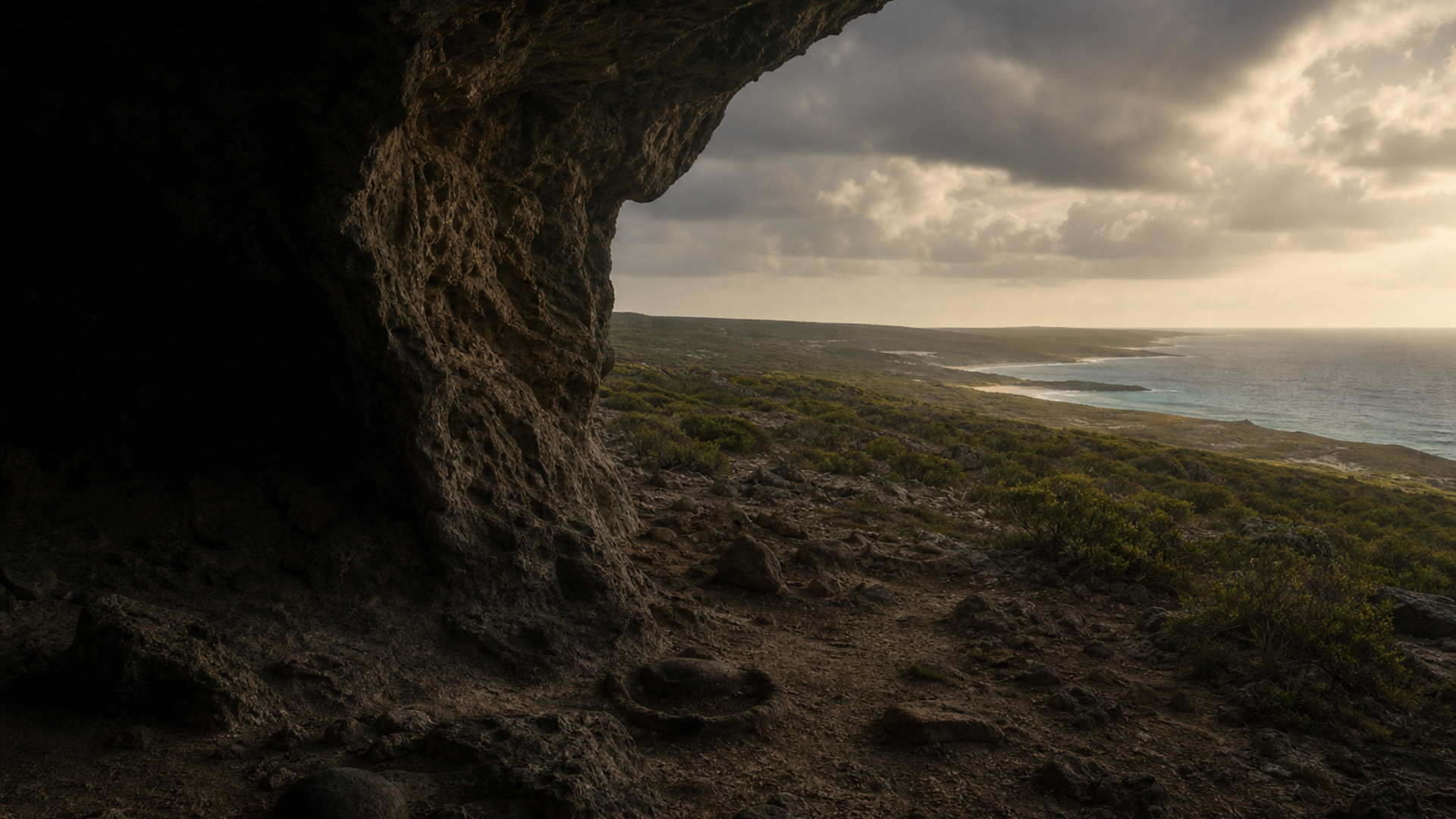
Archaeological remains from Bahamian sites—including house floors, shell middens, food remains, and decorated pottery—evoke a maritime lifeway attuned to coral reefs, mangroves, and open sea. People who left traces in places like Eleuthera exploited conch, fish, turtles, and coastal plants; canoe travel and inter-island exchange were central to subsistence, craft, and ceremonial life.
Social organization likely mirrored patterns seen elsewhere in the Taíno world: small village clusters with communal plazas and specialized craft production. Carved objects and decorated ceramics suggest cosmological practice and social differentiation, while the cave contexts sometimes preserve ritual deposits or funerary traces. Archaeological data indicates mobility—seasonal movement and trade—was fundamental, knitting the Bahamas into wider Caribbean networks.
Material traces in Preacher's Cave and comparable sites form cinematic snapshots: the glint of shell tools, the smear of red ochre on pottery, and hearths cooled to silence. Yet these scenes are reconstructed from fragmentary deposits; careful interpretation is required, and some aspects of social life—language use, ritual detail, and kinship structure—remain only partially visible without larger genetic and archaeological samples.