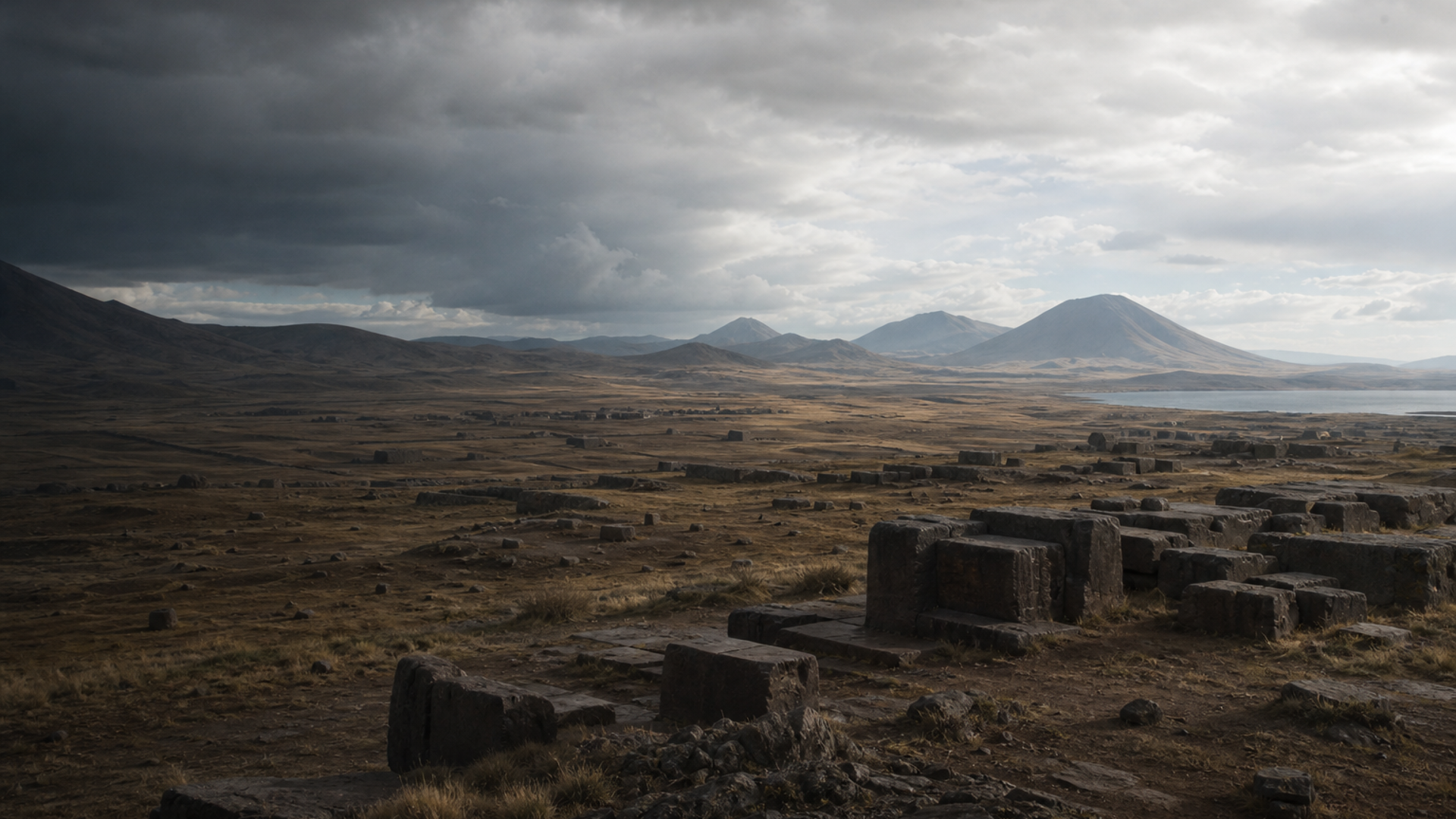
The genetic evidence from Pumapunku is currently limited — one human individual dated to 670–774 CE with mitochondrial haplogroup B2. Haplogroup B2 is a widely recognized Native American maternal lineage, common across many Indigenous populations in the Americas. Archaeogenetic studies in the Andes more broadly show long-term highland continuity with episodes of local gene flow, but interpretations at Pumapunku must be conservative because n=1.
No Y-chromosome (paternal) haplogroups are reported for this sample, so male-line inferences cannot be made. The presence of mtDNA B2 in this individual suggests maternal ancestry that aligns with broader Native American maternal diversity, but it does not by itself demonstrate direct continuity to any single modern group. Limited evidence suggests population structure across the altiplano — diverse communities linked by trade, ritual and mobility — and a single maternal lineage may reflect those local dynamics or simply the ancestry of one household or mortuary context.
In sum, the Pumapunku genome adds an important data point to Andean ancient DNA but highlights the urgent need for more samples: increasing sample counts would permit robust statements about population continuity, admixture, and connections to modern Aymara and Quechua-speaking peoples. Until then, conclusions must remain preliminary and framed by archaeological context.