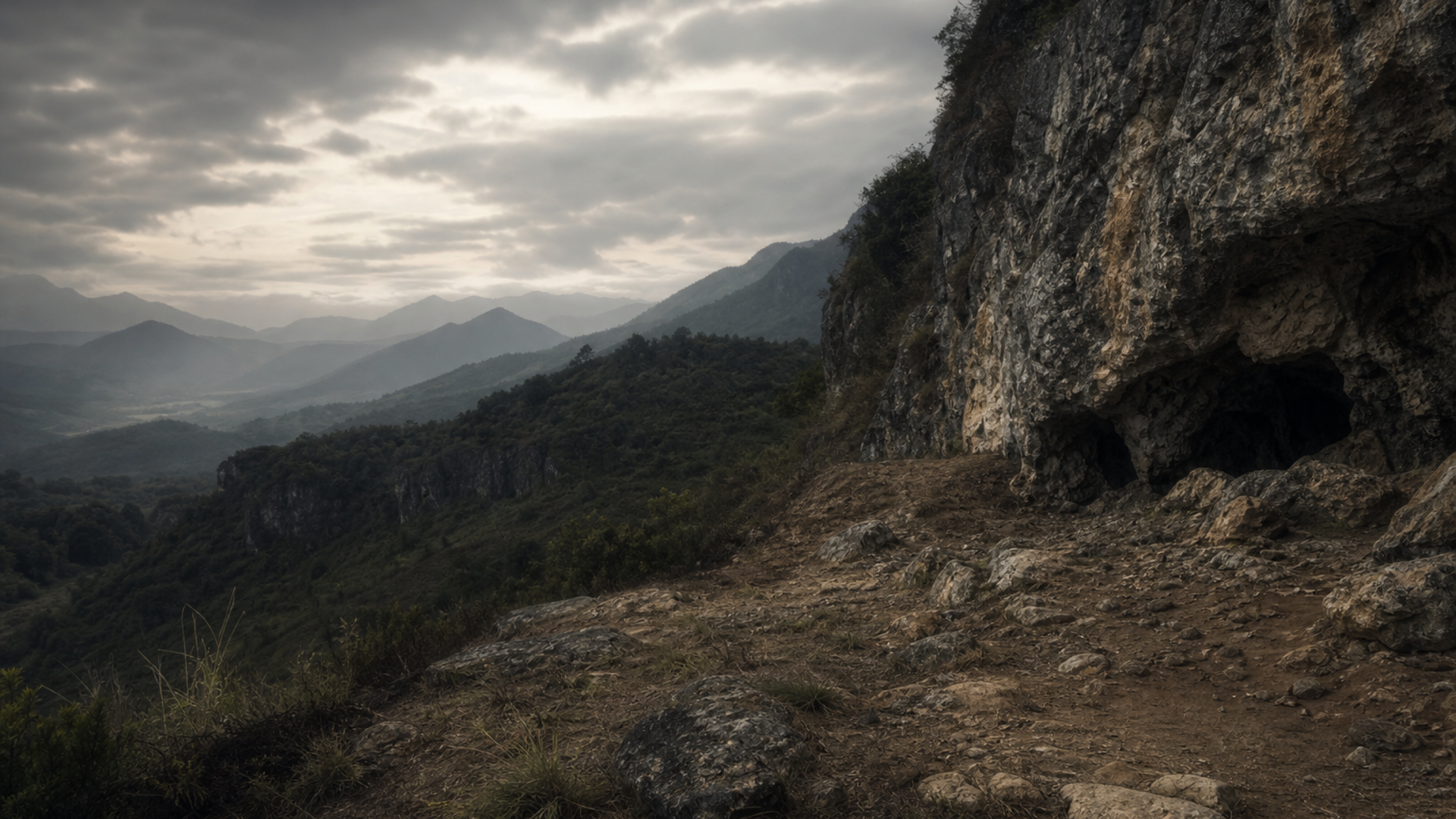
The people who frequented Qihe Cave lived in a landscape of steep hills, rivers, and a warming post-glacial climate. Archaeological indicators from regional Epipaleolithic sites suggest lifeways organized around small social units, high mobility, and a flexible subsistence strategy that married inland hunting with the exploitation of freshwater and coastal resources. Seasonality likely structured movement patterns: estuaries and river mouths would draw groups when fish and shellfish were abundant, while upland forests provided game and plant foods at other times of year.
Caves and rock shelters such as Qihe offered shelter, processing locations, and focal points in a shifting landscape. Social life was probably centered on kin networks and reciprocal ties; material culture—lightweight flaked stone tools, occasional ground stone, and ephemeral hearths—reflects a life tuned to rapid response and resource patchiness. Evidence across southern China points to diverse strategies rather than a single uniform adaptation, and Qihe fits within this mosaic.
Because direct archaeological detail from Qihe is limited in the genetic dataset, it is important to combine careful excavation reports, regional surveys, and paleoenvironmental reconstructions to imagine daily rhythms: seasonal camps, shared tasks of foraging and tool maintenance, and intimate knowledge of a changing coastline.