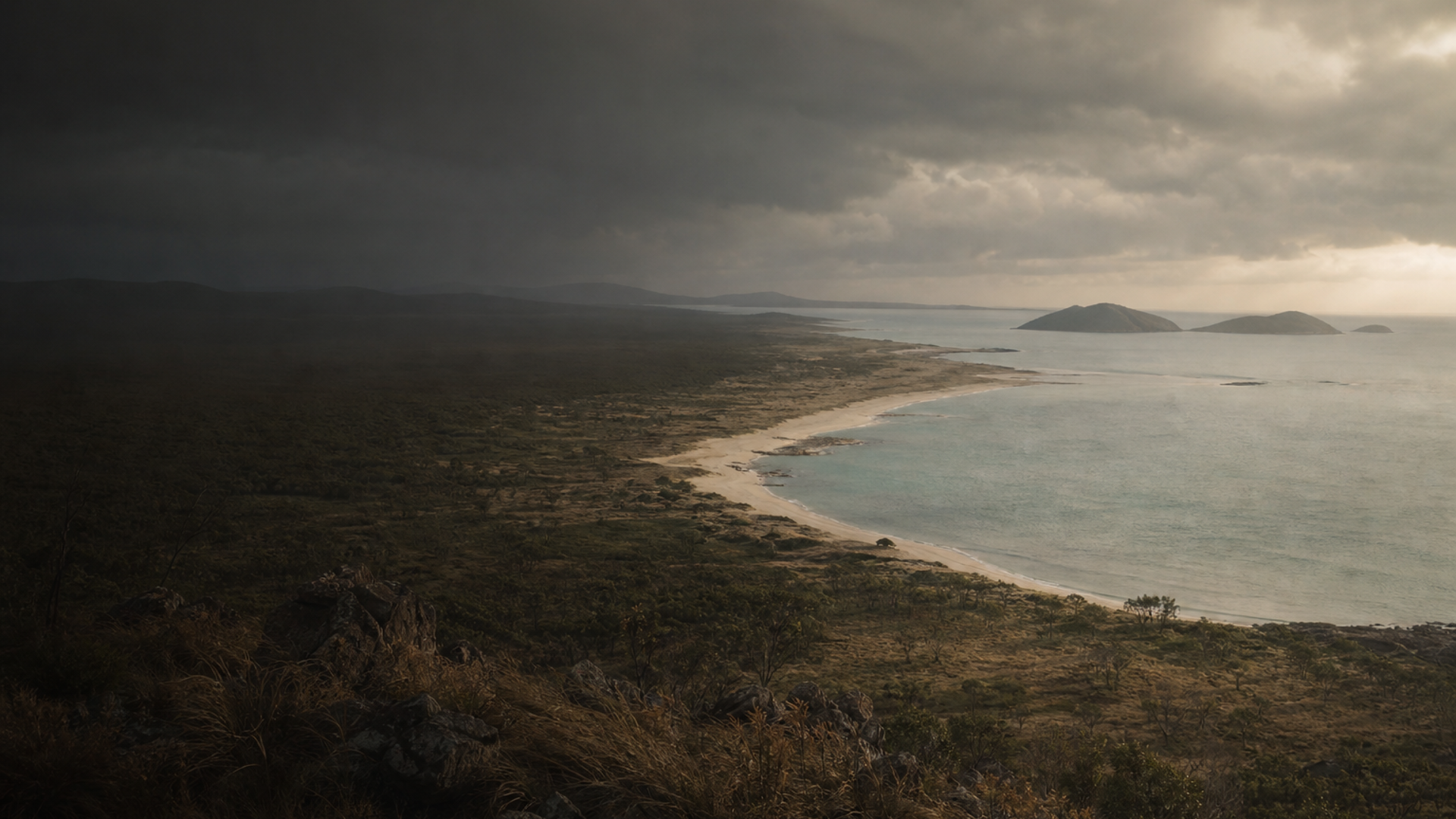
Four ancient genomes recovered from Flinders Island and Mapoon date between 410 CE and 1788 CE. All four carry mitochondrial haplogroup P, a lineage found among Indigenous Australians and some neighbouring Papuan groups, suggesting strong maternal continuity in this coastal region during the late Holocene. On the paternal side, the tiny sample includes one individual assigned to Y‑haplogroup F and one to Y‑haplogroup P. Both Y lineages are phylogenetically deep and broadly distributed in Oceania and parts of South and Southeast Asia, but the observed counts here (F:1, P:1) are too small to infer population structure or sex‑biased processes with confidence.
Archaeogenetic interpretation must stress the preliminary nature of these results. With fewer than ten samples, apparent patterns (for example, universal mtDNA P) could reflect sampling bias, kin groups buried in the same place, or true regional continuity. When combined with archaeology—the continuity of coastal sites and the persistence of technological strategies—the genetics point toward long‑term local ancestry, but they do not yet resolve questions of interregional contact, migration timing, or fine‑scale social organization.
Future sampling across additional sites in Queensland and integration with ancient and present‑day genomes will be essential to test whether mtDNA P dominance here reflects widespread maternal continuity, local endogamy, or other demographic processes.