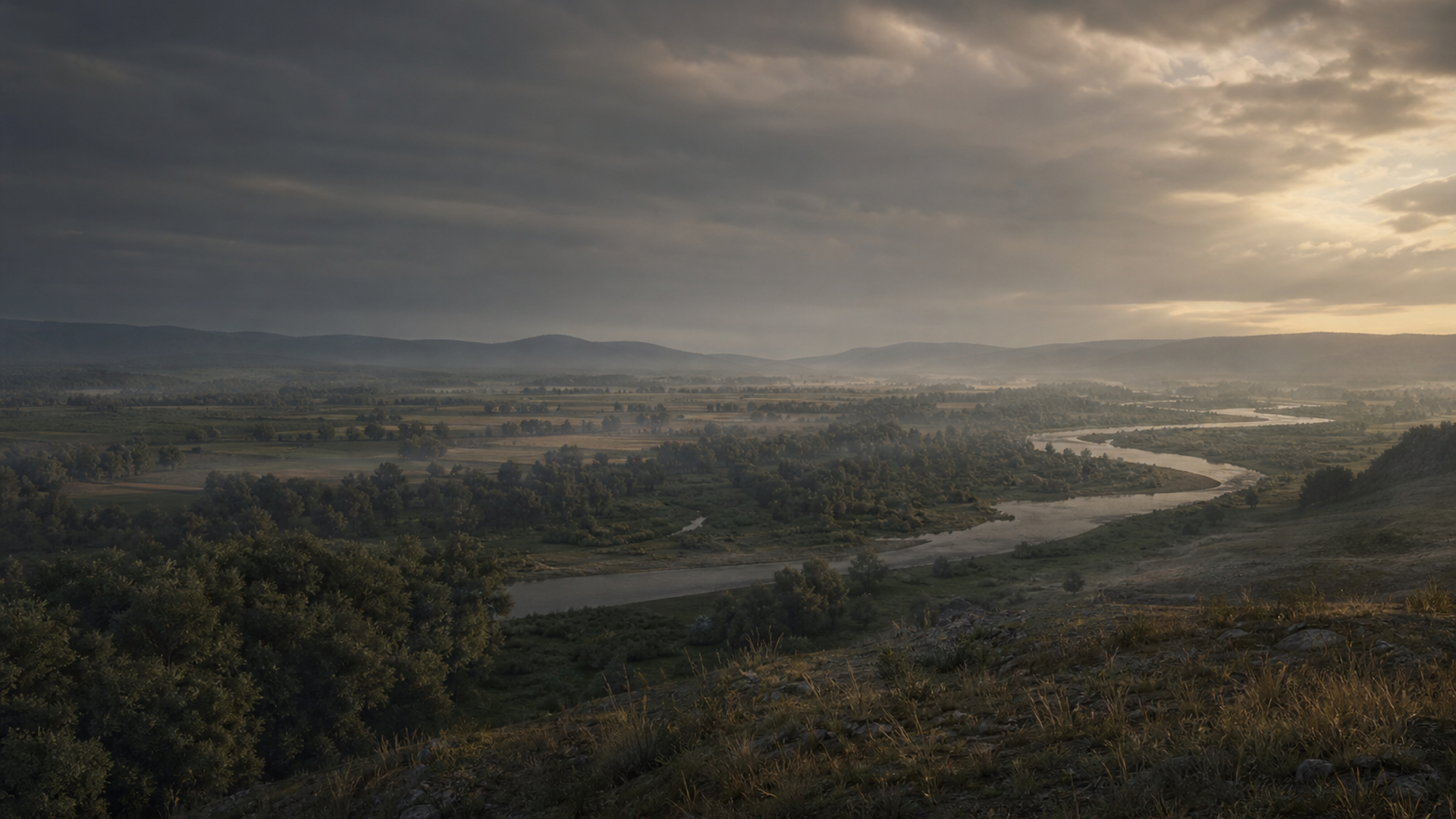
Daily life in Early Neolithic Grand-Est was intimate with the land. Archaeological deposits show domestic activity—cooking, craft production, and tool maintenance—clustered in small settlement loci. Stone grinders and cereal-processing residues point to cultivation of hulled wheats and barley, while bone assemblages indicate managed herds of sheep, goats, and possibly cattle were part of household economies.
Settlement architecture is inferred from posthole patterns and midden concentrations; timber structures with small internal divisions may have sheltered extended family units. Pottery served as both practical containers and social markers: variations in shape and decoration hint at networks of shared styles across the Rhine corridor. Flint-knapping debris and imported raw materials suggest mobility and exchange beyond immediate valleys.
Burial evidence in the region is sparse; where graves occur, they are often shallow and accompanied by modest offerings, which complicates interpretations of social hierarchy. Archaeological data indicates a mixed economy of farming and residual foraging, with seasonal movements to exploit riverine wetlands for fish and reeds.
These reconstructed lifeways evoke a quietly industrious people—fields tilled by hand, children playing near hearths, and a landscape reshaped by persistent human activity over generations.