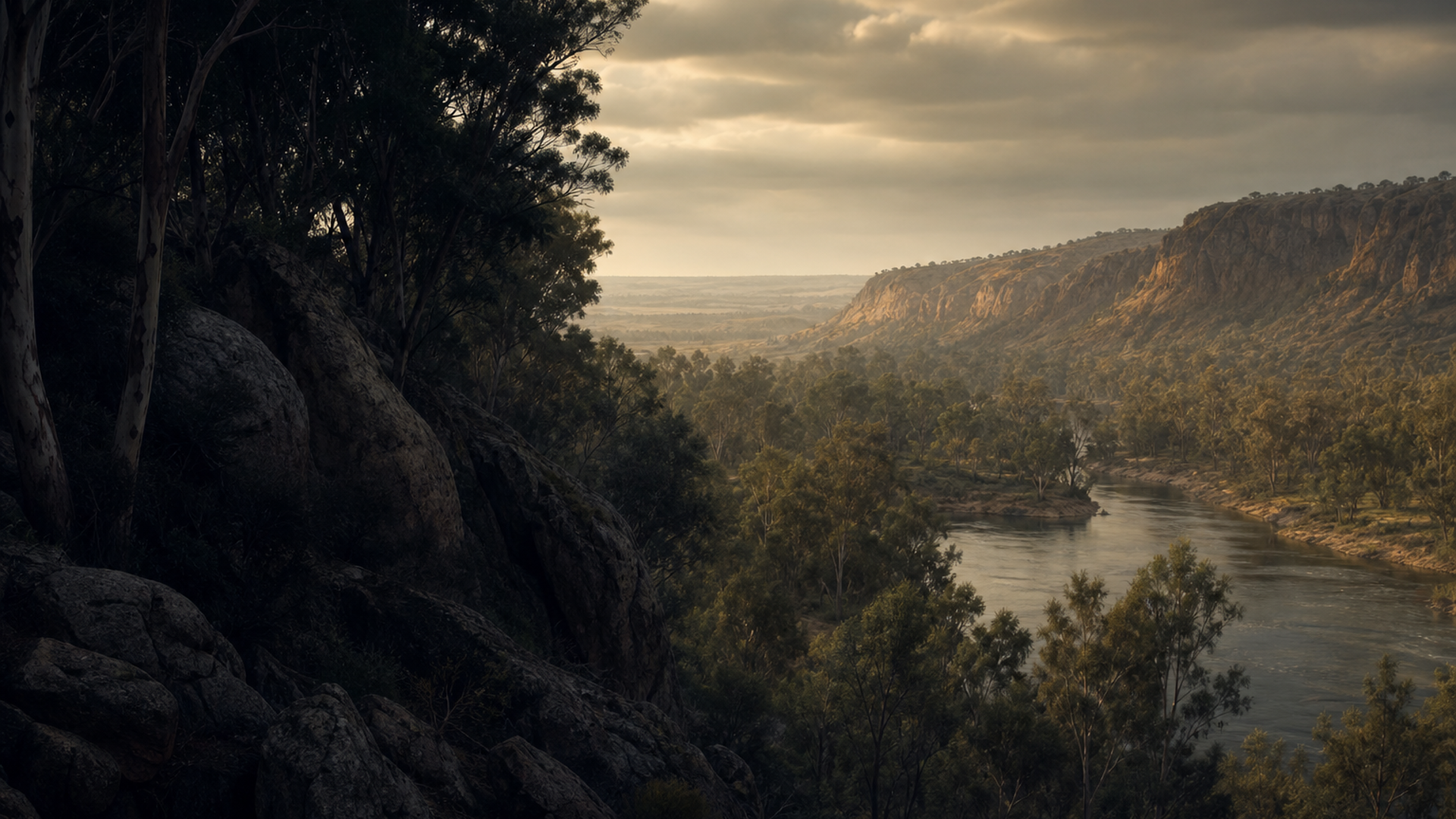
Daily life in the riverlands of New South Wales was governed by the pulse of water. Fish, freshwater mussels, waterfowl and plants such as riverine tubers and seeds formed predictable seasonal staples, supplemented by terrestrial game from nearby woodlands. Archaeological remains—hearths, shell and bone scatters, and flaked stone assemblages—attest to repeated occupations of sandbars, levees and lunettes where raw materials for tools and firewood were available.
Communities practiced mobility attuned to resource calendars: short residential moves during floods, longer seasonal journeys to trade ochre, stone and plant products. Material signals of social life included ground stone tools, hafted spear points, and ochre fragments used in paint and ceremony. Architectural traces are ephemeral—leaners, windbreaks and hearth structures—but ethnographic and archaeological synthesis suggests tightly knit social networks, with songlines and oral geographies encoding place names, resource rights and ceremonial obligations.
Archaeological data indicates burial and mortuary practices were regionally varied; Willandra contains some of the most compelling ancient burial evidence in Australia, underscoring long‑term landscape attachment. Nevertheless, many aspects of social organization, ritual and identity remain best accessed through continued collaboration with descendant Aboriginal communities.