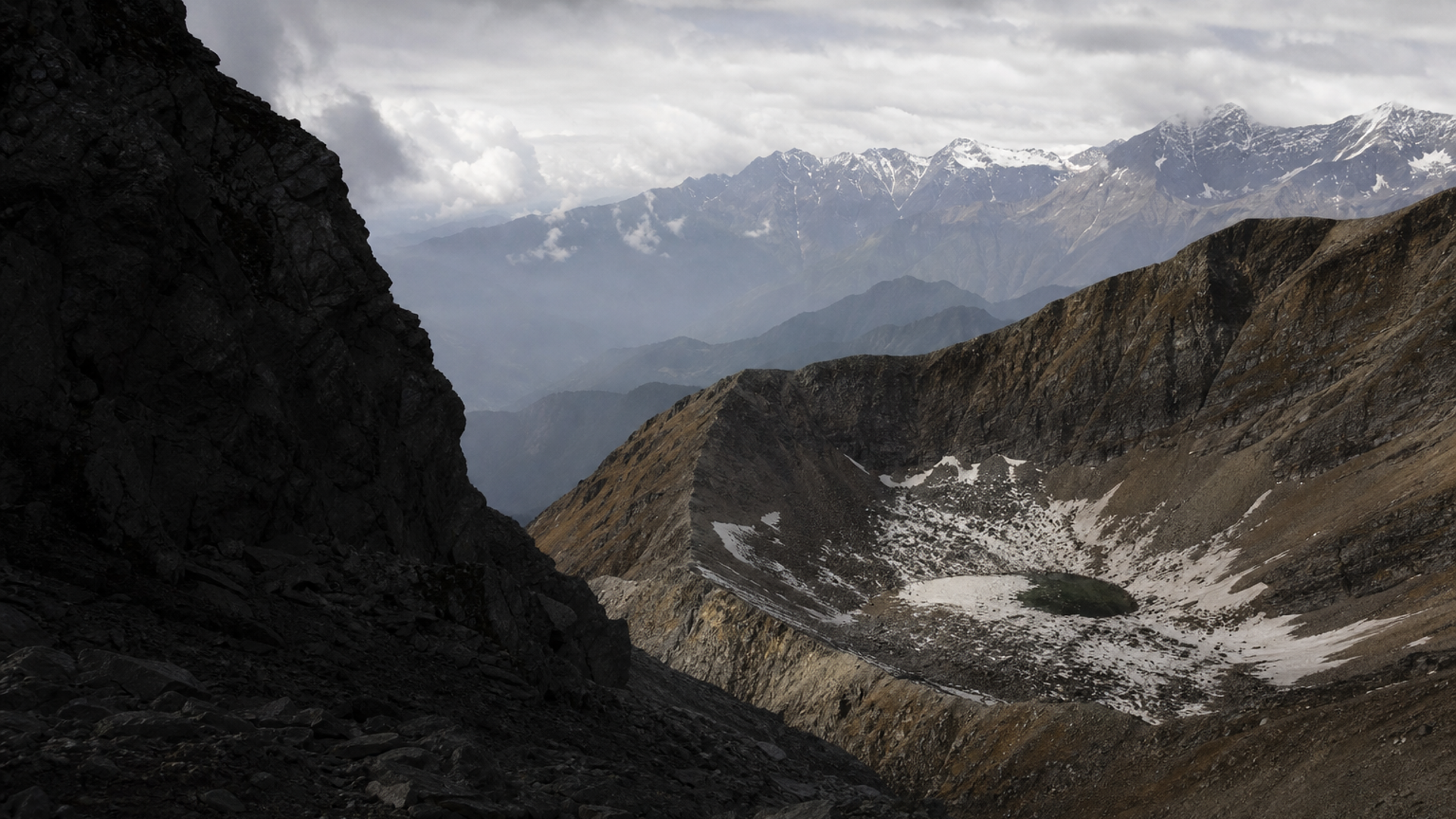
Ancient DNA from 23 Roopkund A individuals reveals a mixed paternal and maternal picture that illuminates medieval human mobility into the high Himalaya. Y‑chromosome haplogroups observed include R (5 individuals), H (4), J (3), and E (1). These broad haplogroups span a wide geography: H is frequently associated with South Asian paternal lineages, R occurs widely across Eurasia and has South Asian and West Eurasian subbranches, while J and E often indicate West Asian or Near Eastern connections. On the maternal side, mtDNA is dominated by haplogroup M (8 individuals) — a major South and East Eurasian maternal lineage — alongside U (5), and singletons such as M30, HV, and M3.
Taken together, the genetic mix suggests that the Roopkund A group included both local South Asian lineages (notably maternal M and paternal H) and lineages with stronger affinities to West Eurasia (U, J, E). This pattern is consistent with a population that was not genetically homogenous: individuals may represent different geographic origins, episodes of long‑distance movement, or mingled communities. Because sample size is moderate (n=23) and genome‑wide coverage varies across individuals, interpretations remain provisional: future dense sampling and broader comparative datasets are needed to test models of pilgrimage, trade‑era mobility, or episodic migration. Still, the aDNA paints a vivid portrait of medieval connectivity at a remote alpine crossroads.