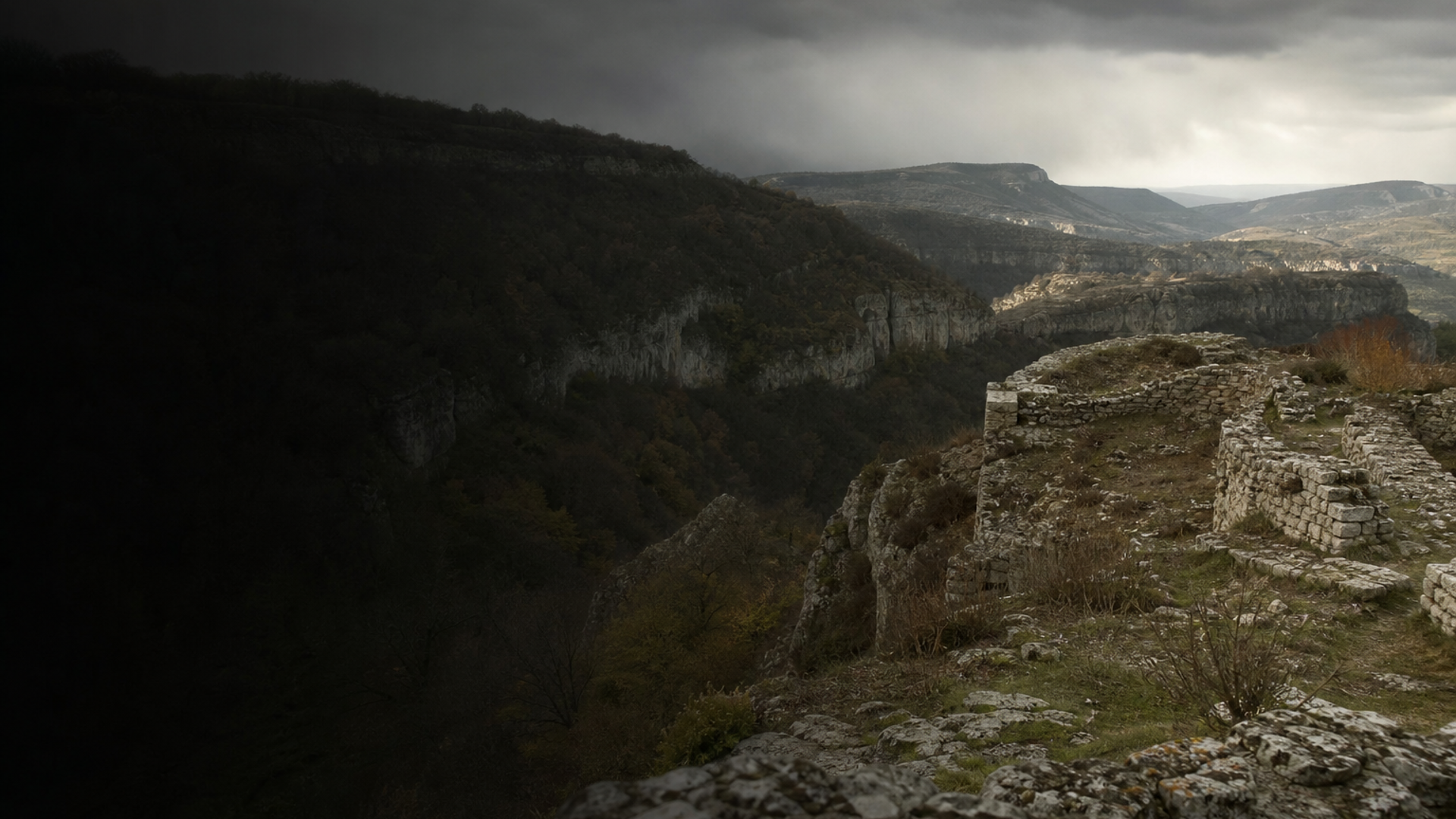
Archaeological indicators for daily life in the Veliko Tarnovo region during the medieval period point to a mixed economy of agriculture, artisanal craft, and regional trade. Pottery sherds, building remains, and tool fragments (where recorded) suggest households engaged in cereal cultivation, animal husbandry, and localized artisanry — small-scale ironworking, leatherworking, and textile production are commonly inferred in contemporaneous Bulgarian settlements.
Fortified sites like Ryahovets likely served as administrative or defensive centers: a place where agricultural surplus was collected, taxed, or defended. Nearby villages such as Samovodene would have supplied food, labor, and crafts to these nodes. Seasonal rhythms of sowing and harvest, religious calendars, and market cycles structured social life. Mobility was a feature of the era — merchants, pilgrims, soldiers, and itinerant craftsmen all contributed to cultural and material exchange across the Balkans.
Archaeological data indicate a landscape of interdependent settlements, but direct evidence tied to the three sampled individuals is limited. Burial practices, grave goods, and isotopic studies (when available) would refine reconstructions of diet and mobility; for these particular samples, such contextual data are sparse or unpublished.