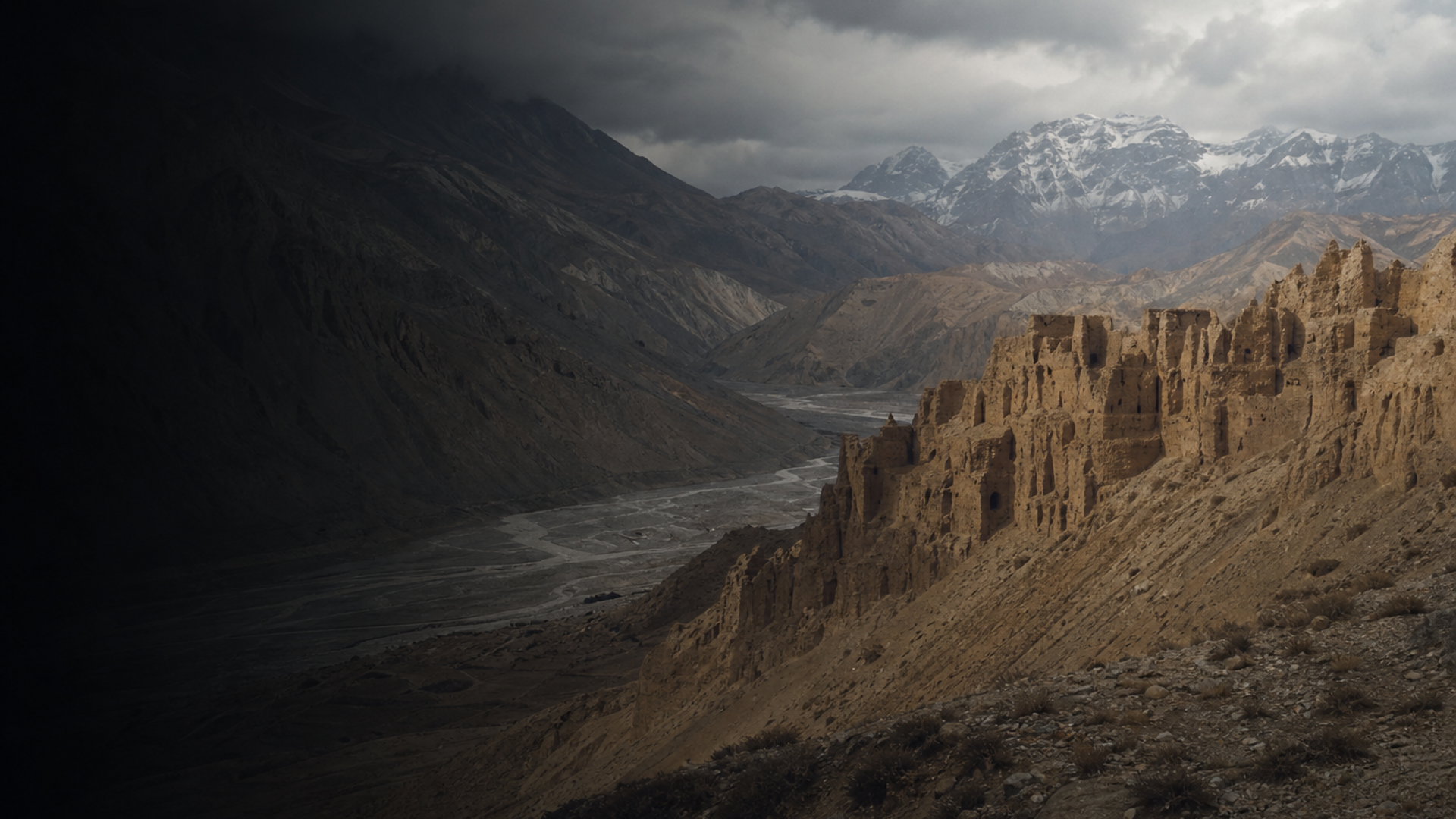
Ancient DNA from nine individuals at Samdzong provides an initial genetic snapshot of this Middle Kingdoms community. Y‑chromosome data show a prevalence of haplogroup O (reported in 4 male samples), a lineage today common across East and Southeast Asia and among many Tibeto‑Burman speaking populations. Mitochondrial diversity is notable: haplogroup M appears in multiple individuals (M types in 3 samples), with additional maternal lineages including D4i, F and F1g. D4 subclades are often associated with northern/East Asian maternal ancestries, while F and F1g have broad distributions across East and Southeast Asia.
Together, these markers suggest that the Samdzong population carried a mixture of East Asian–linked paternal and maternal lineages alongside broader South/Central Himalayan mitochondrial diversity. Archaeogenetic patterns are concordant with archaeological indicators of mobility and interaction across the Tibetan Plateau and Himalayan margins. However, because the dataset comprises fewer than ten individuals, these patterns must be treated as preliminary. Statistical power is low for detecting population structure, sex‑biased migration, or fine‑scale ancestry components.
Future sampling—higher genome coverage, isotope analyses, and expanded temporal sampling—will be critical to test hypotheses about migration pulses, marriage networks, and the degree of continuity between ancient and modern high‑altitude communities.