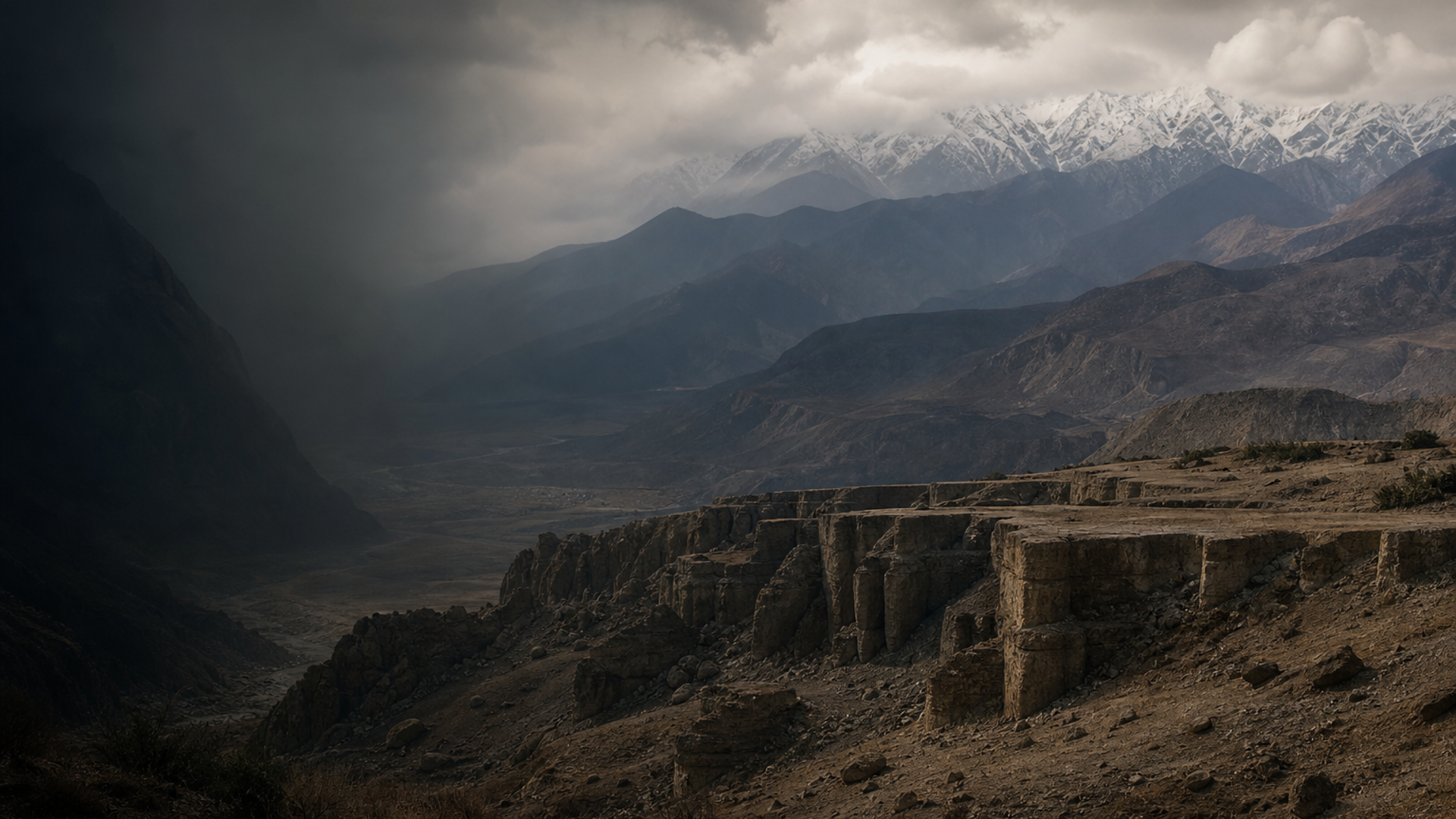
Ancient DNA from four individuals recovered at Samdzong Tomb provides a preliminary genetic window into this Himalayan community. Y-chromosome results include two individuals assigned to haplogroup O, one to D, and one male whose Y lineage could not be confidently resolved with the available data. Haplogroup O is widespread across East and Southeast Asia and appears in many historic and modern populations; its presence here suggests paternal links or gene flow along east–west corridors. Haplogroup D is characteristic of highland East Asian and Tibetan-associated lineages and has been observed in Himalayan and some East Asian groups, signaling deep regional continuity or long-term residence in mountainous zones.
Mitochondrial profiles are diverse: two individuals carry haplogroup M (a broad maternal lineage common across South and Central Asia and the Himalaya), one carries F1d, and one carries F. Haplogroups F and its sublineages (including F1d) are often associated with East and Southeast Asian maternal ancestries. The combined pattern—East-associated paternal markers (O), a Himalayan-deep lineage (D), and mixed maternal M/F lineages—suggests a mosaic ancestry, with contributions from both southward and eastward gene pools. However, with only four samples, these signals are provisional: small-n sampling increases the chance that observed haplogroup frequencies do not represent the full ancient population. Larger, better-dated datasets would be needed to resolve sex-biased gene flow, continuity with modern Nepali groups, or the timing of admixture events.