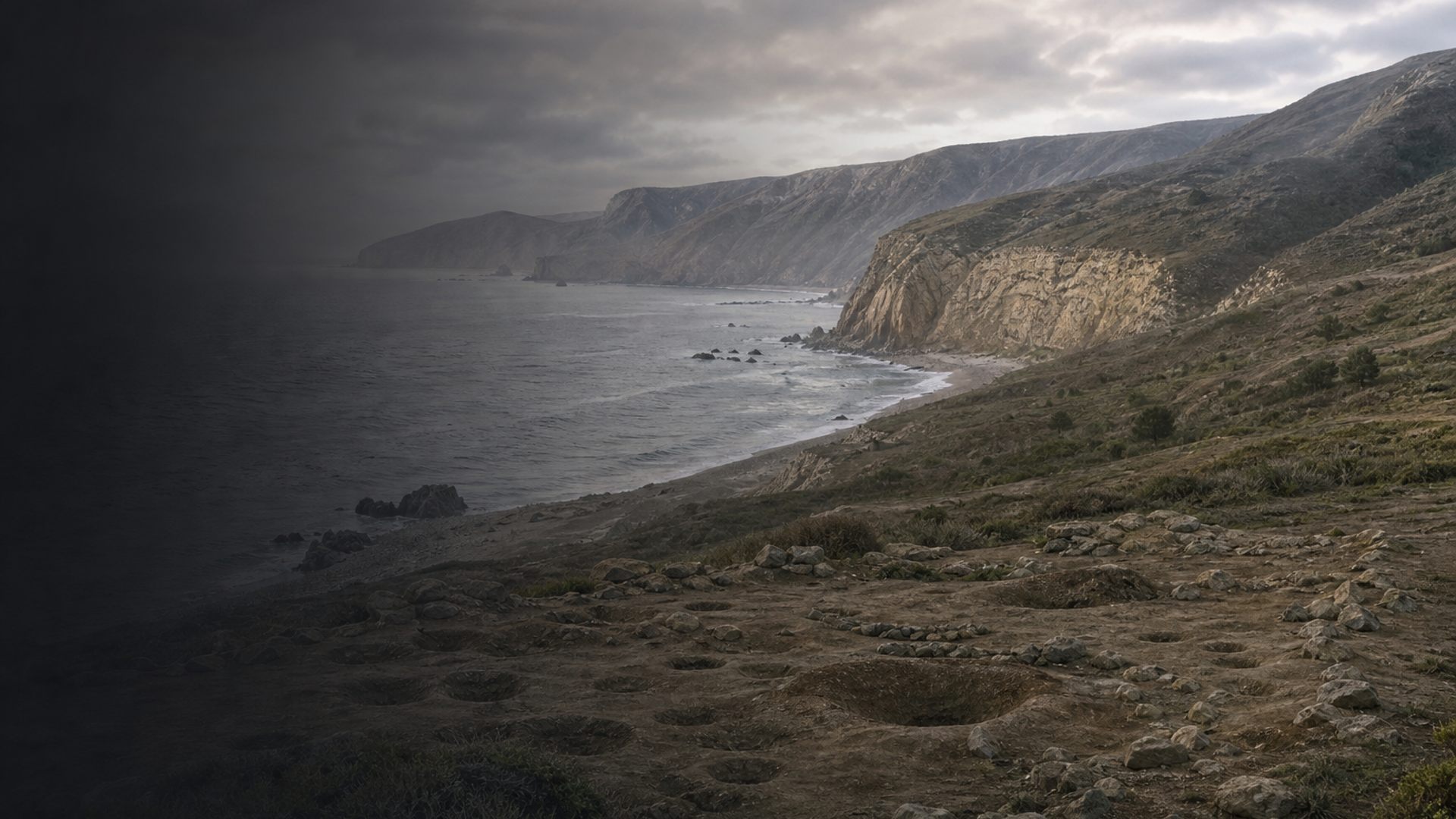
Imagine dawn light silvering a rocky strand as people launch watercraft and cast lines into kelp-rich currents. Archaeological traces on San Clemente Island — dense shell middens, fish bone concentrations, worked bone fishhooks, and bead-production debris — evoke a society whose diet and craft relied heavily on the sea. Avian bones show intensive seabird procurement, and hearth features preserve evidence of routine food processing.
Material culture suggests specialized skills: fine bone and shell working for hooks and ornament, stone tool retouching, and structured refuse pits that reflect repeated, organized use of space. Social life likely balanced family-based household groups with broader seasonal gatherings; ethnographic parallels from nearby islands and coastal California support flexible mobility within a primarily maritime economy. Archaeological data indicates ritual and social signaling through bead use and personal ornament, though the symbolic meanings remain poorly documented in the archaeological record.
Preservation on the island is uneven, and many site contexts have been affected by later disturbances. Still, the tangible echoes of daily life are vivid: a shoreline threaded with human activity, where technological ingenuity met the demanding island environment.