Menu
Store
Blog
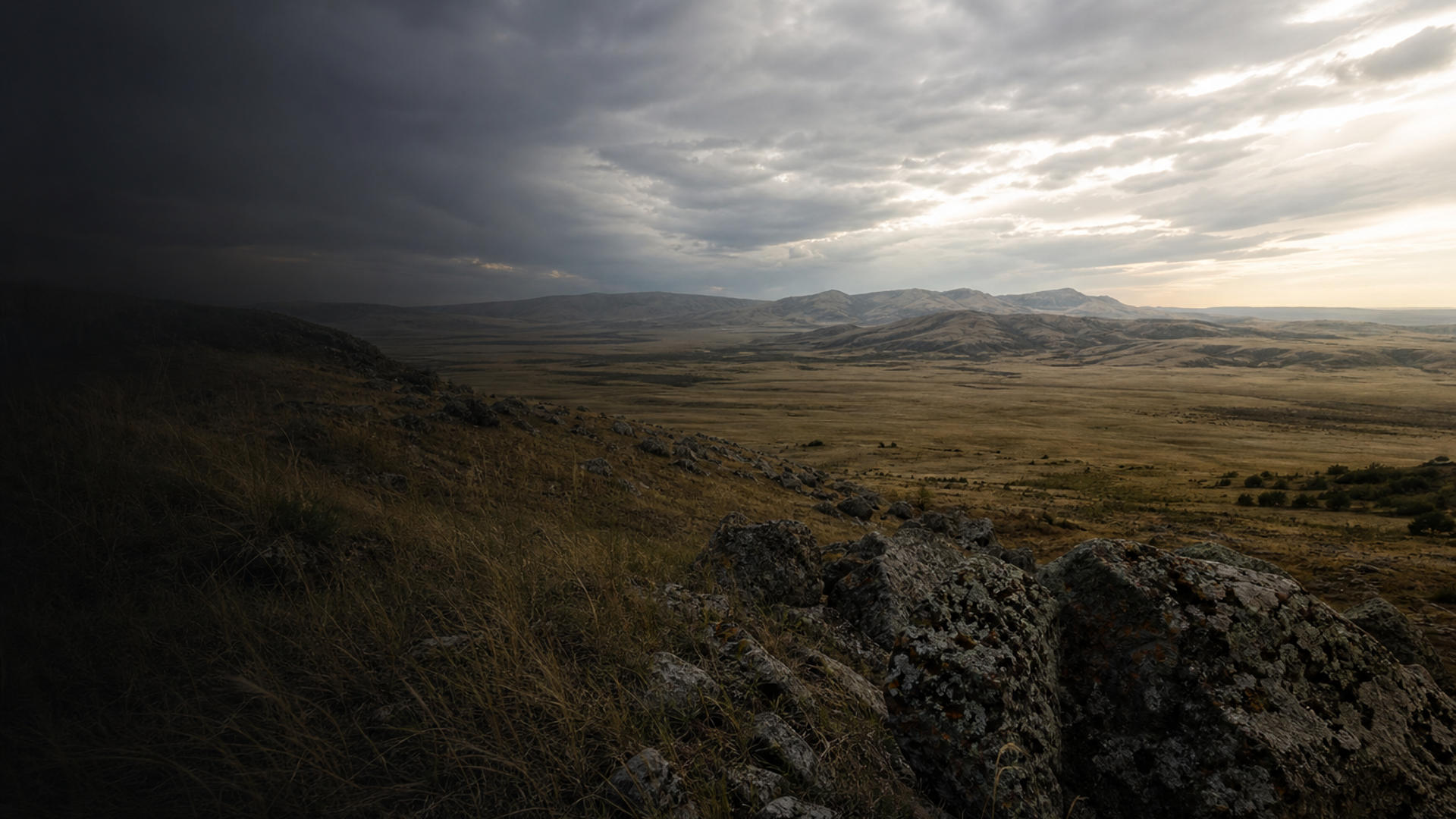
Caspian steppe, Russia

Sarmatians of the Caspian Steppe

Iron Age horse-warriors woven into the windblown grasslands of Russia

800 BCE - 100 CE
Scroll to begin
Chapter I

The Story

Understanding the Sarmatians of the Caspian Steppe culture

Archaeological and genetic evidence from 8 Sarmatian-era burials (800 BCE–100 CE) on the Caspian steppe (including Zolka Mound 4, burial 30) reveals a steppe society with mixed West–East Eurasian ancestry. Findings are preliminary due to small sample size.

Time Period

800 BCE – 100 CE

Region

Caspian steppe, Russia

Common Y-DNA

R (4), Q (2)

Common mtDNA

U (3), A (2), I1, H28, W

Chapter II

Timeline

Key moments in the history of this culture

800 BCE

Emergence of Sarmatian material culture

Kurgan burials and equestrian artifacts appear on the Caspian steppe, marking the rise of Sarmatian-related groups who would dominate parts of the Iron Age steppe.

Chapter III

Origins & Emergence

The Sarmatians emerge in the archaeological record of the Pontic–Caspian and Caspian steppes as a vibrant confederation of nomadic and semi-nomadic groups during the first millennium BCE. Archaeological data indicates heavy reliance on mounted pastoralism, manifested in horse tack, high-status horse burials, and weapons found across kurgan cemeteries. Sites such as burials from the Caspian steppe and the Zolka Mound (Mound 4, burial 30) anchor this material culture in the modern Russian steppe.

Culturally they are associated with the broader continuum of Iranic-speaking steppe peoples often grouped with Scythian-related traditions; however, cultural labels mask fluid identities and regional variation. Limited evidence suggests Sarmatian groups were dynamic—expanding, absorbing, and trading with neighbors from the Black Sea to the lower Volga.

Archaeology provides chronology through typologies and radiocarbon dates, placing the dataset for these samples between roughly 800 BCE and 100 CE. This period captures the rise of mounted warfare and long-range mobility that reshaped Eurasian social landscapes. While material culture speaks in artifacts and burial rites, it cannot fully resolve language or precise population movements without complementary genetic evidence.

  • Material culture tied to mounted pastoralism and kurgan burials
  • Key sites: Caspian steppe burials and Zolka Mound 4 (burial 30)
  • Dates in this dataset: ~800 BCE–100 CE
Chapter IV

Daily Life & Society

The daily world of Sarmatian communities on the Caspian steppe was shaped by wind, horse, and horizon. Archaeological remains—weaponry, horse gear, metalwork, and grave assemblages—suggest a society organized around mobile pastoralism with strong martial values. Kurgan burials often preserve rich textiles, weapon caches, and personal ornaments that hint at social differentiation and craft networks stretching into the Black Sea and Central Asia.

Seasonal mobility allowed pastoral herds to exploit distant pastures; settlements were often ephemeral, with durable social memory preserved in burial monuments. Women’s burials sometimes contain high-status accoutrements and mounted items, indicating complex gender roles and possibly the celebrated mounted women noted in later classical sources. Trade and conflict introduced objects and styles from Mediterranean, Caucasian, and eastern steppe neighbors, making Sarmatian material culture a palimpsest of localized practices and long-distance connections.

Archaeobotanical and zooarchaeological evidence—where recovered—points to mixed herding economies with sheep, cattle, and horses central to subsistence and status. Nevertheless, preservation bias and uneven excavation mean many aspects of daily life remain opaque.

  • Mobile pastoralism with kurgan burials marking memory and status
  • Material links to broad trade and contact networks across Eurasia
Chapter V

Genetic Profile

Genetic data from this dataset consists of 8 individuals from the Caspian steppe (notably Zolka Mound 4, burial 30), dated between ~800 BCE and 100 CE. Because the sample count is small (<10), conclusions must be considered preliminary and indicative rather than definitive.

Y-chromosome markers recorded here include broad haplogroup R in four individuals and haplogroup Q in two. Haplogroup R is common across many West Eurasian steppe groups and can reflect deep continuity of paternal lineages on the Pontic–Caspian steppe; haplogroup Q, while rarer in western Eurasia, is often associated with more eastern Siberian or Central Asian ancestries and may signal east–west connections or recent gene flow into the steppe.

Mitochondrial diversity in the dataset shows both West Eurasian and East Eurasian maternal lineages: U (3) and H28 (1) and I1 (1) typical of European/West Eurasian backgrounds, alongside A (2) and W (1) which point to East Eurasian or broad Eurasian maternal contributions. This mix echoes a landscape of admixture where steppe populations incorporated gene flow from both western and eastern sources over centuries.

Taken together, the genetic snapshot aligns with archaeological signs of cultural connectivity across Eurasia: a dominant West Eurasian genetic substrate with detectable eastern inputs. However, with only eight genomes, the observed haplogroup counts could underrepresent the true diversity of Sarmatian populations across time and space.

  • Small sample (n=8) — interpretations are preliminary
  • Y-DNA shows R (4) and Q (2); mtDNA mixes U, A, I1, H28, W
Chapter VI

Legacy & Modern Connections

The Sarmatians left an archaeological imprint of equestrian culture and kurgan monuments across the Eurasian steppe that influenced successor populations. Genetic signals of mixed West and East Eurasian ancestry in these burials suggest that modern populations of the Pontic–Caspian region and beyond carry a palimpsest of steppe ancestries formed by millennia of mobility.

Comparisons between ancient steppe genomes and later medieval and modern populations often reveal continuity in certain Y- and mtDNA lineages, but localized histories of migration and admixture make simple one-to-one links impossible. Given the small number of samples here, these results should be viewed as a window into regional heterogeneity rather than a definitive ancestral map for any modern group. Ongoing sampling and broader genomic datasets are essential to trace how Sarmatian-era ancestries contributed to later genetic landscapes.

  • Archaeological and genetic signs of long-range connectivity across Eurasia
  • Current genetic insights are provisional; larger samples needed for firm links to modern populations
AI Powered

AI Assistant

Ask questions about the Sarmatians of the Caspian Steppe culture

AI Assistant by DNAGENICS

Unlock this feature
Ask questions about the Sarmatians of the Caspian Steppe culture. Our AI assistant can explain genetic findings, historical context, archaeological evidence, and modern connections.
Sample AI Analysis

The Sarmatians of the Caspian Steppe culture represents a fascinating chapter in human history...

Genetic analysis reveals connections to earlier populations while showing evidence of unique adaptations and cultural innovations. The ancient DNA samples provide insights into migration patterns, social structures, and the biological relationships between ancient populations.

This is a preview of the AI analysis. Unlock the full AI Assistant to explore detailed insights about:

  • Genetic composition and ancestry
  • Migration patterns and origins
  • Daily life and cultural practices
  • Modern genetic legacy
Use code for 30% off Expires Apr 05