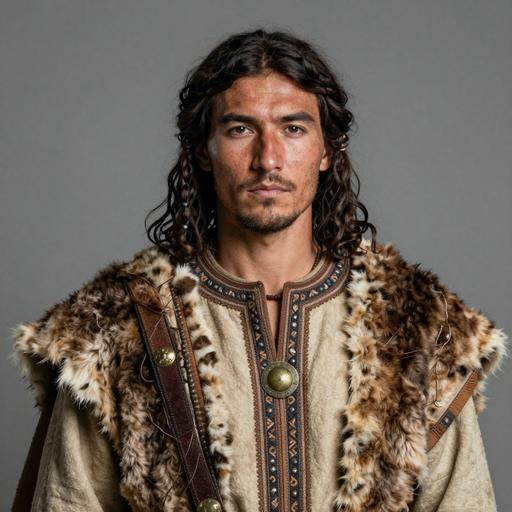
The genetic dataset (89 individuals dated between 5296 BCE and 411 CE) spans a broad swath of the steppe, offering a window into population diversity during and around the Scythian archaeological horizon. Y-chromosome results are dominated by haplogroup R (35 individuals), consistent with deep Eurasian steppe paternal lineages; less frequent Y types in this series include Q (4), E (4), G (2) and J (2), indicating multiple paternal inputs. Mitochondrial haplogroups show substantial diversity: U (24) and H (20) are common, alongside J (5), A (4) and T (4). U and H are widespread in European and steppe contexts, while mtDNA A and Y-haplogroup Q point to eastern Eurasian contributions, especially in eastern sites such as G218 (Nileke, Xinjiang) and Tian Shan samples. The mixture of western and eastern markers aligns with archaeological evidence for long-distance contact — trade, migration and mercenary movement. Regional structure is notable: Pontic steppe burials (Kup'evaha, Medwin, Bidylo) show stronger western Eurasian maternal lineages, while Tian Shan and Xinjiang individuals present more eastern-affinity mtDNA and some Q Y-chromosomes. Presence of E, G and J haplogroups suggests occasional gene flow from Near Eastern and Caucasus sources, possibly via Black Sea trade networks. Because the dataset includes pre- and post-Iron Age individuals, and sample coverage is uneven geographically, conclusions about a single "Scythian genotype" should be treated with caution; the evidence points to a mobile, genetically heterogeneous set of populations linked by culture and mobility rather than a genetically uniform people.