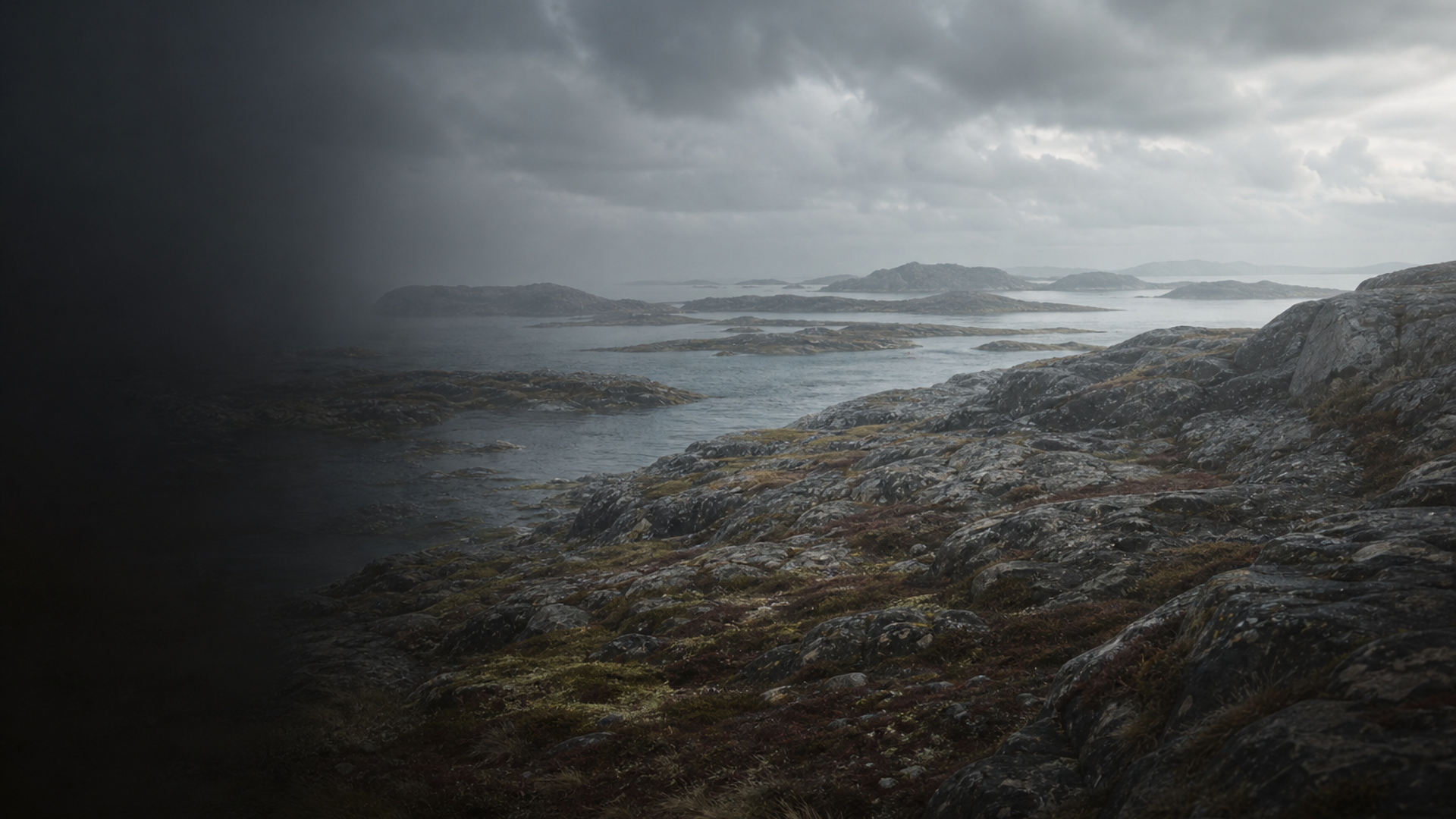
Archaeological evidence paints a picture of daily life organized around the sea and the margins where forest met fjord. Coastal foragers likely focused on fish, shellfish, seabirds, and marine mammals, supplemented by inland hunting and seasonal plant resources. The landscape was a mosaic of rocky skerries, sheltered bays, and newly emerging coastal plains—an environment that rewarded mobility, intimate knowledge of tides, and seasonal scheduling.
Social groups were probably small and flexible. Ethnographic analogies and stone‑tool distributions suggest networks of exchange and intermittent aggregation at rich resource patches. Material culture at many Mesolithic Norwegian sites emphasizes flaked stone tools, organic implements (often poorly preserved in submerged contexts), and occasional bone or antler artefacts. Hummervikholmen itself offers sparse but telling traces: human remains found within marine sediments that imply shoreline burial or loss to rising waters.
Daily life was shaped by unpredictability—storms, sea‑level rise, and shifting fish runs—so resilience likely depended on diverse foraging strategies and social ties spanning coastal and inland landscapes. Archaeological data indicates a people deeply attuned to the sea, moving with its seasons and rhythms rather than imposing fixed settlement patterns.