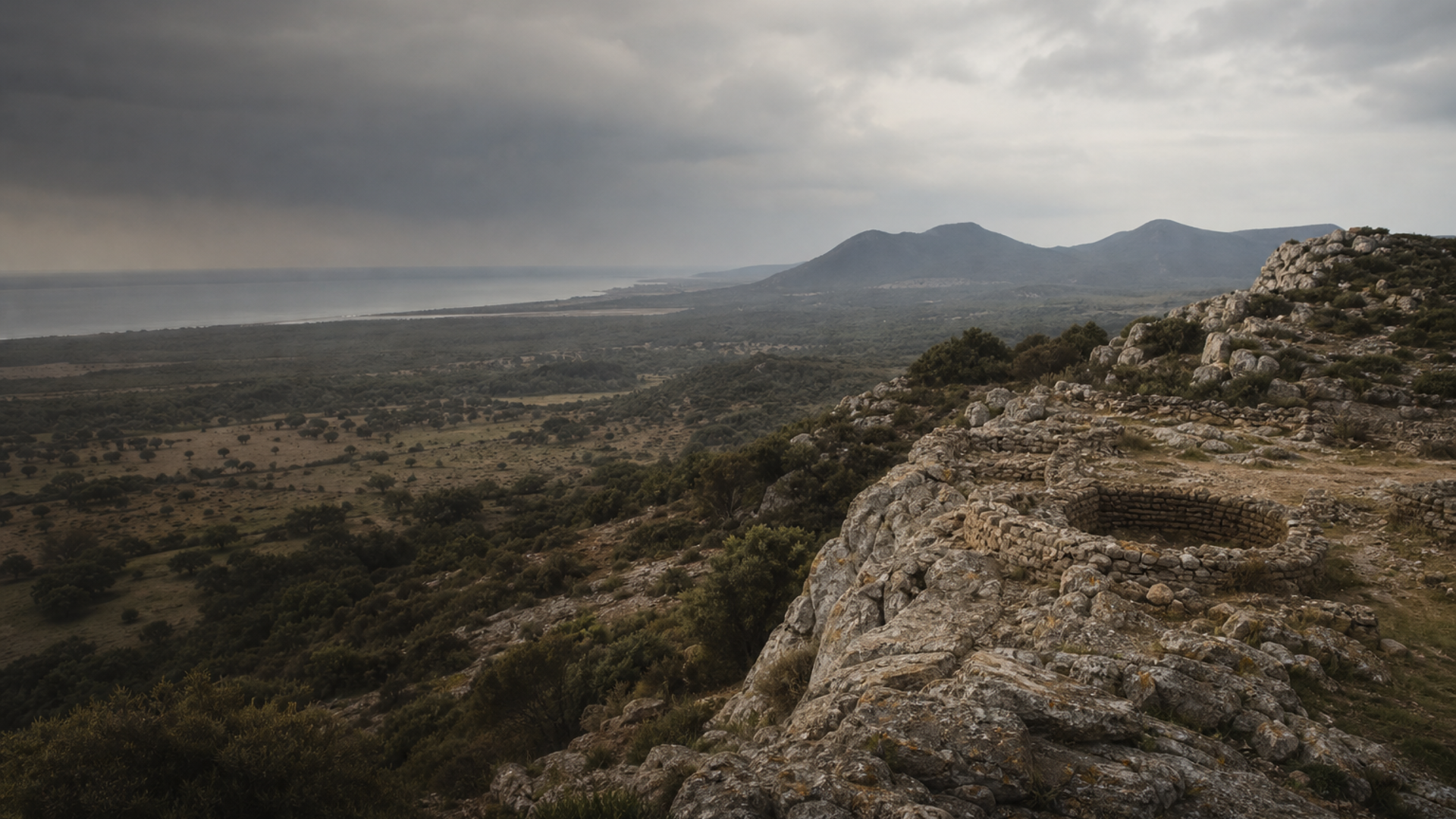
Archaeological traces from Middle Bronze Age Portugal paint a textured portrait of everyday life: households oriented around hearths, domesticated plants and animals, and craft production that included metalworking and pottery. Coastal sites such as those around Setúbal and Melides sat at the intersection of terrestrial and marine economies — fishing, shellfish collecting and salted resources likely supplemented grain and herded flocks.
Social life would have been organized at multiple scales: kin-based households clustered into hamlets, linked by seasonal movement and exchange. Funerary evidence in the region is varied and sometimes fragmentary; where burials survive they can show differential treatment, hinting at emerging social distinctions without clear aristocratic hierarchies. Landscape management — terrace agriculture inland, exploitation of estuarine resources near the coast — suggests adaptive strategies in response to climatic variability.
Archaeological contexts for the five genetic samples are not always diagnostically rich, but they come from settings typical of the period: settlement peripheries, probable burial loci and surface scatters. These contexts permit an integration of material and biological records, enabling us to imagine the rhythms of Bronze Age lives: smoke and metal, coastal winds and communal obligations.