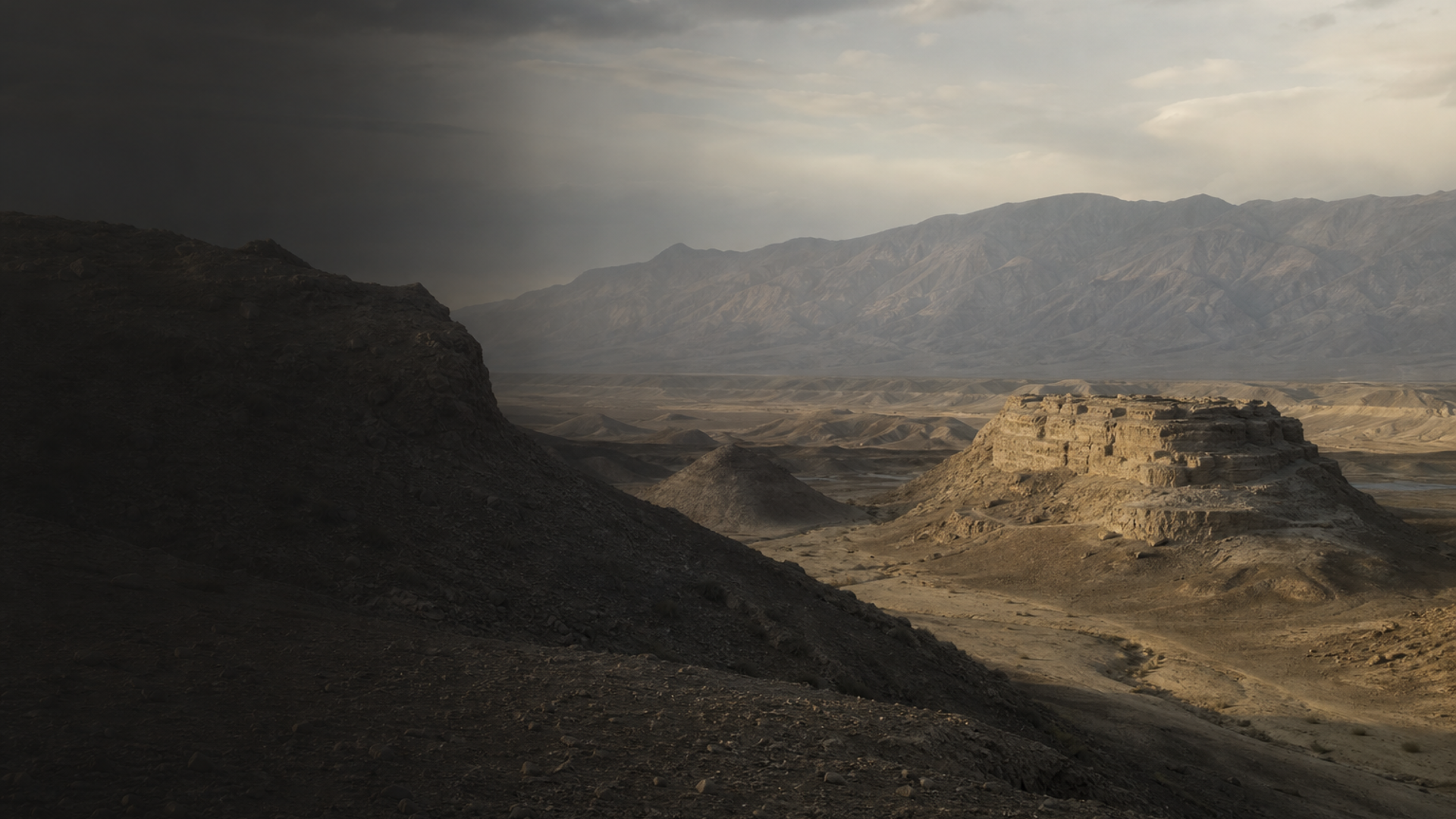
Genome-wide data from nine individuals at Shah Tepe provide a rare genetic window into a Bronze Age community on the Kerman plateau. Sample size is small (<10), so all population-level inferences must be treated as preliminary. Within this modest dataset, paternal lineages include haplogroups J (2 individuals) and T (1), both lineages long associated with West Asia. Maternal lineages are diverse—HV (2), U (2), H14 (1), I1a (1), and J (1)—reflecting a mixture of deep West Eurasian maternal ancestries.
The presence of Y-haplogroup J is consistent with continuity of Near Eastern male lineages through the Bronze Age, while T, though less common, appears intermittently across the Near East and South Asia. Maternal HV and U haplogroups point toward mitochondrial lineages that were widespread across West Eurasia from the Neolithic into the Bronze Age. These patterns align with archaeological indications of local continuity mixed with incoming influences, rather than a wholesale population replacement.
Population genetic modeling with such a small cohort cannot robustly resolve fine-scale admixture events, directionality of gene flow, or social mechanisms like patrilocality. Still, the combination of paternal J/T and varied maternal HV/U/H/I signals a community embedded in broader West Asian genetic landscapes. Future sampling from neighboring sites and temporal horizons will be essential to move from tentative snapshots to confident narratives about ancestry, mobility, and kinship at Shah Tepe.