Menu
Currency
Store
Blog
Shamakhi Antiquity: A Caucasus Echo
Azerbaijan_Shamakhi_Antiquity Shamakhi, Azerbaijan (Caucasus)

Shamakhi Antiquity: A Caucasus Echo

A lone genome from Shamakhi illuminates Late Antique life on Azerbaijan’s ancient margins.

205 CE - 346 CE
1 Ancient Samples
Scroll to begin
Chapter I

The Story

Understanding the Shamakhi Antiquity: A Caucasus Echo culture

Archaeogenetic and archaeological evidence from a single Shamakhi sample (205–346 CE) offers a tentative glimpse into Late Antique Azerbaijan. Limited data link local burial contexts to wider Caucasus and Near Eastern genetic threads; conclusions remain preliminary.

Time Period

205–346 CE

Region

Shamakhi, Azerbaijan (Caucasus)

Common Y-DNA

J (1 sample)

Common mtDNA

K (1 sample)

Chapter II

Timeline

Key moments in the history of this culture

205 CE

Earliest dated sample

The lower bound of the sample’s calibrated date range from Shamakhi, marking the earliest possible provenance (205 CE).

346 CE

Latest dated sample

The upper bound of the sample’s calibrated date range (346 CE), closing the current dating window for this individual.

Chapter III

Origins & Emergence

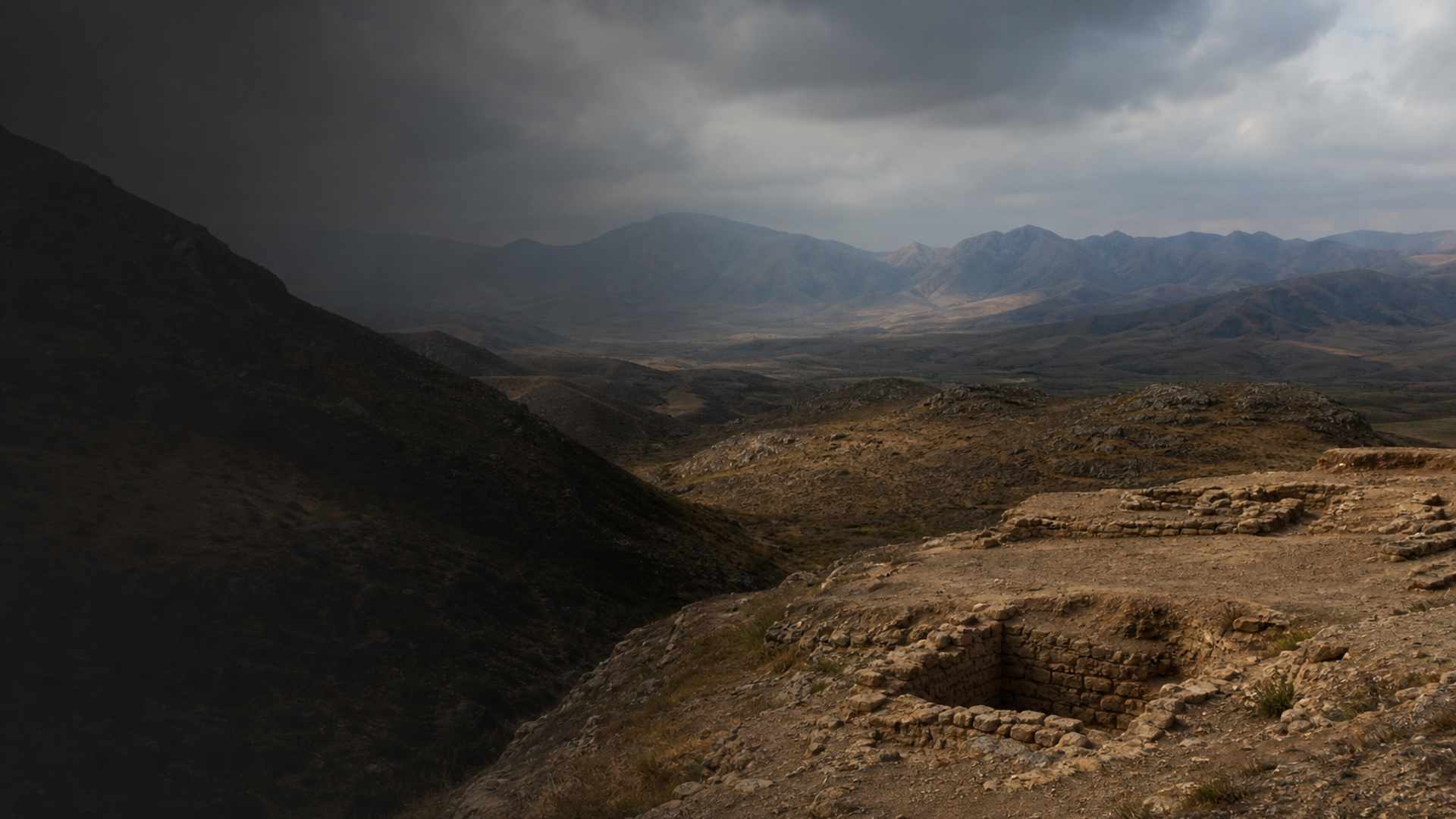
The archaeological horizon labeled here as Azerbaijan_Shamakhi_Antiquity sits in the shifting human landscape of the eastern Caucasus during Late Antiquity. Excavations and surface surveys around Shamakhi, Azerbaijan, reveal funerary traces and settlement debris that archaeologists associate with the local Shamakhi Culture tradition. Archaeological data indicate continuity of occupation on low terraces and foothills, with material culture showing affinities to broader Caucasus and Near Eastern exchange networks.

Limited evidence suggests that communities around Shamakhi were woven into regional trade and mobility corridors linking the Caspian littoral to inland highlands. Pottery fabrics, metalwork fragments, and burial orientations—where recorded—hint at local traditions adapting influences from neighboring polities. Radiocarbon and contextual dating that bracket the available sample place activity between 205 and 346 CE, a dynamic century marked by political and economic changes across the South Caucasus.

Because direct archaeological publication for many Shamakhi contexts remains sparse, interpretations must be cautious. The single genomic sample from this timeframe offers a powerful but narrow window: it can signal connections but cannot on its own map the full mosaic of community origins or migration dynamics.

  • Local occupation in foothills and terraces near Shamakhi, Azerbaijan
  • Material links to wider Caucasus and Near Eastern exchange
  • Dating constrained to 205–346 CE; interpretations remain cautious
Chapter IV

Daily Life & Society

Archaeological impressions of everyday life in the Shamakhi area during the 3rd–4th centuries CE are fragmentary but evocative. Excavated contexts and stray finds suggest small household compounds and ephemeral workshops. Ceramic shards imply cooking and storage practices familiar across the Caucasus: coarseware for hearth cooking, and finer wares for serving and storage. Metal fragments—likely from tools or personal items—point to local craft production and repair rather than large-scale industry.

Funerary evidence, where preserved, provides social clues: individual interments and grave goods indicate beliefs anchored in local custom, perhaps with adopted motifs from neighboring regions. Economically, communities likely combined agriculture on valley floors with pastoralism on nearby slopes, exploiting seasonal resources. Seasonal mobility, exchange of goods, and inter-regional marriages are plausible behaviors that would shape both material culture and genetic signals, but direct evidence tying these practices to specific households in Shamakhi is limited.

  • Household economies combining agriculture and pastoralism
  • Local craft production and funerary practices with regional motifs
Chapter V

Genetic Profile

Genomic data from Azerbaijan_Shamakhi_Antiquity currently rests on a single sampled individual (n=1), dated between 205 and 346 CE, recovered from Shamakhi, Azerbaijan. The Y-chromosome haplogroup is J, a lineage widely distributed today across the Near East and the Caucasus. The mitochondrial lineage is K, a maternal haplogroup with a broad Eurasian distribution, observed in both West Asia and parts of Europe.

Archaeogenetic interpretation must emphasize the extreme preliminary nature of conclusions based on one genome. Nonetheless, this combined Y–mtDNA signal is consistent with archaeological expectations of the eastern Caucasus as a crossroads region: haplogroup J often reflects male-line connections to Near Eastern and Caucasian populations, while mtDNA K can reflect long-standing maternal ties across West Eurasia. Genome-wide analyses (if and when expanded) would be needed to resolve ancestry components (local Caucasus hunter‑gatherer substrates, Near Eastern farmer ancestry, or additional steppe-related inputs) and to test hypotheses about mobility, admixture timing, and social structure. Until more samples from Shamakhi and contemporaneous sites are sequenced, genetic narratives remain suggestive rather than definitive.

  • Y-DNA: J — links consistent with Near Eastern/Caucasus male lineages
  • mtDNA: K — maternal ancestry with broad West Eurasian affinities; conclusions preliminary (n=1)
Chapter VI

Legacy & Modern Connections

The Shamakhi Antiquity signal, faint and solitary in the genetic record, gestures toward long-term threads that bind past communities to the modern Caucasus. Today’s populations in Azerbaijan and neighboring regions carry a tapestry of ancestries formed over millennia; the J paternal and K maternal markers seen in the Shamakhi sample are part of that broader mosaic. Archaeologically, the material echoes—ceramics, metalworking traces, and burial customs—suggest cultural persistence and adaptation rather than abrupt replacement.

Researchers aiming to map continuity between ancient Shamakhi and present-day groups must expand both archaeological sampling and ancient DNA coverage. With more genomes, we could begin to trace lineage persistence, detect migration pulses, and link specific cultural changes to demographic processes. For now, the lone genome is a cinematic, fragile filament connecting a Late Antique life in Shamakhi to the genetic story of the Caucasus: evocative, informative, and in need of company.

  • Modern Caucasus populations likely reflect layered ancestries that include elements seen in Shamakhi
  • Additional sampling is required to test lineage continuity and demographic scenarios
Chapter VII

Sample Catalog

1 ancient DNA samples associated with the Shamakhi Antiquity: A Caucasus Echo culture

Ancient DNA samples from this era, providing genetic insights into the people who lived during this period.

1 / 1 samples
Portrait Sample Country Era Date Culture Sex Y-DNA mtDNA
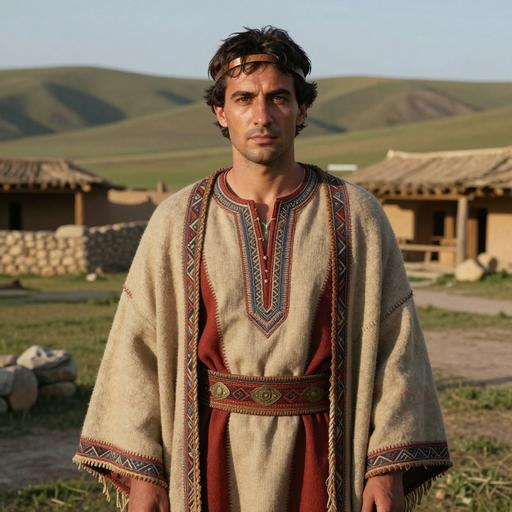
Portrait of ancient individual zrj003 from Azerbaijan, dated 205 CE
zrj003
Azerbaijan Azerbaijan_Shamakhi_Antiquity 205 CE Caucasian M J-Z1842 K1a19
AI Powered

AI Assistant

Ask questions about the Shamakhi Antiquity: A Caucasus Echo culture

AI Assistant by DNAGENICS

Unlock this feature
Ask questions about the Shamakhi Antiquity: A Caucasus Echo culture. Our AI assistant can explain genetic findings, historical context, archaeological evidence, and modern connections.
Sample AI Analysis

The Shamakhi Antiquity: A Caucasus Echo culture represents a fascinating chapter in human history...

Genetic analysis reveals connections to earlier populations while showing evidence of unique adaptations and cultural innovations. The ancient DNA samples provide insights into migration patterns, social structures, and the biological relationships between ancient populations.

This is a preview of the AI analysis. Unlock the full AI Assistant to explore detailed insights about:

  • Genetic composition and ancestry
  • Migration patterns and origins
  • Daily life and cultural practices
  • Modern genetic legacy
Use code for 40% off Expires May 31