Siberian Middle–Late Bronze Assemblage

Download PDF creates a visual, rasterized copy. Use Print for selectable text and better assistive-technology support.

Skip to main content
Civilization Spotlight

Siberian Middle–Late Bronze Assemblage

Echoes of rivers and steppe across 5632 BCE–758 CE revealed through 86 genomes

5632 BCE - 758 CE
Russia (Far East, Krasnoyarsk, Lake Baikal), Mongolia
3 Ancient Samples

The Story

Archaeogenomic and archaeological evidence from sites across Russia and Mongolia (5632 BCE–758 CE) reveals a dynamic Siberian population history: deep Northeast Asian maternal lineages, frequent Y-haplogroup Q, and pulses of West Eurasian ancestry tied to Bronze Age interactions.

Time Period

5632 BCE – 758 CE (primary MLBA Krasnoyarsk)

Region

Russia (Far East, Krasnoyarsk, Lake Baikal), Mongolia

Common Y-DNA

Q (34), R (12), C (8), N (7), CT (2)

Common mtDNA

C (21), D (9), F (9), A (6), U (6)

Sample locations

The interactive map is unavailable. Browse the sample catalog for recorded locations.

Timeline

2500 BCE

Bronze Age transformations along river corridors

Middle–Late Bronze Age growth in metal use and long-distance exchange reshaped social networks across the Yenisei–Angara–Amur corridors.

Origins & Emergence

Across a sweep of taiga, river valleys and steppe edges, the people now grouped under this Siberian assemblage emerge from long-standing Northeast Asian forager traditions and Bronze Age cultural transformations. Archaeological deposits from Shamanka II and the early Bronze cemeteries around Lake Baikal, Late Bronze Age contexts in Krasnoyarsk and Chita, and Iron Age burials at Blagovechensk and Glazkovskoe predmestie show continuity in regional mortuary practices alongside new metalwork and horse-related artifacts that appear in the mid–late 2nd millennium BCE.

Sites such as Bazaikha on the Yenisei and the Marzyn khutul tombs (Bulgan, Mongolia) demonstrate long-distance connections: trade in metal, shared decorative motifs, and mobility along river corridors. Radiocarbon dates for this dataset span 5632 BCE to 758 CE, but most genomes cluster in the Middle–Late Bronze Age (MLBA) horizon associated with the Russia_MLBA_Krasnoyarsk designation. Archaeological data indicates layered occupation and cultural blending rather than a single migration event.

Limited evidence suggests episodes of demographic influx—likely steppe-related—superimposed onto deep local hunter-gatherer ancestry. The material record creates a portrait of an evolving frontier: peoples rooted in Northeastern Eurasian lifeways who adopted new technologies and social practices as Bronze Age networks intensified.

  • Continuity from Early Bronze Lake Baikal foragers into MLBA communities
  • Key sites: Shamanka II (Lake Baikal), Bazaikha (Yenisei), Marzyn khutul (Bulgan, Mongolia)
  • Cultural change linked to Bronze Age metalwork and riverine mobility

Daily Life & Society

Life along the Amur, Yenisei and Angara rivers blended forager traditions with pastoral and metallurgical innovations. Settlement archaeology at Glazkovskoe predmestie and habitation layers at Pospelovo 1 suggest seasonal use of riverine floodplains for fishing, boat travel and seasonal camps, with more permanent graves and cairns marking landscape claims. Grave goods—ceramics, bronze ornaments, awls and occasionally horse gear—point to household craft, specialized metalworking and increasing social differentiation through the Bronze and Iron Ages.

Hunting, fishing and reindeer or horse use likely formed dietary backbones, augmented by small-scale herding where the terrain allowed. Ornament styles shared between sites in Krasnoyarsk and Primorsky Krai indicate artisans and objects moving long distances. Mortuary variability—single inhumations versus multiple burials at sites like Chumysh-Perekat-1—hints at complex kin networks and changing social identities over a multi-millennial span. Preservation biases mean that organic materials and ephemeral seasonal camps are underrepresented, so our picture emphasizes durable items and burials.

  • Riverine economies: fishing, transport, and seasonal camps
  • Material culture shows increasing social complexity and long-distance exchange

Genetic Profile

The dataset of 86 genomes provides a moderately robust window into population dynamics across Siberia and northern Mongolia. Mitochondrial diversity is dominated by typical Northeast Asian lineages—mtDNA C (21), D (9), F (9), A (6), and U (6)—consistent with long-term maternal continuity in the region and strong affinity to East Asian hunter-gatherer mitochondrial pools. On the paternal side, haplogroup Q is the most frequent (34/86), a marker widely observed in Siberia and among Native American ancestors; its prevalence points to deep local male-line continuity. Substantial representation of Y-haplogroup R (12) and smaller counts of C (8) and N (7) indicate multiple male-mediated inputs, including West Eurasian (steppe-related) gene flow manifested by R lineages.

Allele-sharing and admixture analyses imply a composite ancestry: a dominant Northeast Asian substrate with episodic admixture from West Eurasian steppe-related sources during the Bronze Age. The temporal span (5632 BCE–758 CE) and geographic spread mean gene flow was likely staggered and regionally variable. Sex-biased admixture is suggested by higher frequencies of West Eurasian Y-chromosomes relative to mitochondrial signatures, consistent with male-biased migration or social structures during some interaction phases. While the sample size (86) gives statistical power to detect major signals, regional heterogeneity and uneven temporal sampling mean finer-grained demographic inferences should be treated as provisional.

  • Maternal lineages dominated by Northeast Asian mtDNA (C, D, F, A, U)
  • Paternal profile shows dominant Q and notable R—evidence for local continuity plus steppe-related admixture

Legacy & Modern Connections

The genetic and archaeological mosaic of these Siberian populations resonates in the genomes of later communities across Northeast Asia. Modern populations from eastern Siberia and parts of Mongolia retain elements of the maternal and paternal lineages found here, and the prevalence of Y-haplogroup Q helps illuminate long-term population structure that ultimately contributed to New World founding lineages. Cultural legacies—riverine mobility, craft traditions, and certain burial practices—persist in ethnographic records and in material continuities seen in later Iron Age contexts such as the Aldy-Bel and Yankovsky cultures.

Caveats are important: the 86-sample dataset covers many centuries and broad terrain, so local histories may differ substantially from the pan-regional signal. Nonetheless, this assemblage ties archaeological horizons (Lake Baikal Bronze contexts, Krasnoyarsk MLBA, Iron Age burials at Blagovechensk) to measurable genomic shifts, offering a cinematic but evidence-based narrative of human resilience and connection across taiga and steppe.

  • Genetic continuity contributes to modern Northeast Asian diversity and to lineages seen in the Americas
  • Material and genomic signals link Bronze Age riverine societies to later Iron Age cultures

Sample Catalog

3 / 3 samples
Portrait Sample Country Era Date Culture Sex Y-DNA mtDNA
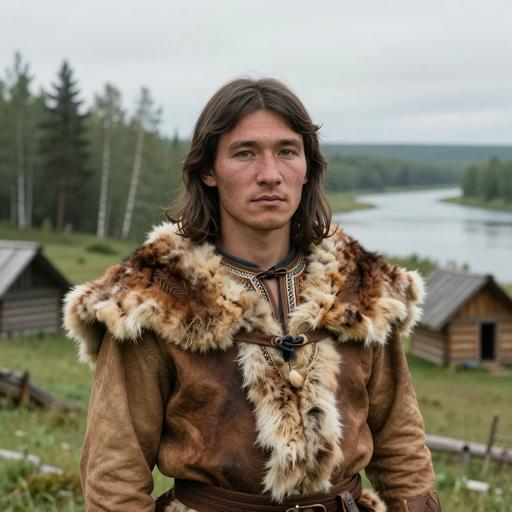
Reconstructed portrait of Irkutsk N individual, Russia
Russia Russia_Irkutsk_N 5718-5556 calBCE (6710±40 BP, OxA-33163) M C-Y10418 A8a
Reconstructed portrait of Siberian individual, Russia
Russia Russia_Irkutsk_N 4239 BCE Siberian M N-L708 A10
Reconstructed portrait of Siberian individual, Russia
Russia Russia_Irkutsk_N 4239 BCE Siberian M N-L708 A10

AI Assistant

AI Assistant by DNAGENICS

Unlock this feature
Ask questions about the Siberian Middle–Late Bronze Assemblage culture. Our AI assistant can explain genetic findings, historical context, archaeological evidence, and modern connections.
Sample AI Analysis

The Siberian Middle–Late Bronze Assemblage culture represents a fascinating chapter in human history...

Genetic analysis reveals connections to earlier populations while showing evidence of unique adaptations and cultural innovations. The ancient DNA samples provide insights into migration patterns, social structures, and the biological relationships between ancient populations.

This is a preview of the AI analysis. Unlock the full AI Assistant to explore detailed insights about:

  • Genetic composition and ancestry
  • Migration patterns and origins
  • Daily life and cultural practices
  • Modern genetic legacy
Use code for 30% off • Expires Nov 15