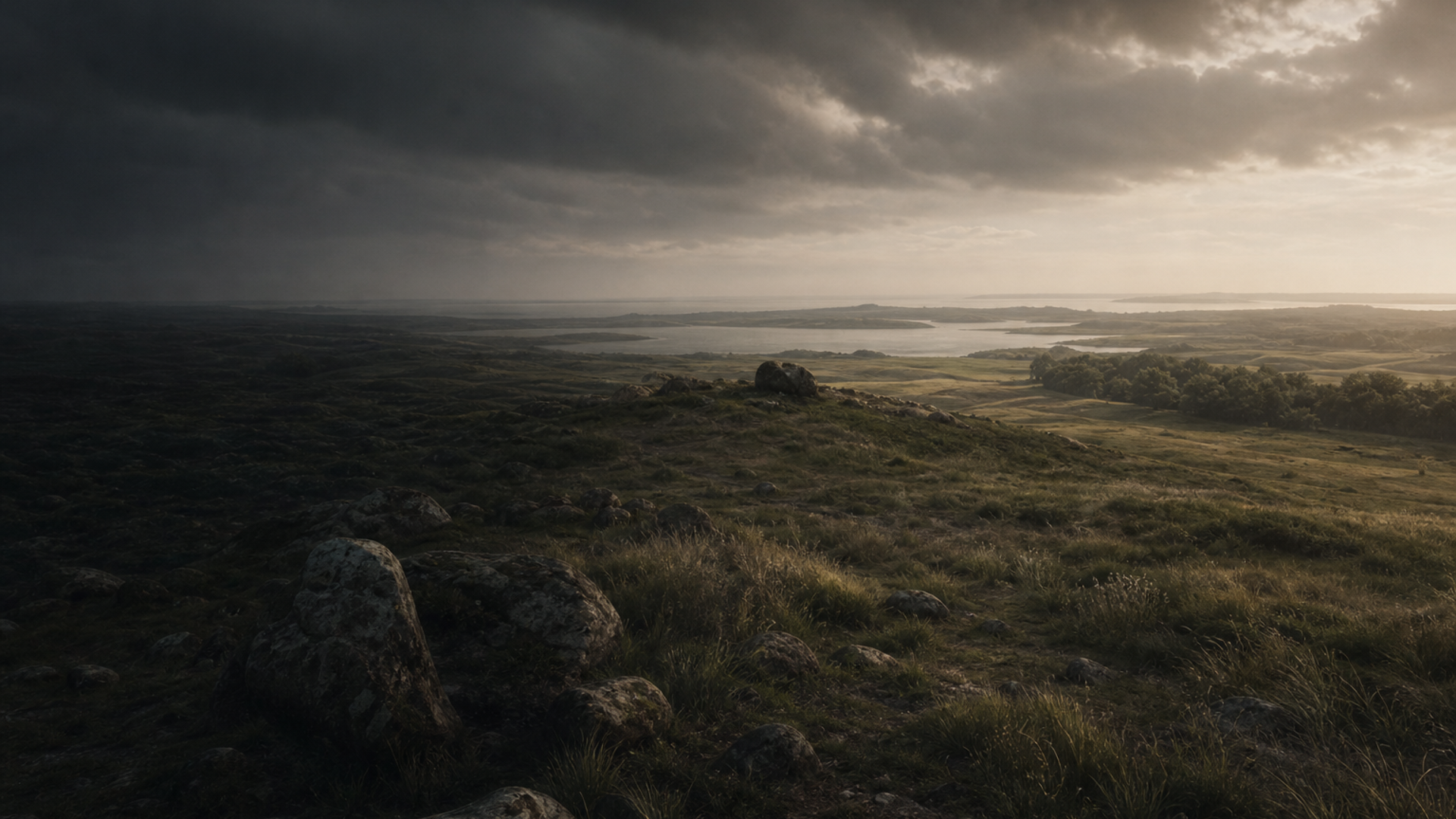
Daily life in Mid-Neolithic Denmark likely unfolded in villages clustered near arable patches and shorelines, where people tended domesticated cereals and animals while seasonally exploiting fish, shellfish, and wild game. Archaeobotanical remains from contemporaneous Danish contexts show cultivation of emmer and barley, and animal bones indicate cattle, sheep/goat, and pig husbandry alongside continued hunting.
Material culture paints a cinematic picture: painted or funnel-shaped pottery vessels used for cooking and storage; polished axes that cleared small woodlands for fields; and wooden posts and turf houses that anchored communities to their marshy coasts. Ritual behavior is visible in the landscape—wetland deposits and isolated burials emphasize a cosmology attentive to water and liminal zones. Mortuary variability—single graves, small mounds, and bog interments—suggests differing social roles, beliefs, or external contacts.
Archaeological interpretations must remain tentative: preservation varies by site and social signals can be subtle. When combined with genetic snapshots, however, these material traces help us imagine individuals who were both farmers and fishers, carrying new crops and domesticates while inheriting deep local knowledge of Scandinavia's coasts and bogs.