


Chapter I
The Story
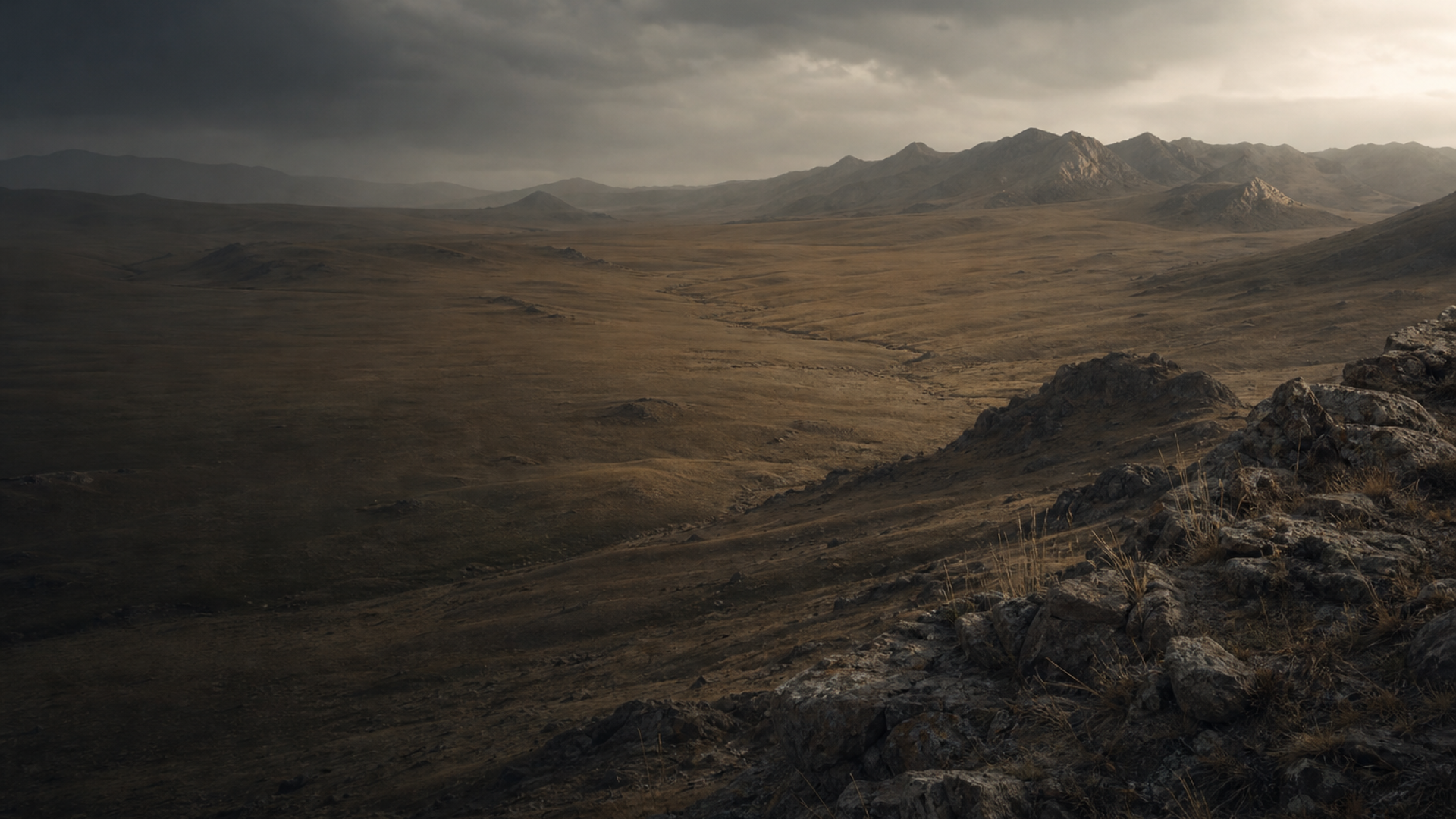
Understanding the Sukhbaatar Late Medieval Steppe culture
Archaeological burials from Sukhbaatar Province (1000–1500 CE) reveal a Late Medieval Mongolian population with mixed northern Eurasian and East Asian genetic signals. Nine samples from multiple cairns and ovoos link material culture, landscape, and DNA to dynamic steppe lifeways. Conclusions are preliminary.
Time Period
1000–1500 CE
Region
Mongolia (Sukhbaatar Province)
Common Y-DNA
C (3), O (2), N (1)
Common mtDNA
M (3), N (1), Z (1), D (1), G (1)





