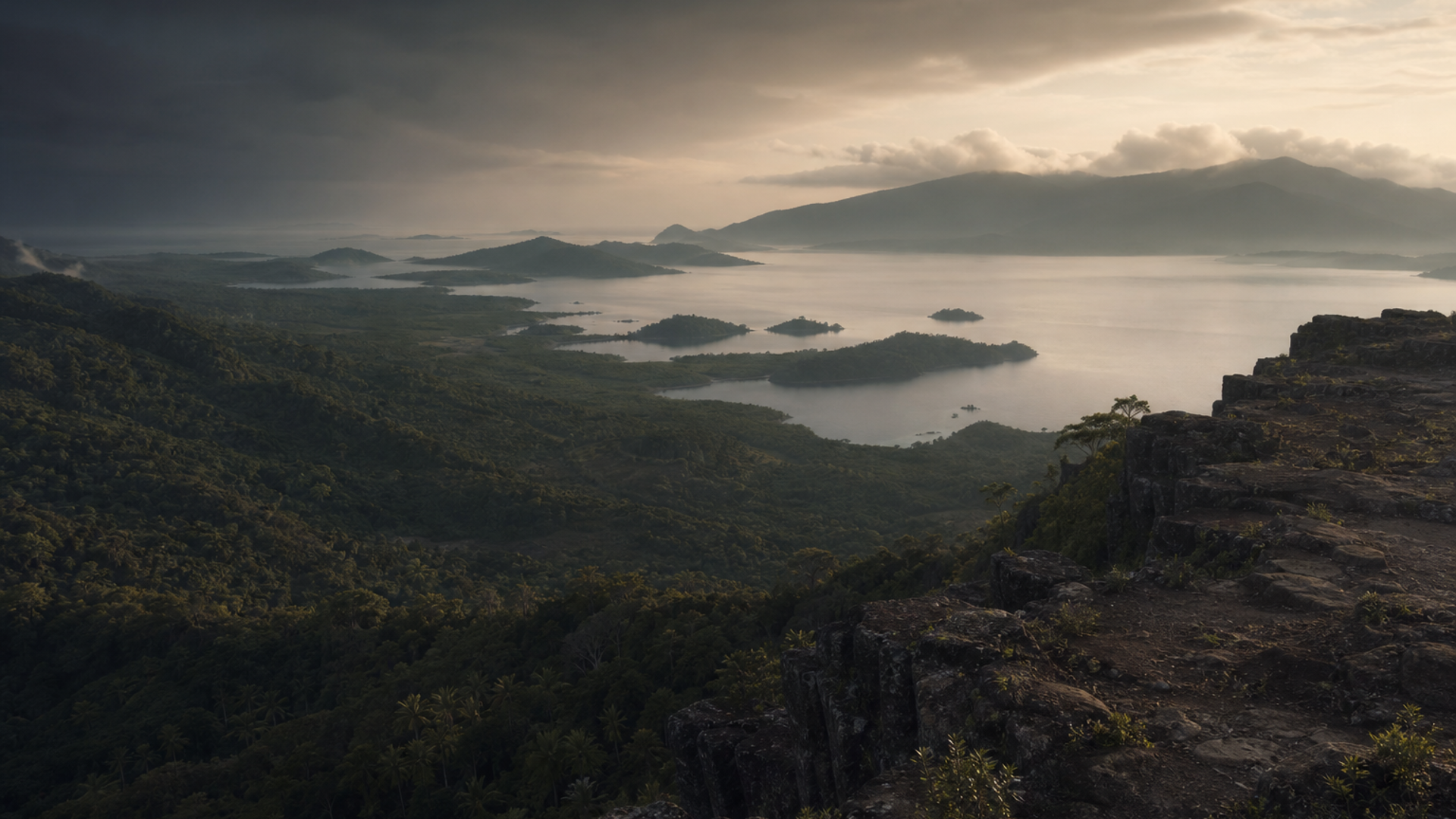
Life on Morotai would have been organized around the sea and the island's productive coastal ecologies. Archaeological patterns across Wallacea indicate mixed economies of fishing, shellfish gathering, and small-scale horticulture; durable goods in the region include pottery for storage and cooking, carved shell ornaments, and worked stone tools. At a cinematic remove, one can imagine canoes slipping from coral reefs at dawn, barter of valued items with passing vessels, and kinship networks that stretched between islands.
Archaeological deposits in nearby islands point to long-term habitation and frequent exchange, which likely translated into social structures adapted to maritime mobility: flexible residence, lineage ties mediated by seafaring, and ritual practices oriented to both sea and land. However, direct evidence from Tanjung Pinang itself remains limited. Organic materials rarely survive in tropical contexts, and the current genetic sample set (four individuals) does not illuminate intra-site social differentiation, age profiles, or occupational specialization. Future multidisciplinary work combining artefact analysis, isotopes for mobility and diet, and a larger aDNA dataset will be required to reconstruct daily life with confidence.