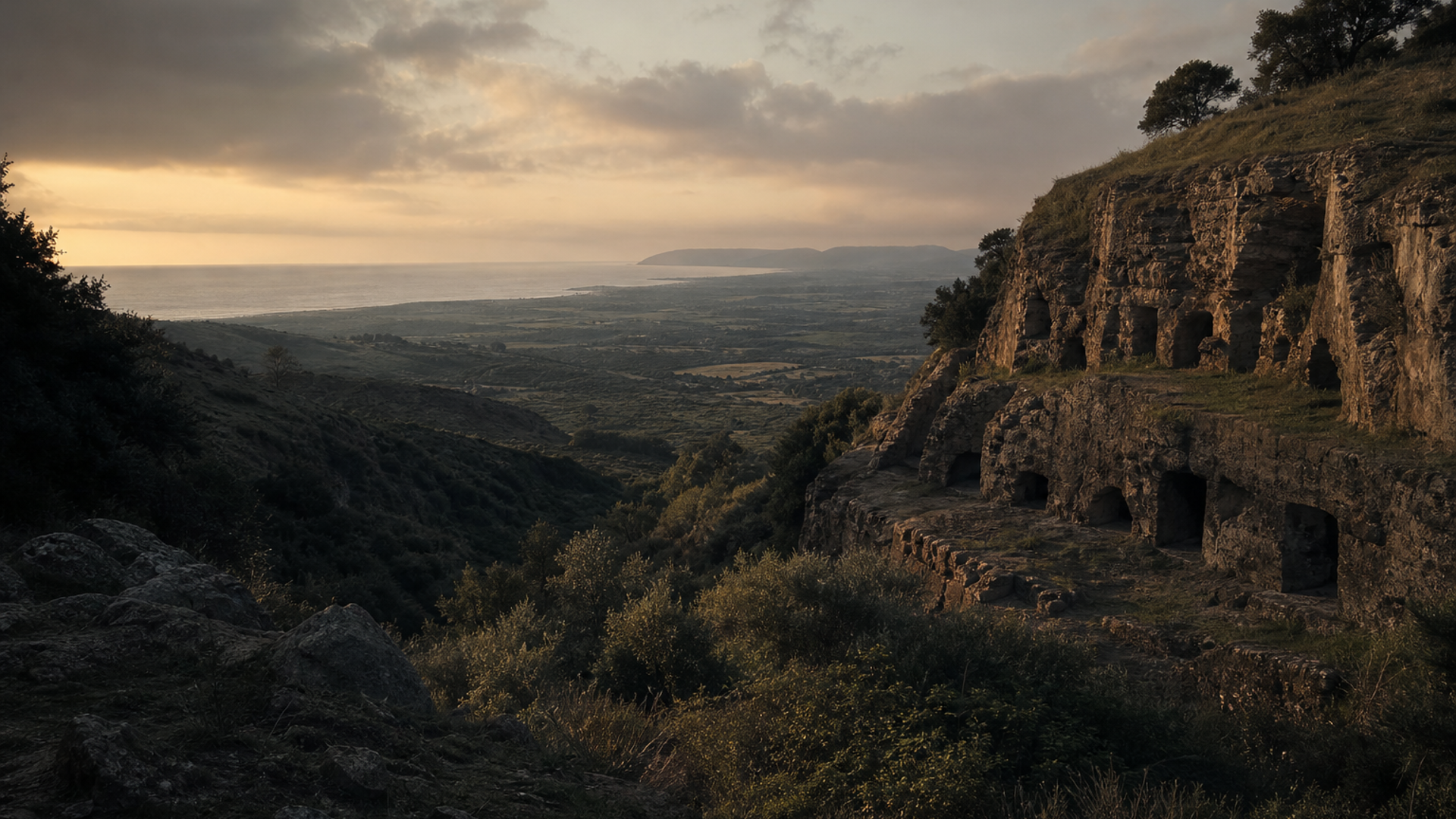
Seventeen individuals from Tarquinia (Viterbo, Lazio) dated to 400–1 BCE were analyzed for ancient DNA. The maternal haplogroup distribution in the available data includes H (5), T2e (3), U (2), HV (1), and H5 (1). These mitochondrial lineages are broadly consistent with long‑standing European maternal profiles found across Neolithic, Bronze Age, and Iron Age contexts in the Mediterranean and continental Europe.
This pattern suggests substantial local continuity of maternal ancestry in southern Etruria during the late Etruscan period, with haplogroups such as H and T2 commonly associated with post‑Neolithic European populations. The presence of U lineages is compatible with deeper Mesolithic or Bronze Age ancestry components that persist in Italy. Because Y‑chromosome haplogroups were not uniformly reported for these samples, conclusions about male‑mediated migration or patrilineal structure remain unresolved in this dataset.
Important caveats apply: the dataset covers a narrow time window (centuries immediately before and during the Roman expansion) and a single necropolis, so it reflects Late Etruscan demography rather than the full spectrum of Etruscan origins. Additionally, 17 individuals, while useful, are a modest sample size for making population‑scale inferences. Future analyses combining genome‑wide data, more sites across Etruria, and Y‑DNA will be necessary to untangle local continuity from episodic gene flow and to test competing models (local development vs. substantial external migration).