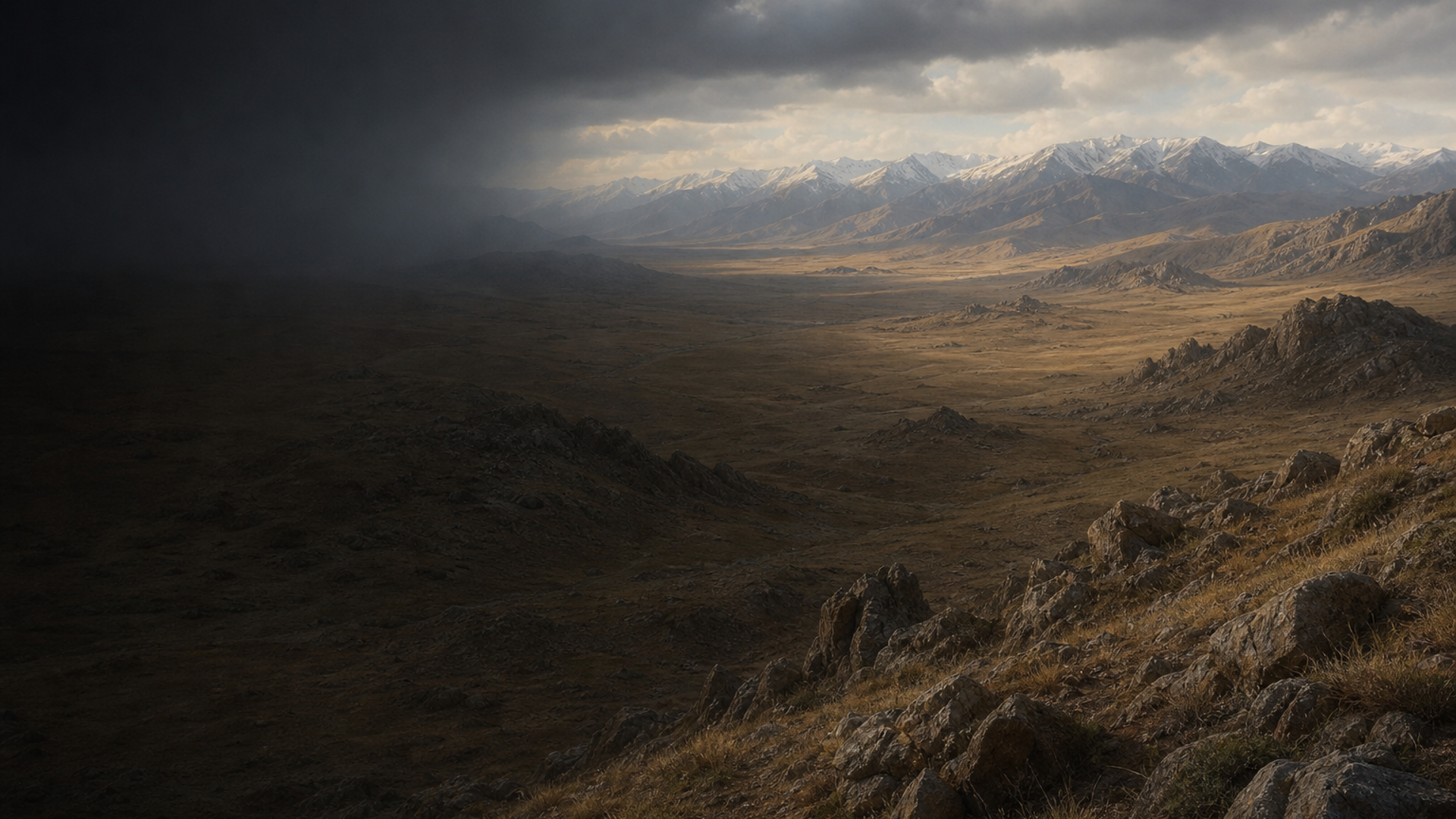
Daily existence for these Iron Age nomads was shaped by mobility, animals and landscape. Herds—likely sheep, goats, cattle and horses—provided meat, milk, hides and transport; archaeological traces such as corrals, hoofed faunal assemblages and portable gear (common across steppe sites) point to pastoral economies adapted to the Tian Shan's seasonal pastures.
Social life revolved around kin groups and small chieftaincies: burials sometimes display differentiation in grave goods and horse accompaniments, hinting at social ranking, but the evidence is uneven across the region. Craft activities—metalworking, textile production and leatherwork—were often portable or performed at temporary camps, permitting rapid movement without sacrificing technological complexity.
Mobility also structured interaction: steppe roads and river corridors facilitated exchange of goods, ideas and people. Conflict and alliance-building were part of the landscape; equestrian skills conferred economic and military advantages. However, because archaeological contexts in Tian Shan are patchy and the genetic dataset here is very small (three individuals), reconstructions of everyday life remain a mosaic built from fragmentary clues rather than a single, settled picture.