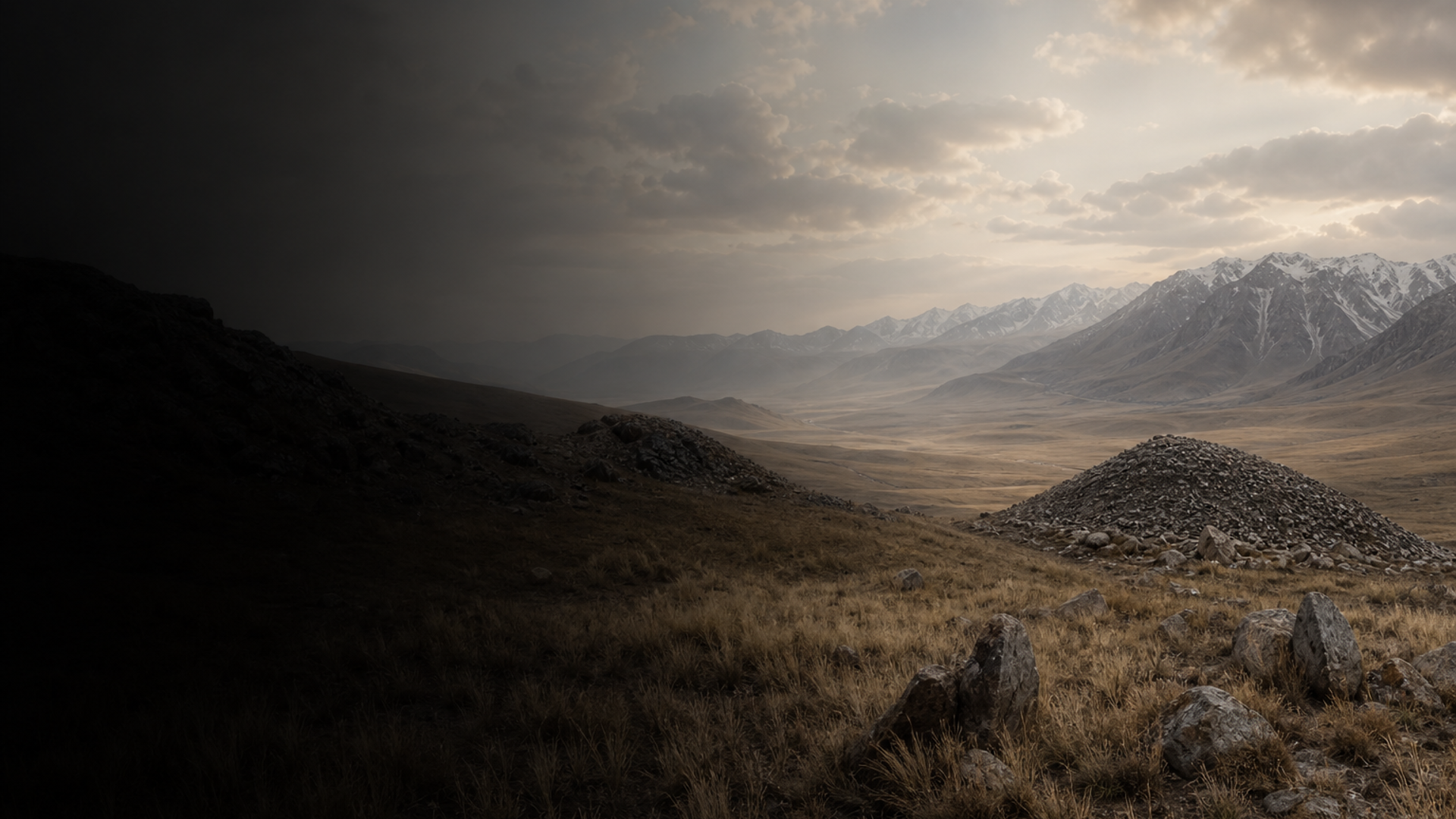
The lived world of the Tian Shan Saka would have been one of seasonal movement: herds driven between alpine pastures and lower valleys, temporary camps punctuating long-distance routes. Archaeological assemblages—bone tools, bits of textile, horse harness fittings, and occasional ceramics—evoke a society organized around mounted pastoralism, hunting, and exchange rather than dense agricultural settlement.
Grave architecture and funerary accoutrements offer social clues. Kurgan burials range from modest single interments to more elaborate mound burials with weapons and personal ornaments, suggesting differences in status, age, or role. The presence of both male and female burials with high-value items implies household-level wealth and gendered roles tied to pastoral economies and craft exchange.
Material traces of metalworking and the circulation of exotic goods reveal connections to wider networks: trade routes that crossed the steppe linked the Tian Shan margins to the Iranian Plateau, the Altai, and eventually to southern Siberia. Archaeological evidence indicates a flexible social order resilient to climatic and political fluctuations of the Iron Age steppe.
While graves provide dramatic snapshots, they capture only part of daily life; organic materials rarely preserve, and so reconstructions combine artifact patterns, landscape context, and the newly emerging genetic evidence to render a fuller picture.