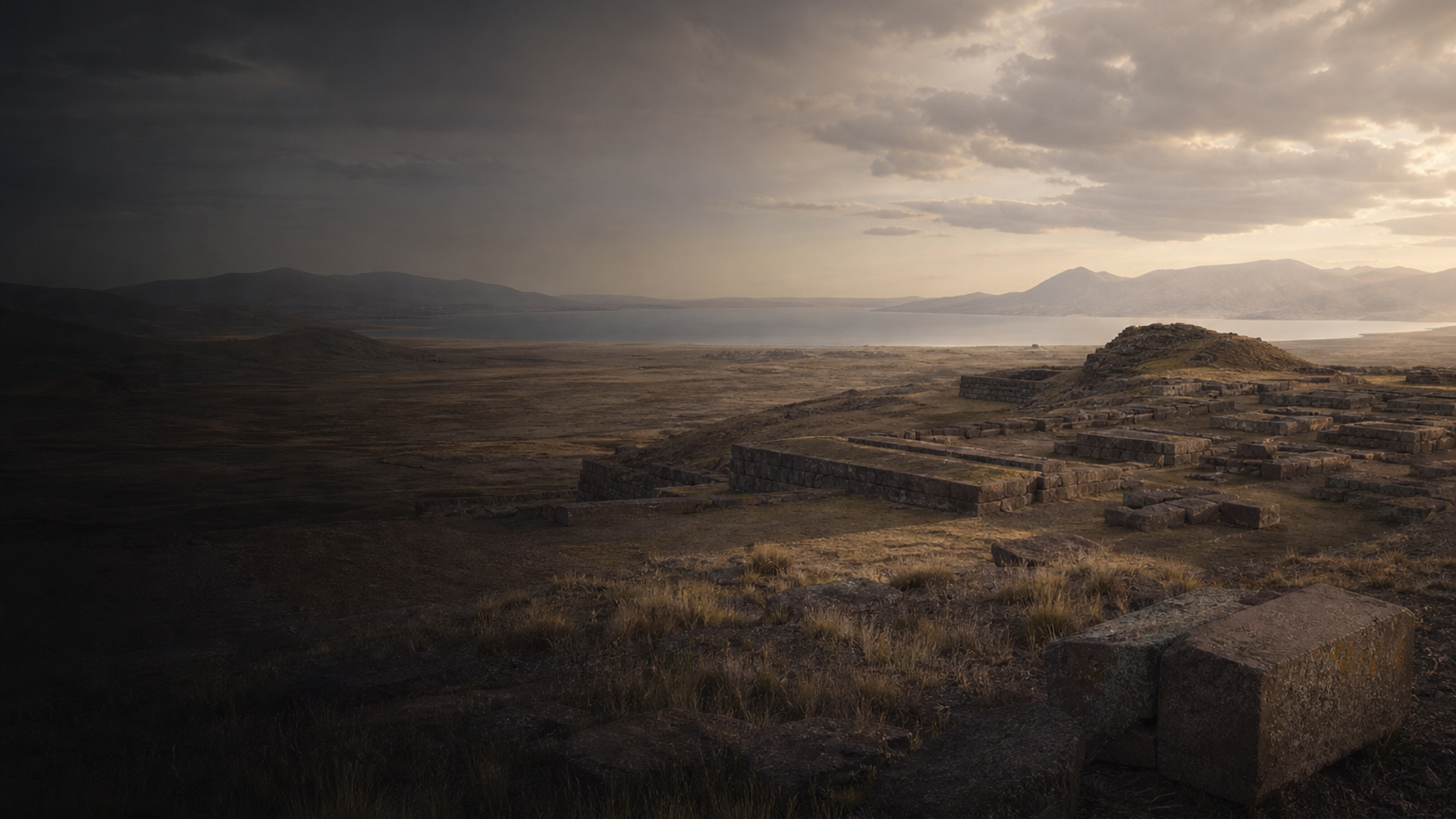
Ancient DNA from four individuals excavated at Tiwanaku (La Paz, Bolivia; dated between 650 and 1200 CE) yields a preliminary genetic portrait. Three of the four males carry Y-chromosome haplogroup Q, a lineage widely found among Indigenous peoples across the Americas and commonly interpreted as one of the major founding paternal clades of Native American populations. On the maternal side, three individuals carry mtDNA haplogroup B2 and one carries C1c—both are subclades frequently observed in Andean and broader South American ancient and modern populations.
These genetic signals are consistent with substantial local Andean ancestry in the Tiwanaku population sampled. However, with only four individuals, conclusions about population structure, migration, or social organization are provisional. Limited evidence suggests continuity with earlier Andean lineages, but the sample is too small to detect subtle admixture events, sex-biased mobility, or regional heterogeneity. Future sampling from peripheral Tiwanaku-influenced sites and contemporaneous communities will be necessary to test hypotheses about demographic expansion, interregional marriage networks, and genetic connections to present-day Aymara and Quechua-speaking groups. For now, ancient DNA complements the archaeological picture by anchoring Tiwanaku people within longstanding Andean genetic lineages while highlighting the need for broader datasets.