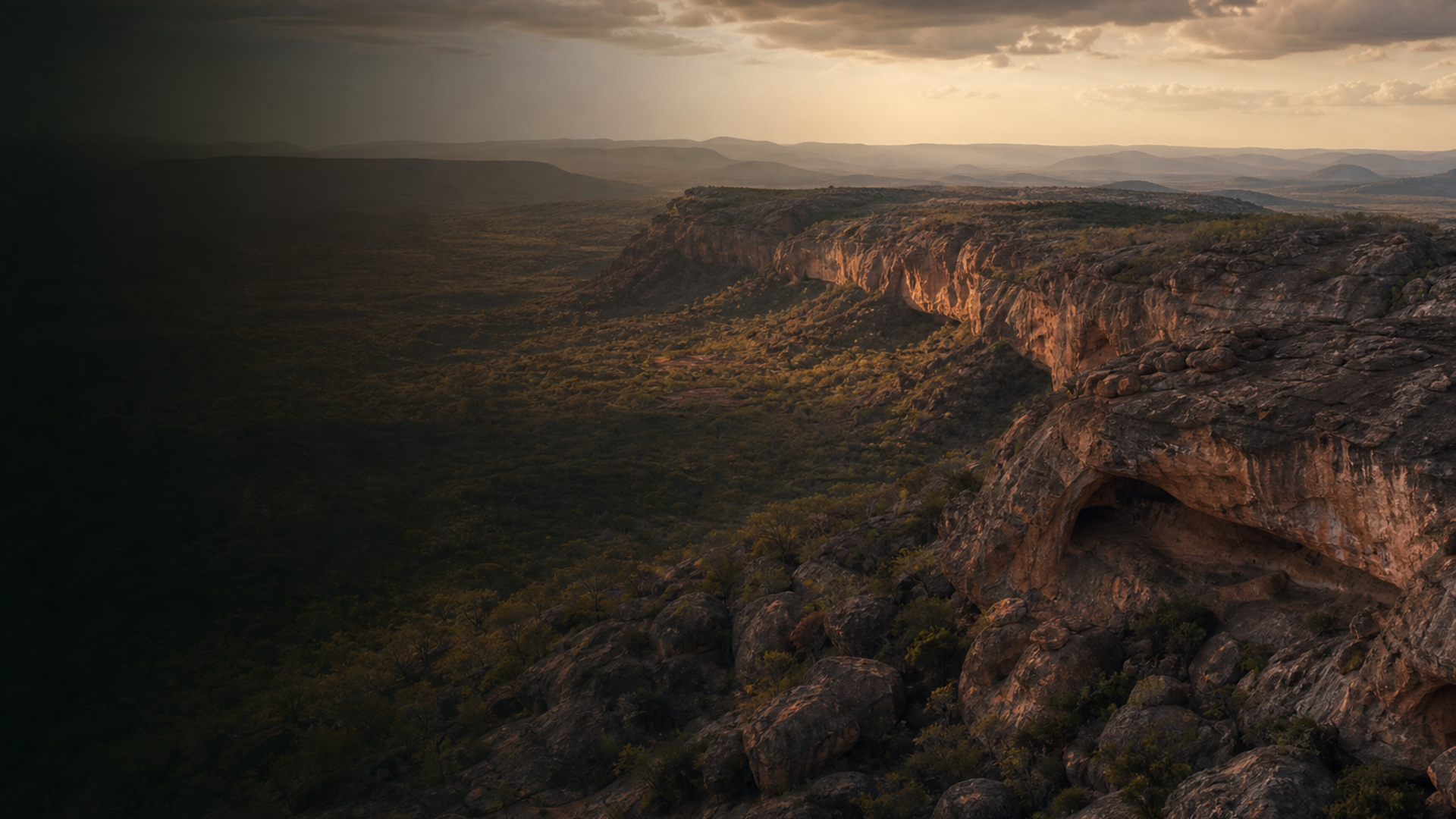
Archaeological patterns in northeastern Brazil suggest a lifeway tuned to seasonal cycles of the cerrado and gallery forests. Foragers likely moved across a landscape of rivers, rock shelters, and open plains, exploiting fish, small game, plant resources, and seasonal fruits. Hearths and stone-tool scatters at nearby sites imply short-term occupations punctuating larger movement networks.
Socially, small mobile bands are a reasonable model: flexible residency, kin-based networks, and exchange of raw materials and finished tools between valleys. Funerary evidence from Serra da Capivara and analogous regions shows varied mortuary treatments; however, the specific burial context for the Toca do Enoque individual is not fully published, so behavioral inferences remain provisional.
Material culture in the area often includes expedient flaked stone tools and simple groundstone implements where plant processing was important. Artistic expression in the region's rock art speaks to deep symbolic landscapes, but linking that directly to this genome is speculative. Overall, daily life was likely adaptive and intimate with the patchwork ecology of late Holocene Piauí.