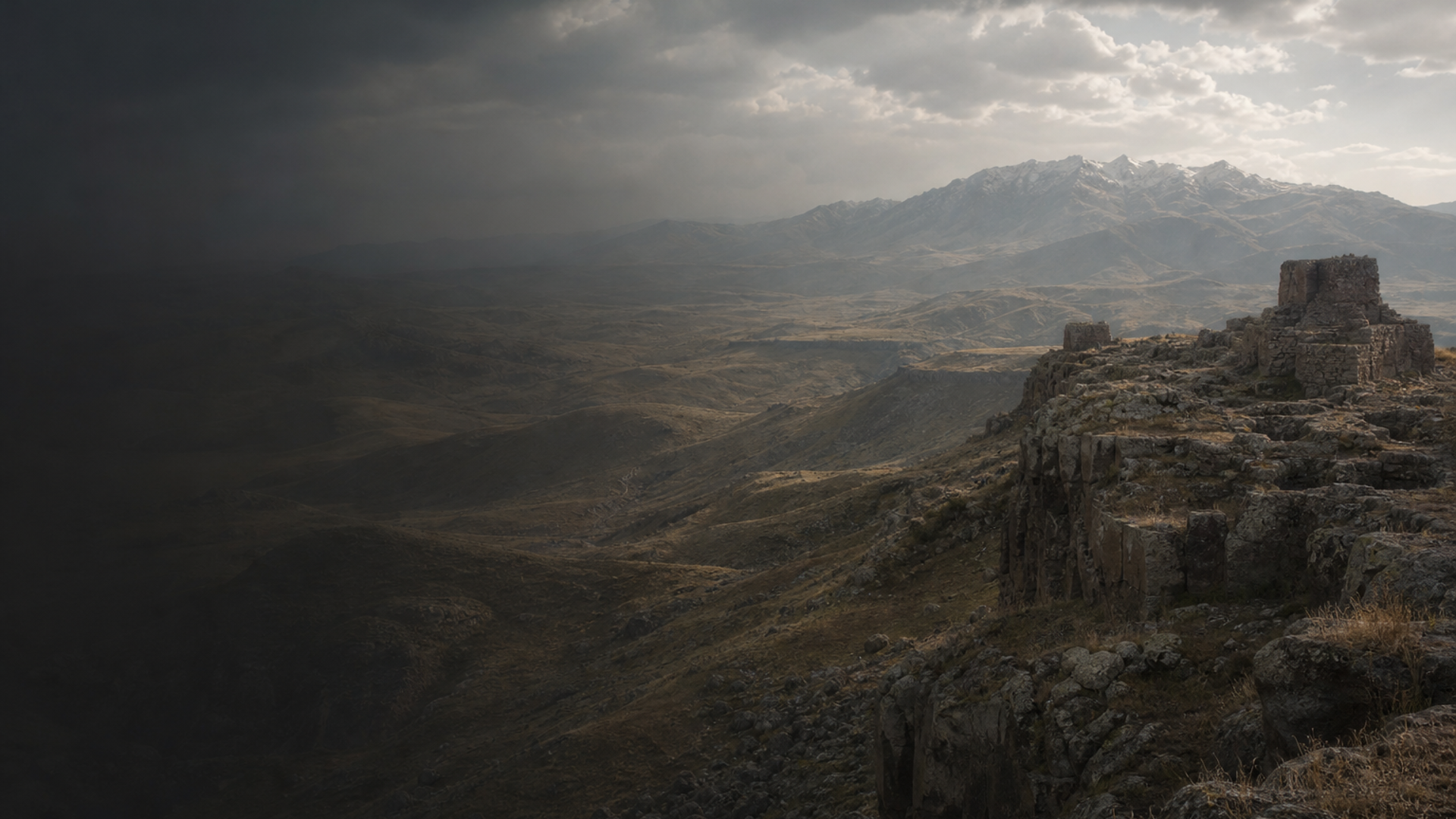
Archaeological data from the Armenian Highlands paints a vivid, if fragmentary, picture of everyday life during Antiquity. Terraced fields and irrigation traces across the high valleys point to mixed farming of cereals, pulses and orchard crops, while seasonal herd movements suggest transhumant pastoralism remained central to many households. Craft production—pottery, metalworking, and textile manufacture—thrived in village and town contexts; trade goods attest to links with Anatolia, the Levant, and the Iranian plateau.
Settlements ranged from fortified hilltops to riverine villages. Ceramics and architectural features recorded in regional surveys indicate cultural continuity with earlier Bronze and Iron Age traditions, overlaid with stylistic influences arriving with Hellenistic and Roman contacts. Burial practices in caves and cemeteries vary widely, reflecting social diversity: some interments include modest grave goods, others are simple and unadorned, pointing to different economic statuses or cultural practices within the same landscape.
Limited written records—inscriptions and classical accounts—provide occasional glimpses of political life and elite display, but the majority of inhabitants lived as farmers, herders, and artisans. The Vardbakh individuals likely belonged to such local communities; their material world would have been defined by seasonal cycles, local craft economies, and the steady flow of ideas along ancient routes.