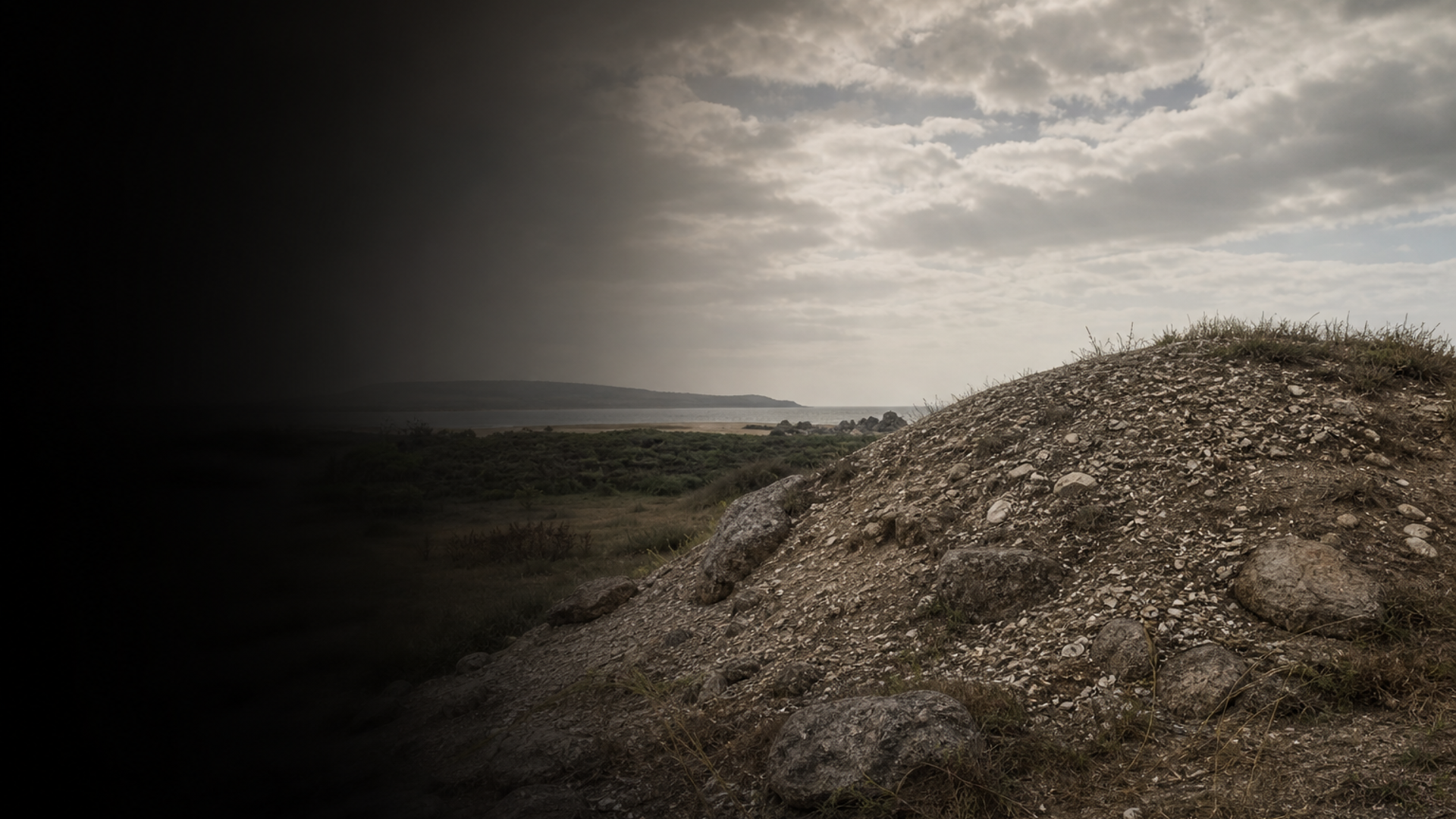
Archaeological traces from sambaqui contexts evoke a coastal world shaped by tide and harvest — a rhythm of shells, fish, and gatherings. At sites like Vau, midden stratigraphy preserves repeated meals: thick deposits of bivalves, fish vertebrae, crustacean remains, and tool‑making debris. Archaeological data indicates specialized exploitation of nearshore and estuarine environments, with evidence for fishing technologies (bone and stone points), shellfish processing hearths, and the curation of tools made from local raw materials.
The architecture of daily life is written in mound form. Shell accumulations could function as durable living platforms, burial terraces, or communal markers visible across the lagoonal landscape. Burials within sambaquis suggest ritual investment in place: individuals interred with varying treatments hint at social distinctions, though Vau’s single genetic sample prevents firm conclusions about status or kinship patterns at this site specifically. Artefactual variability at better‑studied sambaquis points to trade and contact: exotic stones and non‑local shells at some sites imply exchange networks along the coast.
Cinematic visions of daily life — children sorting shells in slanting light, fish smoke curling above hearths, communities tending shared middens — are supported by stratified deposits, but many nuances remain uncertain at Vau. The archaeological record indicates probable sedentism or repeated seasonal aggregation, yet sample limitations require cautious interpretation.