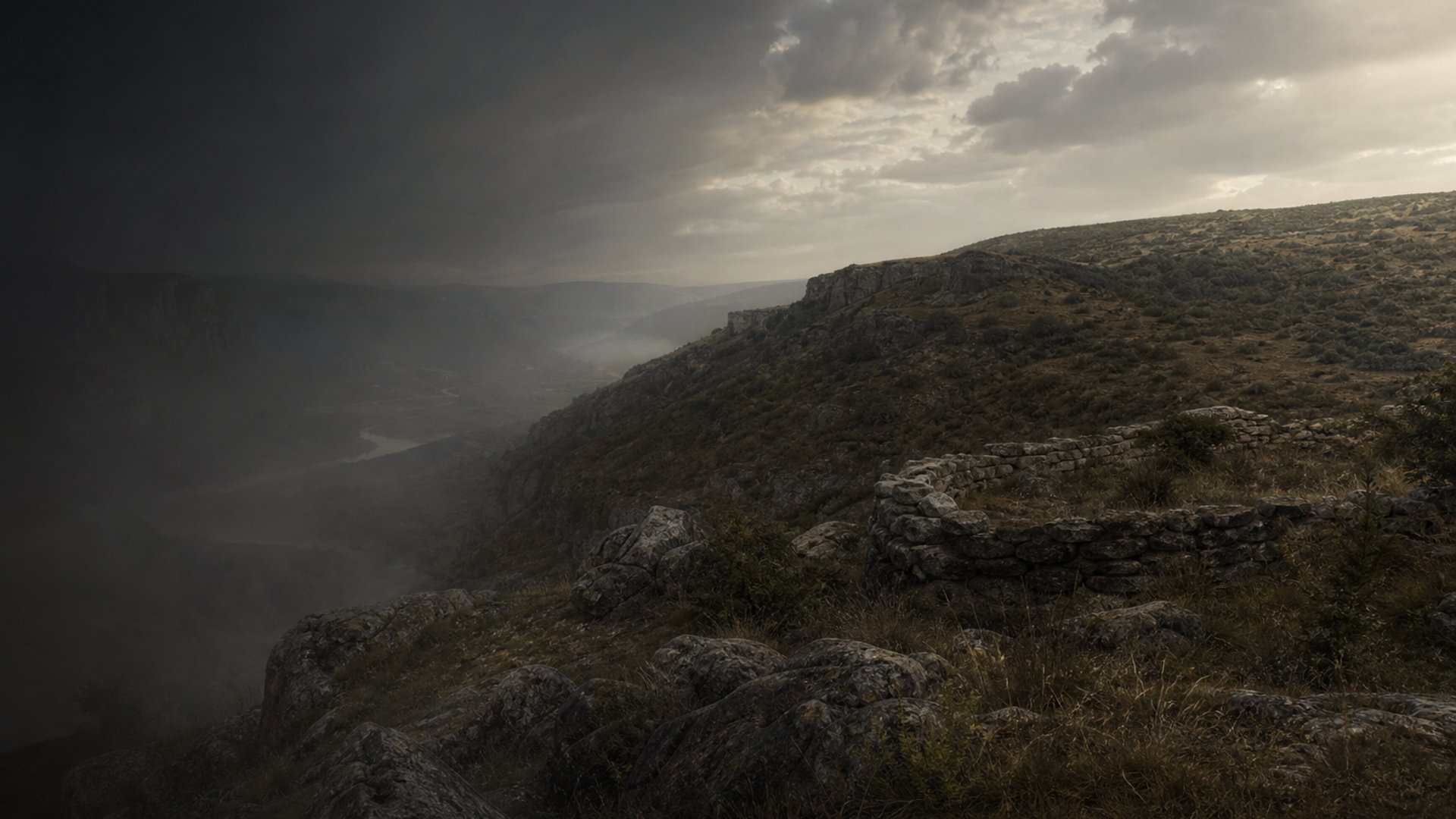
Life across Iron Age communities near Veliko Tarnovo would have been textured and dynamic: villages cultivated cereals and pulses on river floodplains while hillforts controlled trade routes and seasonal pastures. Zooarchaeological remains from regional sites indicate mixed farming with sheep, cattle, and pigs; horse remains and bridling equipment appear in elite contexts, signaling the importance of mobility and mounted status in some groups.
Craft specialization is visible in local assemblages — smithing slag, molds, and finished iron tools — suggesting that ironworking reshaped economies and social hierarchies. Pottery styles show regional variation but also imported wares from the Greek world, implying active exchange. Burial evidence near Veliko Tarnovo and in the Dzhulyunitsa area presents a spectrum: flat graves, tumuli, and occasionally richly furnished elite burials. These differences indicate varying social roles, possibly reflecting emerging chieftaincies or warrior elites.
Ethnic labels are precarious in archaeology; material culture signals networks of interaction rather than tidy population boxes. Still, the daily rhythms preserved in dwellings, tools, and tombs speak to communities adapting to new technologies, shifting alliances, and long-distance connections across the Balkans.