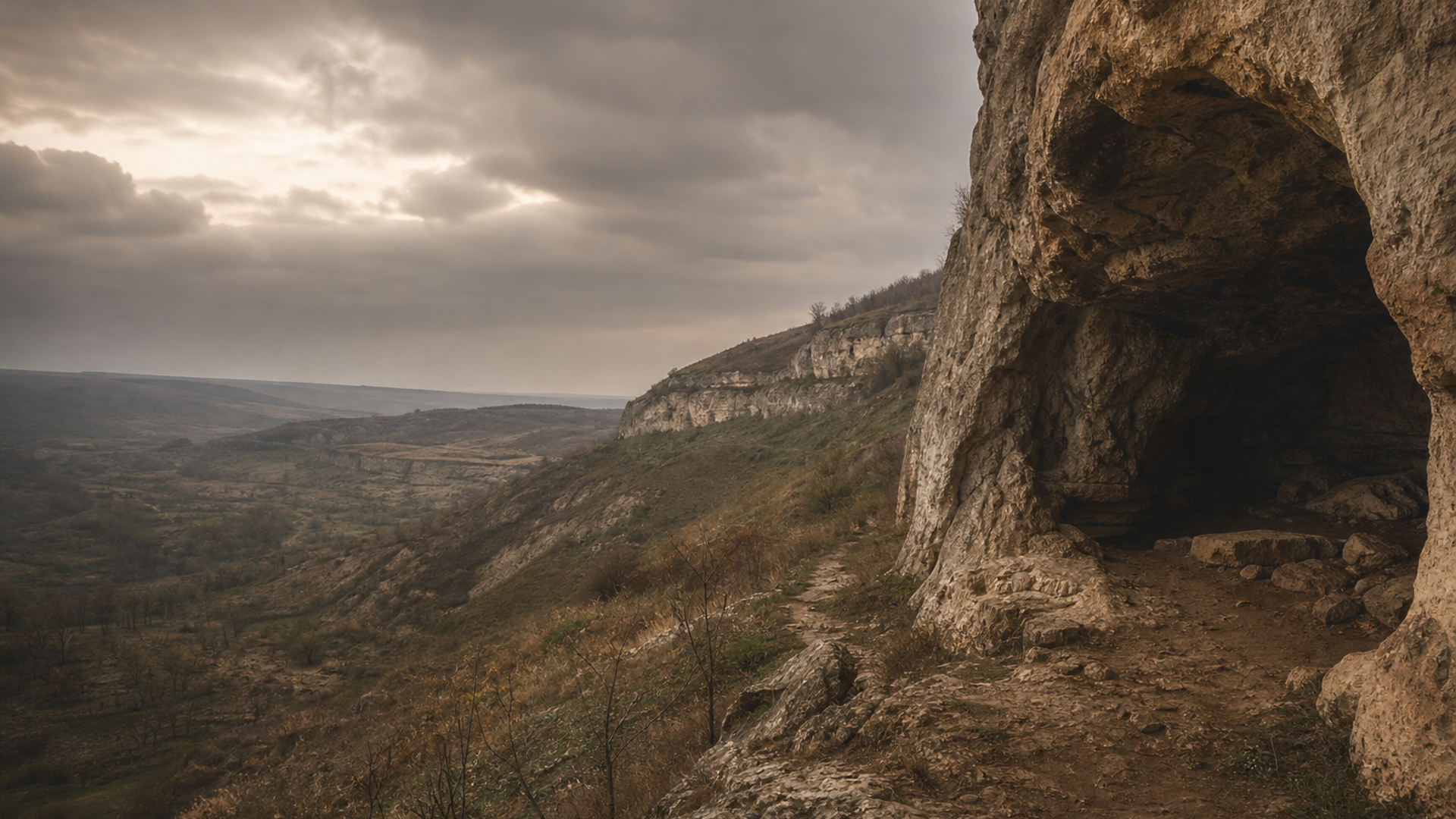
Beneath the cinematic sweep of Trypillia long-houses and heat-hazed fields, daily life was anchored in mixed farming, craft specialization and communal rituals. Osteological traces from Verteba individuals indicate activities typical of Neolithic farming communities: robust bone chemistry consistent with terrestrial diets, healed fractures and dental wear that reflect hard, practical lives. The cave context — often dark, enclosed and symbolically charged — hints that some members were chosen for special mortuary treatment rather than representing a cross-section of the whole population.
Material finds at the cave fringes and on-site sherds mirror Trypillia ceramic styles, including painted and incised motifs that articulate group identity. In life these communities practiced household-level production of pottery and textiles, and exchange networks brought exotic raw materials and stylistic influences into the forest-steppe corridor. Social organization likely emphasized extended kin groups with communal rituals: the selective deposition of remains in Verteba may reflect lineage-based memorials, seasonally timed ceremonies, or crisis events.
Archaeological interpretation must remain cautious: skeletal and contextual evidence can suggest roles and stresses but cannot reconstruct belief systems in detail. When paired with genetic data, however, these traces become more than bones and sherds — they become threads linking ancestry, mobility and social practice.