
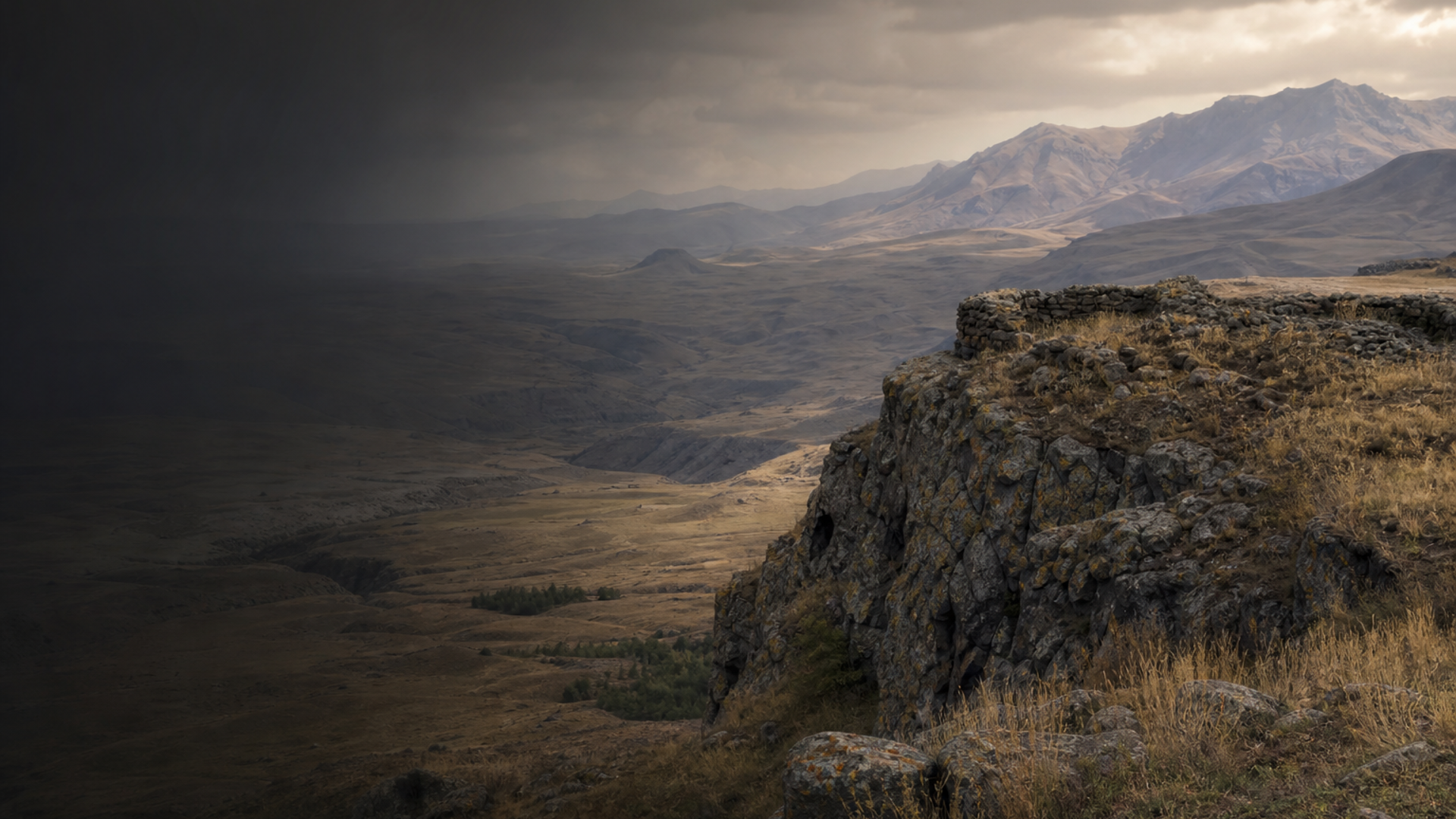
The Early Bronze Age in the Armenian highlands (c. 3350–2354 BCE) unfolds across upland settlements and cemeteries such as Kalavan, Talin (including the Talin cemetery) and the Karnut Archaeological Complex. Archaeological data indicates growing social complexity: clustered settlements, specialized craft production, and increasingly elaborate burial rites. Metallurgy and long-distance exchange are visible in material assemblages, signaling the region's role as a conduit between Anatolia, the Caucasus, and the Iranian plateau.
Genetic evidence from five sampled individuals offers a preliminary glimpse into the people who inhabited this landscape. Limited evidence suggests a mixture of deeply local maternal lineages (notably haplogroup U) alongside haplogroups found elsewhere in West Asia and Europe. A single recorded Y-DNA lineage classified broadly as R appears in the dataset, but subclade resolution and representativeness remain uncertain. Archaeological contexts combined with these nascent genetic signals paint a picture of locally rooted communities with connections across neighboring regions. Because the sample count is small, interpretations about migration, population replacement, or continuity must remain cautious and provisional.





