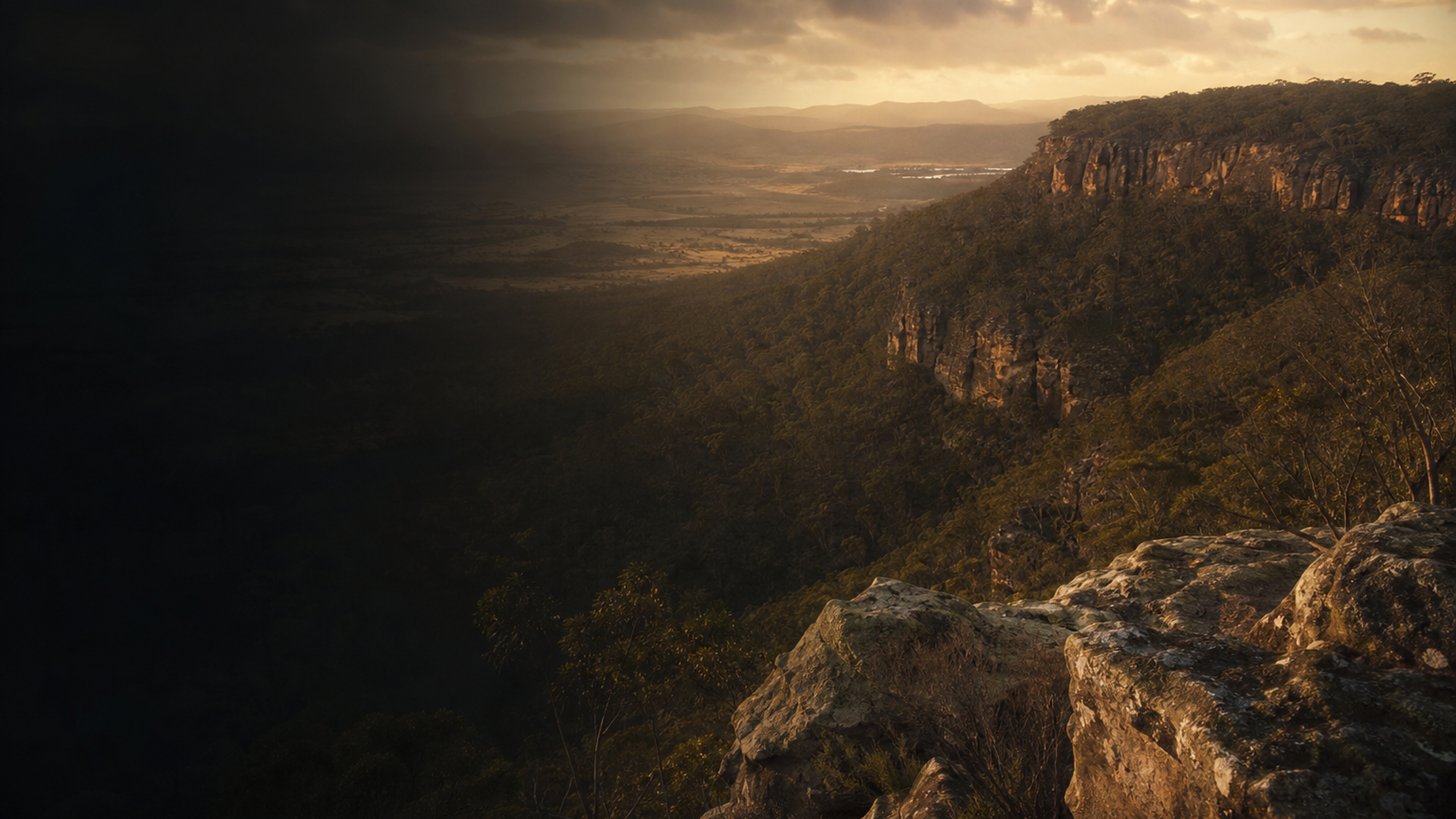
Archaeological traces convey a world of movement and intimate knowledge. People of this NSW landscape practiced sophisticated foraging, drawing on fish runs, waterfowl, crustaceans, and seasonally available plants. Stone tool scatters and heat‑altered rock indicate repeated camp sites and tool maintenance; shell middens preserve the rhythm of coastal and riverine feasting. In the Willandra Lakes Region, dried lakebeds and lunettes framed resources and meeting places, while forested riverbanks at Koondrook‑Perricoota offered shelter and hunting grounds.
Social life would have been organized around kin networks and songlines—landscape histories encoded in place names, stories, and ceremony. Archaeological features such as hearths, buried deposits, and artifact styles point to repeated patterns of use across generations. Exchange and mobility are visible in non‑local stone types and long‑distance narratives recorded ethnographically for New South Wales.
Material culture was adaptable: lightweight tools for canoe travel and spearing, nets woven for fish traps, and pigments for body painting and ceremony. These lifeways reflected finely tuned ecological knowledge rather than isolation: gatherings at lake edges or floodplains were moments of social renewal, resource sharing, and intergroup connection.