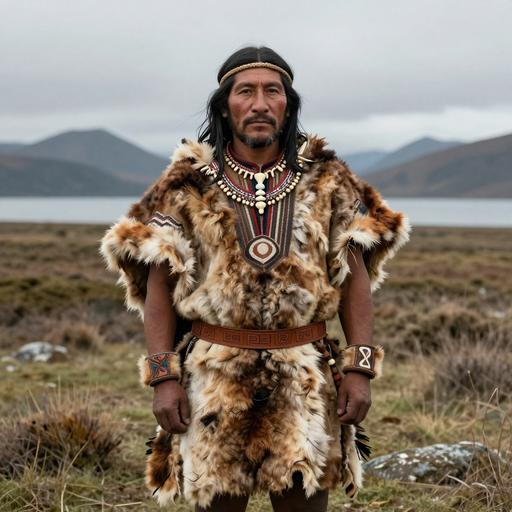
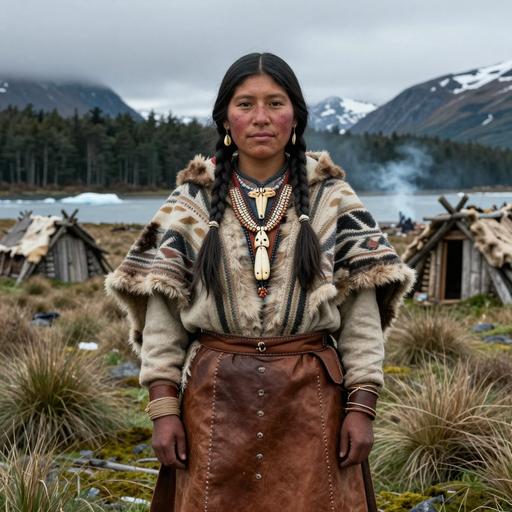
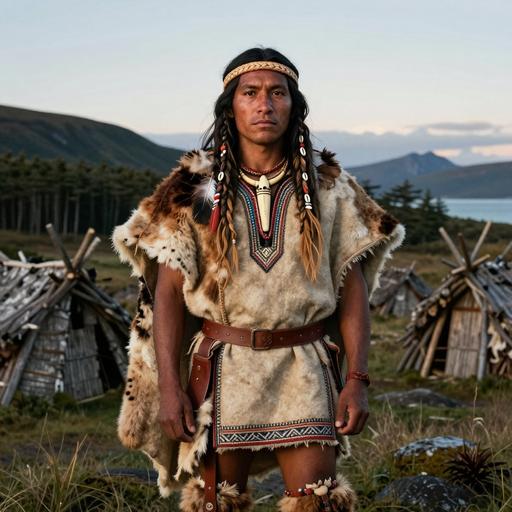
Three DNA samples from northern Tierra del Fuego, dated to roughly 1800–1900 CE, yield a concise but important genetic snapshot. Paternal lineage: one individual carried Y-haplogroup Q, a lineage widely associated with Native American paternal ancestry across the Americas. Maternal lineages: two individuals carried mtDNA haplogroup D and one carried C1b; both D and C1b are well-established founding Native American maternal lineages that appear in ancient and modern populations across South America.
These genetic signatures are consistent with a broader pattern of Indigenous American ancestry in southern South America and align with expectations from archaeological continuity in the region. However, the sample count is very small (n = 3). Limited samples mean that frequency estimates and claims of population structure or continuity must be considered preliminary. Ancient DNA from nearby groups (Yámana, Kawésqar) and additional Selknam samples would be needed to test hypotheses about regional gene flow, sex-biased admixture, and demographic change during the colonial era.
Where archaeology records social disruption and demographic collapse in the late 19th century, genetics can help test whether surviving lineages persisted locally or whether later admixture reshaped ancestry profiles. At present, the data point to Indigenous continuity but cannot resolve finer-scale population history.