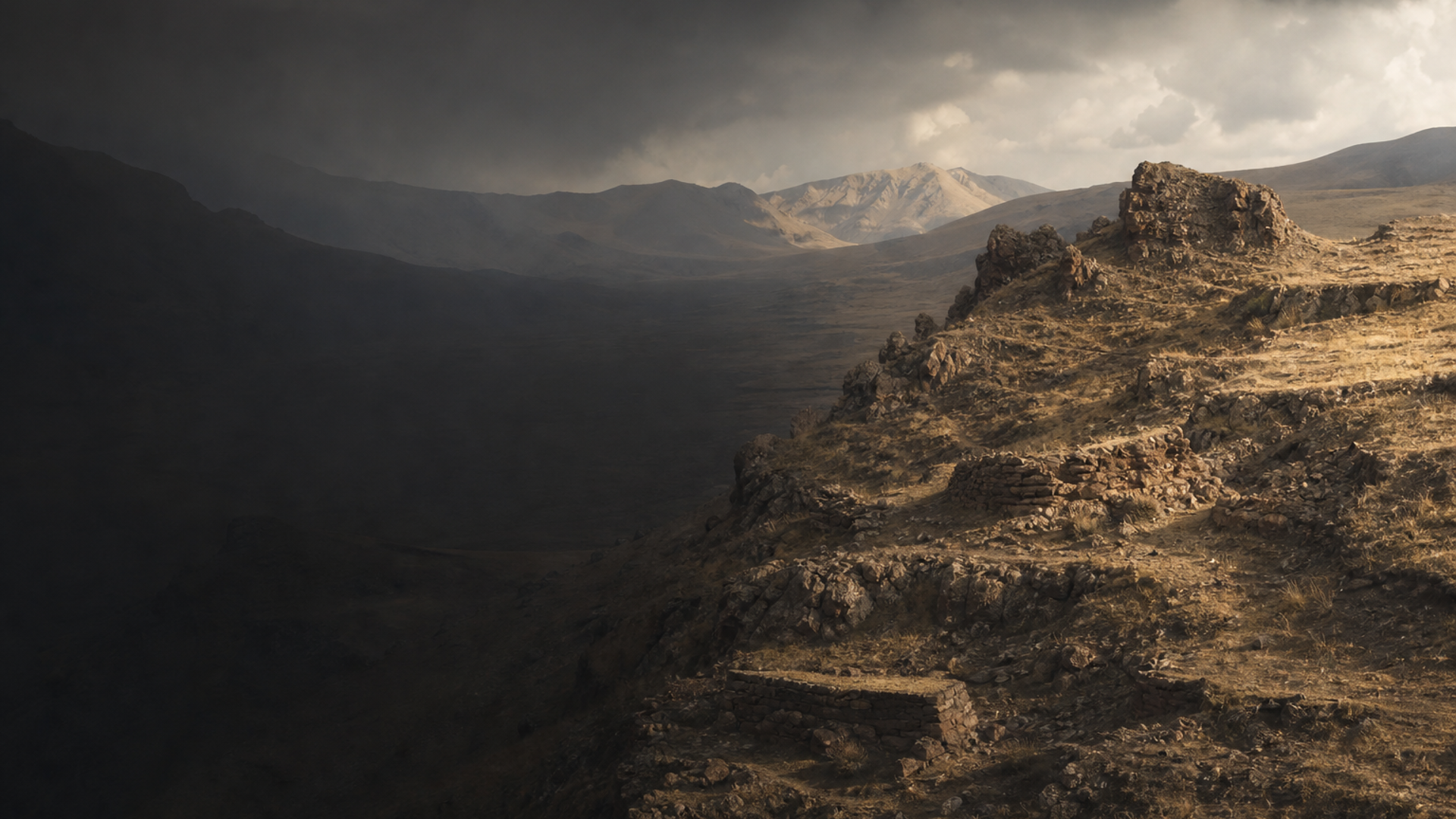
The streets of Teishebaini, as revealed by archaeology, would have been bounded by storehouses, workshops, and temples — places where artisans hammered bronze, potters shaped clay, and officials recorded transactions. Funerary deposits in the necropolis include personal ornaments, ceramics, and weaponry, suggesting that burial practices encoded status, craft identity, and possibly military roles. Osteological indicators show individuals who experienced both hard labor and occasional trauma, consistent with a frontier polity balancing agriculture, craft production, and defense.
Archaeobotanical and zooarchaeological remains indicate an economy based on irrigated agriculture and herding, augmented by trade networks that moved metal, precious stones, and pottery across the highlands. Inscriptions and administrative compilation imply centralized control over labor and resources; yet domestic artifacts attest to lived, local traditions within households. Together, these lines of evidence portray an urban society where state power and everyday life intertwined in stone, metal, and bone.