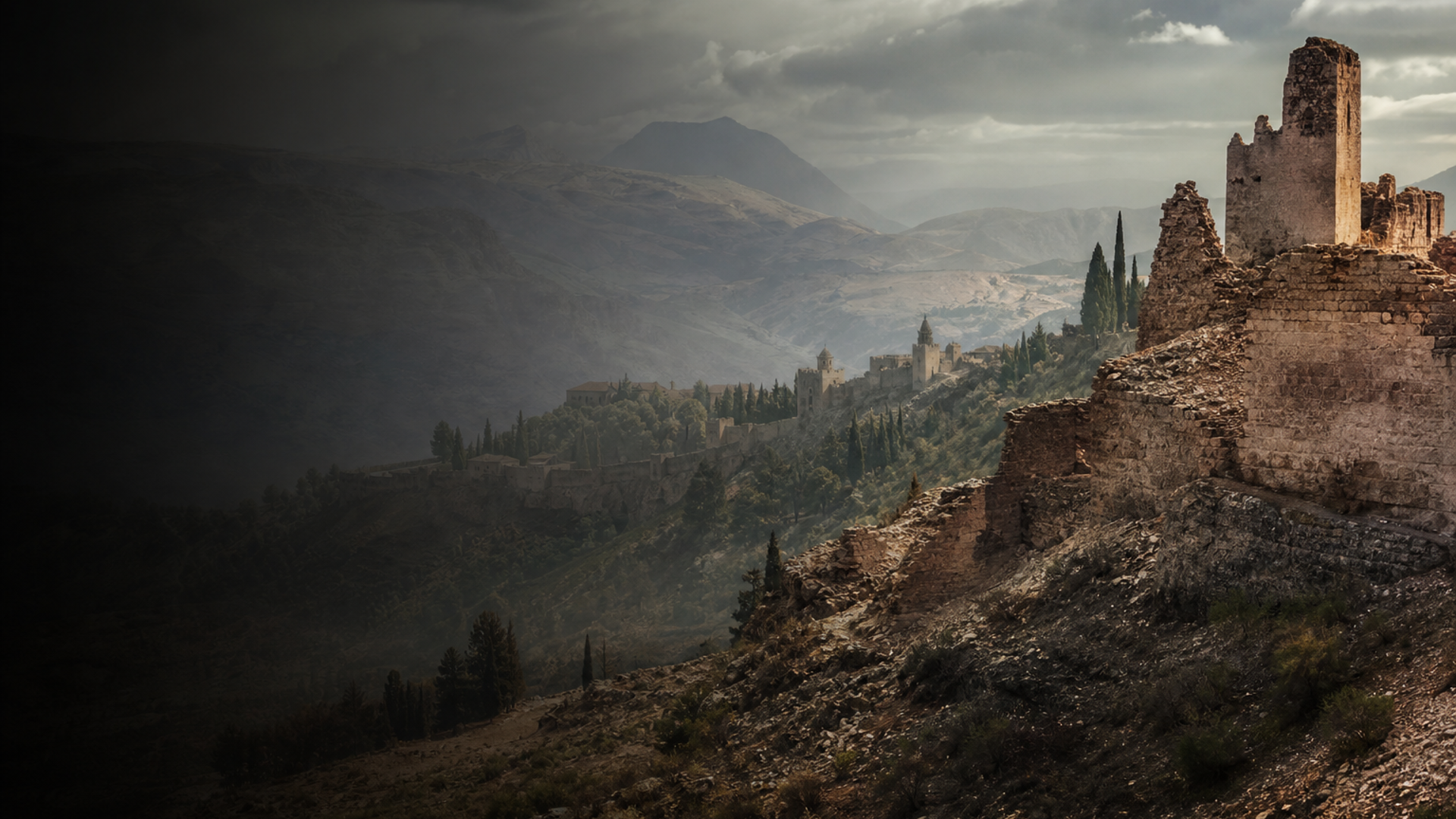
Archaeological traces from urban Granada and rural Huéscar suggest a society anchored in agriculture, craft production, and regional trade. Olive oil, cereals, and small‑scale pastoralism dominated the countryside, while towns acted as nodes for artisanal production and market exchange. Caves such as Cueva Romero may preserve funerary contexts or episodic habitation that provide intimate glimpses of diet, health, and ritual practice.
Household life would have been lived in sunlit patios and narrow lanes, with pottery, metalwork and textiles marking social identity. Ceramic types and building techniques show both continuity with pre‑Islamic Iberian traditions and innovations adopted from broader Mediterranean networks. The material record preserves wear patterns on tools, animal bones with butchery marks, and domestic refuse — quiet, forensic evidence of daily rhythms.
Archaeobotanical and zooarchaeological data from comparable Islamic sites in Andalusia indicate diversified diets and mixed agricultural strategies adapted to mountain valleys and river plains. These practical realities shaped social relations: extended family households, apprenticeship in craft workshops, and frequent mobility tied to trade or seasonal labor. The three Zira samples likely belonged to communities living within these intertwined economic and social systems, though direct associations between specific graves and detailed cultural roles remain uncertain.