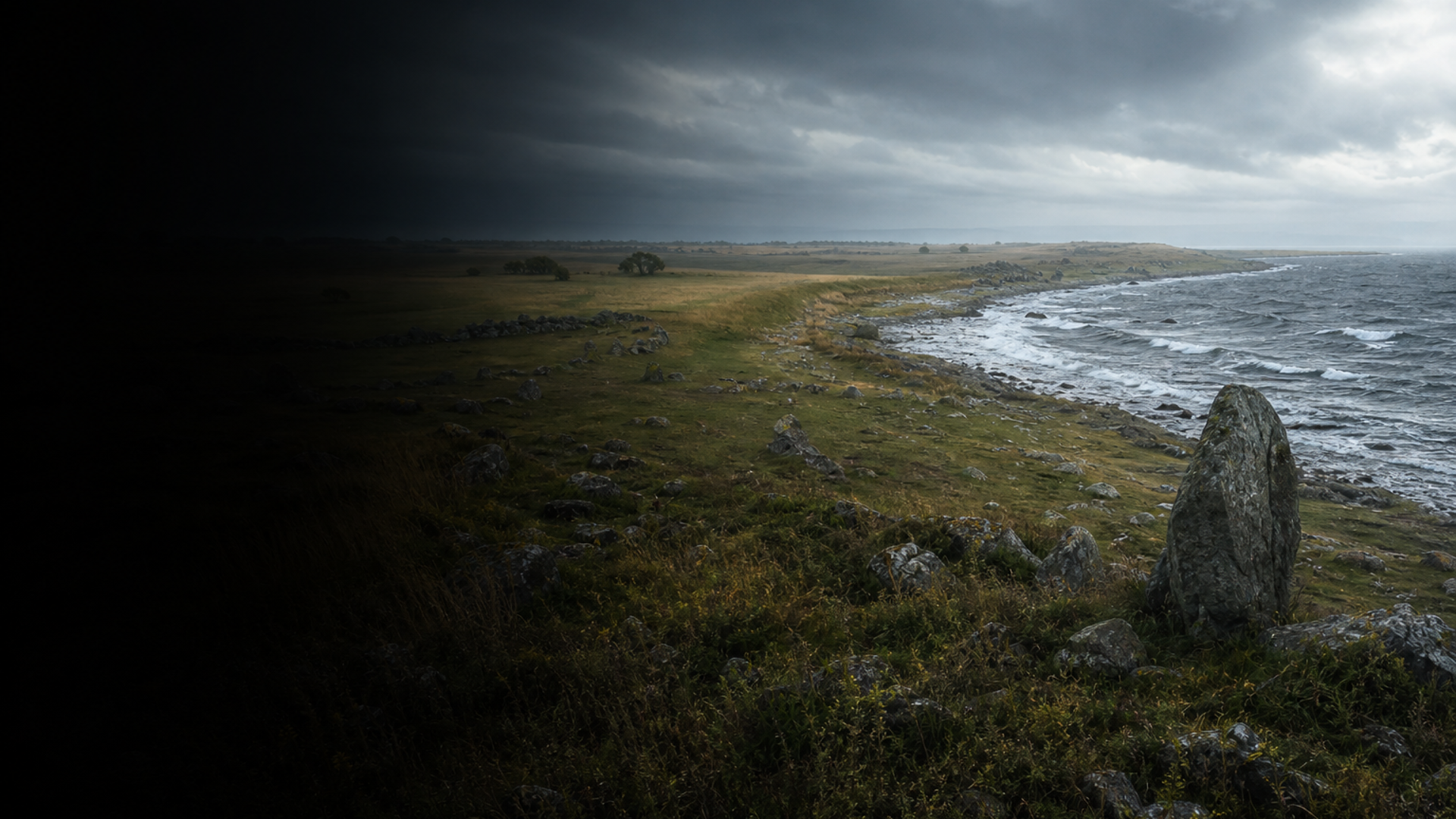
Daily existence in Sweden_IA would have been shaped by the rhythms of sea and season. Archaeological remains — house foundations, storage pits, hearths, animal bone assemblages, and occasional textile fragments — indicate mixed farming, dairying, and fishing as economic mainstays. Coastal sites like Öland exploited rich marine resources and served as waypoints for small-scale coastal trade.
Social life likely centered on extended households and kin groups. Burial practices in the Iron Age of southern Sweden varied between cremation and inhumation and sometimes included grave goods that signal social differentiation: brooches, weapons, and dress accessories that reflect identity and connections. Oxie 7, located in southern Scania (Skåne), lies in a landscape known for fertile soils and early communication routes; artifacts from that region suggest connections across the Baltic and into continental Europe.
Craft specialization — smithing, woodworking, and textile production — would have coexisted with itinerant tradespeople and seasonal mobility. Archaeological evidence indicates long-term use of certain coastal promontories and field systems, suggesting stability punctuated by episodic contacts with wider networks. However, our view of everyday life is partial: preservation biases and the very small genetic sample mean many social details remain invisible.