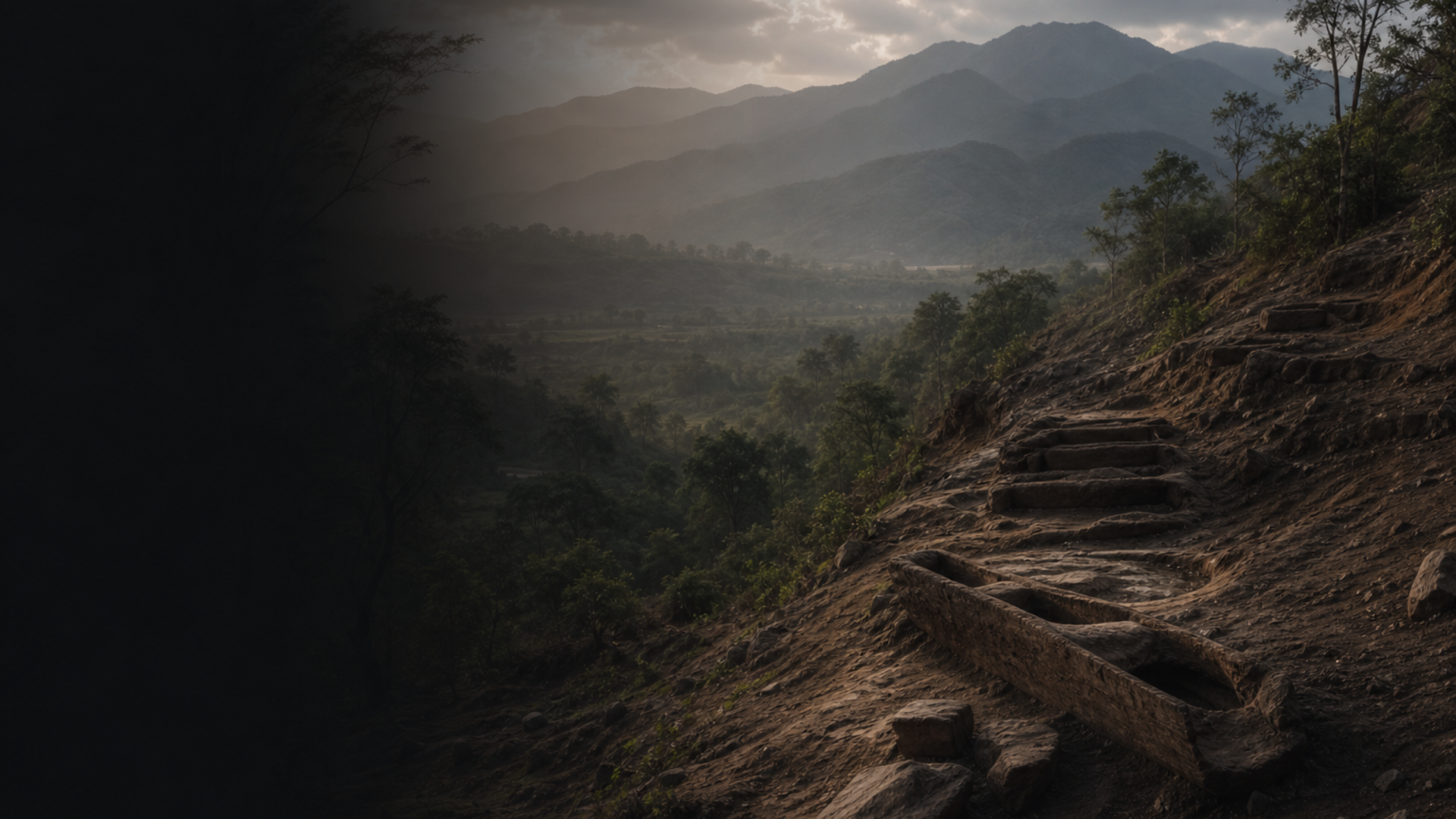
The funerary choices at Yappa Nhae offer a cinematic window into social life: hollowed trunks that once cradled bodies speak of woodworking skill, collective labor, and ritual performance. Grave assemblages—often modest combinations of iron blades, simple pottery, and personal ornaments—suggest households with access to metal tools but not the high-status extravagance documented at lowland polities.
Archaeobotanical and settlement surveys in the wider Mae Hong Son region indicate mixed subsistence, likely combining wet-rice paddies in valley bottoms with swidden and foraging on steeper slopes. The funerary record hints at kin-based burial clusters rather than large centralized cemeteries, consistent with dispersed upland communities. Age and sex distributions in the cemetery (where preservation permits) show adults and children interred together, implying community-wide investment in mortuary rites.
Mobility seems to have been moderate: material parallels point to regular contact along inland routes rather than long-distance maritime trade. Craft specialization—woodworking for coffins and iron-smithing for tools—appears locally available, though some imported ceramics and ornaments signal participation in broader exchange networks. Archaeological data are patchy, however; reconstruction of everyday rhythms rests on a combination of burial evidence, regional surveys, and comparative ethnographic analogies.