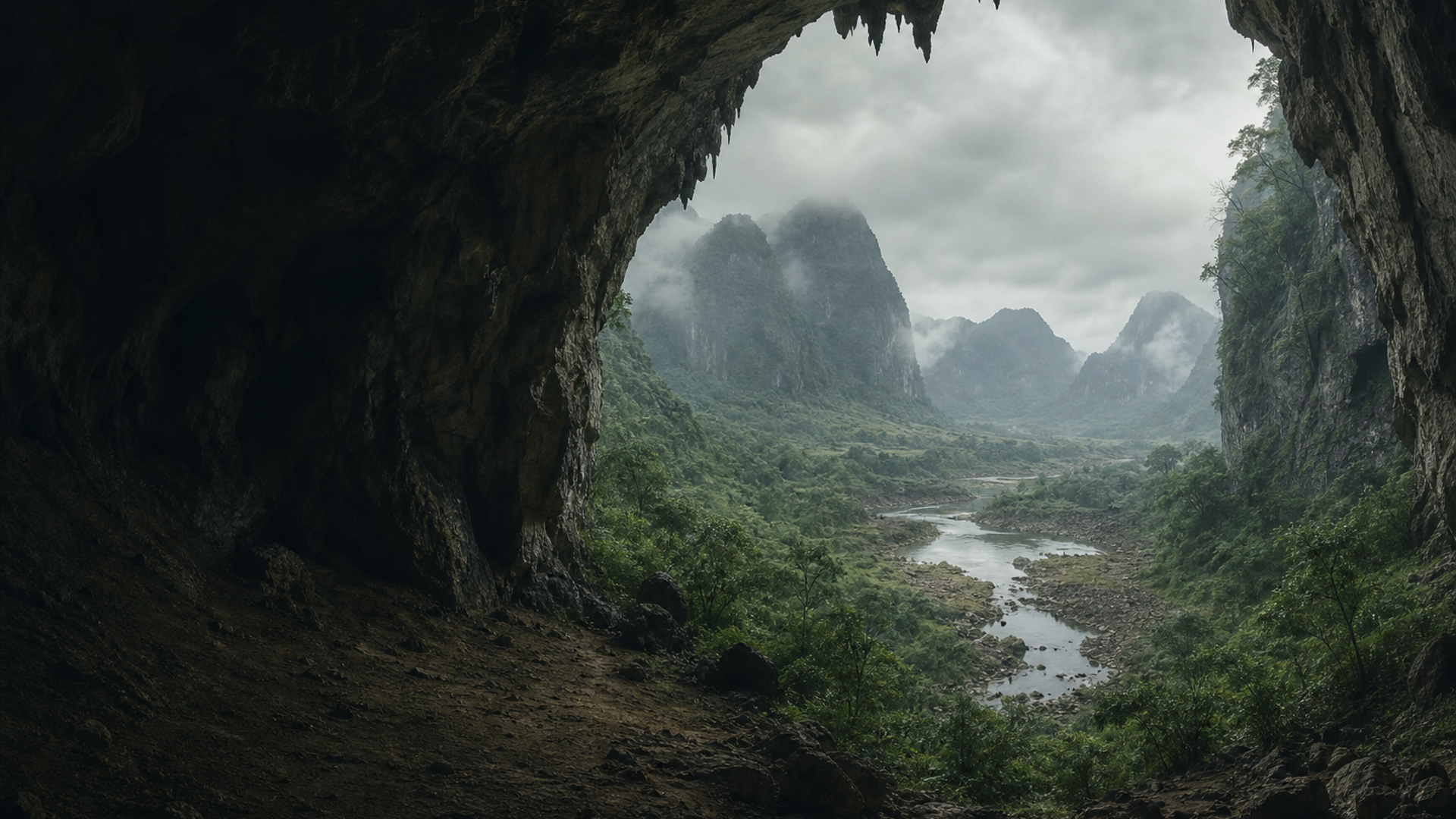
Archaeological context around Yiyang Cave and comparable Guangxi sites evokes a lived landscape of river valleys, terraces, and wooded karst slopes. People in this period typically practiced wet-rice agriculture in lowlands and gardened or foraged in uplands; material culture often reflects a blend of local craft traditions and items exchanged along inland routes linking the south to river corridors and, indirectly, to the north.
Burial practices in southern China were diverse and often localized; cave burials and rock-shelter interments are known in Guangxi, though specific details for the Yiyang individual should be treated with care if contextual recording was limited. Archaeological data indicates regional crafts such as pottery production tailored to local needs, and exchange goods—stones, metal objects, lacquered items—appear in larger assemblages across southern sites, signaling participation in wider economic networks even if political control shifted in the north.
Social life likely combined village-based kin groups with ritual practices rooted in local belief systems, while the era’s political instability could prompt migration, marriage alliances, and shifts in material culture. For this single sample, osteological and isotopic analyses (if available) would more directly inform diet and mobility; absent broad comparative data, reconstructions of daily life remain provisional and framed by analogies from better-documented nearby sites.