Menu
Store
Blog
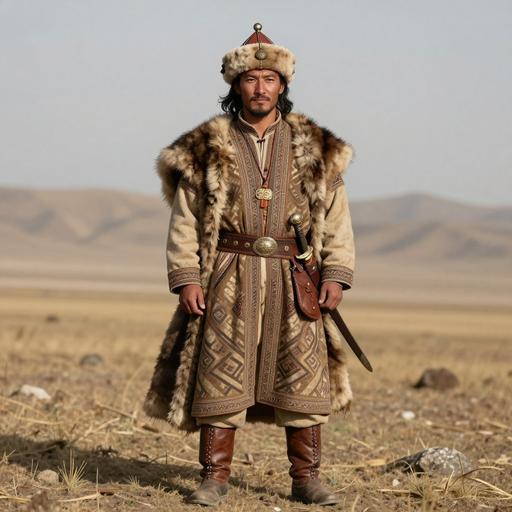
Portrait reconstruction of DA117
Ancient Individual

A man buried in Kyrgyzstan in the Modern era

DA117
1670 CE - 1950 CE
Male
Modern Nomad, Kyrgyzstan
Kyrgyzstan
Scroll to begin
Chapter I

Identity

The biological and cultural markers that define this ancient individual

Sample ID

DA117

Date Range

1670 CE - 1950 CE

Biological Sex

Male

mtDNA Haplogroup

H6a1b

Y-DNA Haplogroup

G-FT382474

Cultural Period

Modern Nomad, Kyrgyzstan

Chapter II

Place

Where this individual was discovered

Country Kyrgyzstan
Locality Tian Shan. Central Steppe
Coordinates 42.0744, 76.9667
Chapter III

Time

When this individual lived in the broader context of human history

DA117 1670 CE - 1950 CE
Chapter IV

Story

The narrative of this ancient life

The \Modern Nomad" culture in Kyrgyzstan represents a fascinating blend of traditional Kyrgyz nomadic heritage with contemporary lifestyles and adaptations to the modern world. This unique cultural identity is deeply rooted in the rich history and traditions of the Kyrgyz people, while also embracing the globalization and technological advancements of the 21st century. Here's an extensive and detailed description of this era:

Historical Background

Kyrgyzstan, located in Central Asia, has a long history of nomadic culture dating back several millennia. Traditionally, the Kyrgyz people were nomads, moving through the mountainous terrain of the Tien Shan mountains with their herds. This nomadic way of life was not just an economic activity but a central part of their cultural and social identity. The Soviet era brought about forced settlement and collectivization, drastically changing the nomadic lifestyle. However, even after the dissolution of the Soviet Union in 1991, elements of nomadic traditions have persisted and adapted in the post-Soviet era.

Cultural Practices

Yurts and Housing

In modern-day Kyrgyzstan, yurts remain a powerful symbol of cultural heritage. While many Kyrgyz have settled in urban or semi-urban areas, the yurt continues to be a symbol of their nomadic past and is used during the summer months in jailoo (summer pastures). These portable, circular dwellings made from felt and wood are more than just shelters; they are meticulously decorated with traditional patterns and serve as venues for social gatherings and celebrations.

Festivals and Celebrations

The Kyrgyz people celebrate several festivals that highlight their nomadic legacy. The World Nomad Games, initiated in 2014, have become a showcase of traditional sports, crafts, and music from various nomadic cultures, with Kyrgyzstan being a prominent participant. This international event, celebrated with much fanfare, includes horseback competitions, eagle hunting, and wrestling, offering a platform for the revival and global appreciation of nomadic traditions.

Music and Arts

Kyrgyz music, characterized by the komuz (a traditional three-stringed instrument), epic poetry recitals such as the Manas, and throat singing, continues to thrive in the modern nomadic culture. Artisanship such as felt-making, embroidery, and crafting of traditional clothing and accessories are also maintained. These artistic expressions have found new life as local artists merge traditional techniques with modern themes and materials, appealing to both domestic and international audiences.

Economy and Lifestyle

Nomadic Pastoralism

While many Kyrgyz have transitioned to settled farming or urban living, nomadic pastoralism remains a significant part of the rural economy. The transhumance system, where pastoralists move their herds seasonally to different pastures, is still practiced, albeit with modern adaptations such as motor vehicles for transport and mobile communication devices for coordination and market access.

Tech and Connectivity

The rise of technology and digital connectivity has had an intriguing interplay with the modern nomadic lifestyle. Many rural Kyrgyz, including those engaged in traditional herding, now use smartphones and solar-powered devices to stay connected, access market information, and even conduct online business. This connectivity has facilitated a form of digital nomadism among the Kyrgyz, where some leverage platforms to sell handicrafts and cultural products globally.

Social and Environmental Challenges

The Modern Nomad culture in Kyrgyzstan is not without its challenges. Issues such as land rights, climate change, and overgrazing pose significant threats to the sustainability of nomadic practices. Rapid urbanization and migration to cities for better economic opportunities have also resulted in a cultural shift, where younger generations may be more disconnected from traditional ways of life. However, there are concerted efforts by both the government and local NGOs to preserve and promote Kyrgyz nomadic heritage through education and tourism initiatives.

Conclusion

The Modern Nomad culture in Kyrgyzstan is a dynamic, living tribute to the resilience and adaptability of the Kyrgyz people. By blending the ancient traditions of a nomadic lifestyle with the conveniences and innovations of the modern era, Kyrgyzstan offers a unique cultural experience that resonates with both its people and visitors from around the world. As this culture continues to evolve, it remains an emblem of national pride and a testament to the enduring legacy of Kyrgyz nomadism."

Chapter V

Genetics

The genetic ancestry of this ancient individual

Ancient Genetic Admixture

This analysis compares the DNA profile of DA117 with ancient reference populations, showing the genetic composition in terms of prehistoric ancestral groups.

Neolithic Farmers 39.1%
Ancient Asians 28.1%
European Hunter-Gatherers 17.0%
Western Steppe Pastoralists 15.8%

Modern Genetic Admixture

This analysis compares the DNA profile with present-day reference populations, showing what percentage of genetic makeup resembles modern populations from different regions.

Asia 70.9%
Central Asian, Northern Indian & Pakistani 44.5%
Pakistan 24.5%
Central Asian 15.0%
Indian 5.0%
Northern West Asian 20.7%
Caucasian 18.8%
Mesopotamian 1.1%
Anatolian 0.8%
Chinese & Southeast Asian 3.1%
Chinese 3.0%
Northern Asian 1.5%
Mongolian 0.9%
Siberian 0.6%
Arab, Egyptian & Levantine 1.1%
Arabian 1.1%
Europe 25.0%
Eastern European 16.3%
Northwestern European 8.2%
Scandinavian 5.2%
English 2.7%
America 3.1%
America 3.1%
Native American 3.1%
Africa 1.1%
North African 1.1%
North African 1.1%

Closest Modern Populations

These are the modern populations showing the closest statistical alignment to A man buried in Kyrgyzstan in the Modern era, ranked by genetic distance. Lower distance values indicate closer statistical similarity.

1
Tajik Tajikistan Hisor
4.0193
2
Tajik Tajikistan Ayni
4.1895
3
Tajik Tajikistan Kulob
4.2708
4
Pamiri Rushan
4.5138
5
Pamiri Shugnan
4.5641
6
Pamiri Badakhshan
4.5885
7
Pamiri Ishkashim
5.2302
8
Pamiri Sarikoli
5.3281
9
Tajik Yaghnobi
5.4902
10
Pamiri Wakhi
5.5678
Chapter VI

Context

Other ancient individuals connected to this sample

Sources

References

Scientific publications and genetic data

Scientific Publication

137 ancient human genomes from across the Eurasian steppes

Authors Damgaard PB, Marchi N, Rasmussen S
Abstract

For thousands of years the Eurasian steppes have been a centre of human migrations and cultural change. Here we sequence the genomes of 137 ancient humans (about 1× average coverage), covering a period of 4,000 years, to understand the population history of the Eurasian steppes after the Bronze Age migrations. We find that the genetics of the Scythian groups that dominated the Eurasian steppes throughout the Iron Age were highly structured, with diverse origins comprising Late Bronze Age herders, European farmers and southern Siberian hunter-gatherers. Later, Scythians admixed with the eastern steppe nomads who formed the Xiongnu confederations, and moved westward in about the second or third century BC, forming the Hun traditions in the fourth-fifth century AD, and carrying with them plague that was basal to the Justinian plague. These nomads were further admixed with East Asian groups during several short-term khanates in the Medieval period. These historical events transformed the Eurasian steppes from being inhabited by Indo-European speakers of largely West Eurasian ancestry to the mostly Turkic-speaking groups of the present day, who are primarily of East Asian ancestry.

G25 Coordinates

The G25 coordinates for sample DA117 can be used for detailed admixture analysis in our G25 Studio tool.

DA117,0.09090982,0.02380838,-0.00634148,0.03885636,-0.03704128,0.01519844,0.0065924,0.00176406,-0.02556536,-0.02907302,0.00255184,-0.00131898,0.00393324,-0.00667762,-0.0005301,0.0001289,-0.00678854,0.00033014,-0.0034711,-0.00898782,-0.00265402,0.00296878,-0.0026569,0.000772,-0.00166197
Analyze in G25 Studio
Use code for 40% off Expires Feb 27