Menu
Store
Blog
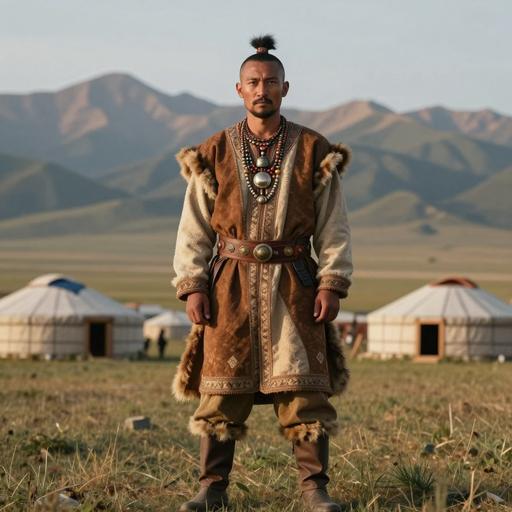
Portrait reconstruction of DA87
Ancient Individual

A man buried in Kazakhstan in the Medieval era

DA87
605 CE - 775 CE
Male
Kimak Period Kazakhstan
Kazakhstan
Scroll to begin
Chapter I

Identity

The biological and cultural markers that define this ancient individual

Sample ID

DA87

Date Range

605 CE - 775 CE

Biological Sex

Male

mtDNA Haplogroup

A-a1

Y-DNA Haplogroup

R-L1433

Cultural Period

Kimak Period Kazakhstan

Chapter II

Place

Where this individual was discovered

Country Kazakhstan
Locality Tian Shan. Central Steppe
Coordinates 52.6431, 76.7106
Chapter III

Time

When this individual lived in the broader context of human history

DA87 605 CE - 775 CE
Chapter IV

Story

The narrative of this ancient life

The Kimak Period in Kazakhstan, roughly spanning from the 8th to the 11th centuries CE, is characterized by the rise and flourishing of the Kimak Khaganate, a confederation of Turkic nomadic tribes. This era is significant for its contributions to the cultural and political landscape of Central Asia, laying foundations that would influence later states and empires in the region.

Geographical Context

The Kimaks established their domain primarily in what is now northeastern Kazakhstan, extending into southern Siberia and parts of western Mongolia. The landscape was defined by vast steppes, river valleys, and mountainous regions, which were ideal for the nomadic lifestyle. These areas facilitated the movement of large groups of people and livestock, crucial to the sustenance of a nomadic economy.

Political Structure and Society

The Kimak Khaganate was a confederation of several Turkic tribes, including the Kipchaks, who would later become prominent in their own right. The political organization was relatively decentralized, with tribal leaders maintaining a degree of autonomy while recognizing the authority of the khagan, the supreme ruler of the confederation. The khaganate exemplified a balance between centralized authority and tribal independence, a common feature in nomadic political systems.

Social structure in the Kimak period was hierarchical, yet fluid, revolving around kinship and tribal affiliations. The elite class consisted of tribal leaders and warriors, whose status was linked to their prowess in battle and ability to secure resources. The common people were primarily herders and craftspeople, with social mobility being possible through martial achievement or accumulation of wealth.

Economy and Lifestyle

The economy of the Kimak period was predominantly based on pastoral nomadism. Livestock—such as horses, camels, sheep, and cattle—were central to their way of life, providing food, clothing, and trade goods. This nomadic economy required seasonal migrations to access different grazing pastures, which also facilitated trade and interactions with sedentary cultures.

Apart from pastoralism, the Kimaks controlled several key trade routes that connected them with other cultures and empires, such as the Islamic Caliphates to the southwest, the Chinese dynasties to the east, and various Slavic and Uralic tribes to the west and north. Trade goods included furs, textiles, metalwork, and horses, which were often exchanged for agricultural products, silk, and other luxury items.

Culture and Religion

The Kimak period is marked by a rich cultural tapestry, influenced by interactions with neighboring cultures and the heterogeneity of the tribes within the khaganate. Shamanistic practices were prevalent, with shaman leaders playing vital roles in both spiritual and social life. Religious beliefs often centered on Tengriism, characterized by the worship of Tengri, the sky god, and other spirits associated with nature.

Over time, elements of Manichaeism, Buddhism, and Islam began to permeate Kimak society, mainly through trade and contact with other cultures. This syncretism of beliefs is evident in archaeological finds, such as art and religious artifacts, blending Turkic motifs with foreign influences.

Legacy and Influence

The Kimak Khaganate's influence can be seen in its successors, most notably the Kipchak Khanate, which would become a dominant force in the Eurasian steppes. The Kimaks contributed to the formation of a Turkic identity and the continuation of nomadic traditions that would endure in various forms across the Central Asian landscape.

Their legacy is also imprinted in the region's demographic and cultural composition, as the movement of Turkic peoples throughout the steppe regions led to a diffusion of languages, customs, and genetic ties that still resonate in modern Central Asian societies.

In conclusion, the Kimak Period in Kazakhstan represents a vibrant era of nomadic power and cultural exchange, setting the stage for future developments in Central Asian history. Its impact is a testament to the adaptability and dynamism of nomadic cultures in the historical tapestry of the region.

Chapter V

Genetics

The genetic ancestry of this ancient individual

Ancient Genetic Admixture

This analysis compares the DNA profile of DA87 with ancient reference populations, showing the genetic composition in terms of prehistoric ancestral groups.

Ancient Asians 51.5%
European Hunter-Gatherers 15.3%
Neolithic Farmers 14.8%
Western Steppe Pastoralists 13.4%
Ancient Native Americans 5.1%

Modern Genetic Admixture

This analysis compares the DNA profile with present-day reference populations, showing what percentage of genetic makeup resembles modern populations from different regions.

Asia 72.8%
Central Asian, Northern Indian & Pakistani 25.2%
Central Asian 15.3%
Indian 5.4%
Pakistan 4.5%
Northern Asian 22.3%
Siberian 20.8%
Mongolian 1.5%
Chinese & Southeast Asian 13.0%
Chinese 12.7%
Northern West Asian 12.3%
Caucasian 12.3%
Europe 25.4%
Eastern European 19.1%
Northwestern European 6.3%
English 3.2%
Northwestern European 3.1%
America 1.8%
America 1.8%
Native American 1.8%

Closest Modern Populations

These are the modern populations showing the closest statistical alignment to A man buried in Kazakhstan in the Medieval era, ranked by genetic distance. Lower distance values indicate closer statistical similarity.

1
Tatar Siberian
3.9052
Chapter VI

Context

Other ancient individuals connected to this sample

Sources

References

Scientific publications and genetic data

Scientific Publication

137 ancient human genomes from across the Eurasian steppes

Authors Damgaard PB, Marchi N, Rasmussen S
Abstract

For thousands of years the Eurasian steppes have been a centre of human migrations and cultural change. Here we sequence the genomes of 137 ancient humans (about 1× average coverage), covering a period of 4,000 years, to understand the population history of the Eurasian steppes after the Bronze Age migrations. We find that the genetics of the Scythian groups that dominated the Eurasian steppes throughout the Iron Age were highly structured, with diverse origins comprising Late Bronze Age herders, European farmers and southern Siberian hunter-gatherers. Later, Scythians admixed with the eastern steppe nomads who formed the Xiongnu confederations, and moved westward in about the second or third century BC, forming the Hun traditions in the fourth-fifth century AD, and carrying with them plague that was basal to the Justinian plague. These nomads were further admixed with East Asian groups during several short-term khanates in the Medieval period. These historical events transformed the Eurasian steppes from being inhabited by Indo-European speakers of largely West Eurasian ancestry to the mostly Turkic-speaking groups of the present day, who are primarily of East Asian ancestry.

G25 Coordinates

The G25 coordinates for sample DA87 can be used for detailed admixture analysis in our G25 Studio tool.

DA87,0.07837492,-0.14545858,0.04499388,0.02081322,-0.05088178,-0.01383862,0.00256568,0.00270484,-0.0163392,-0.021406,-0.00437334,-0.00076762,0.00194638,-0.02075632,0.00807422,0.00132958,-0.00651164,-0.00348904,-0.00029334,0.01010634,-0.02285852,0.00640554,-0.00244916,0.00204244,-0.00412219
Analyze in G25 Studio
Use code for 40% off Expires Feb 27