Menu
Store
Blog
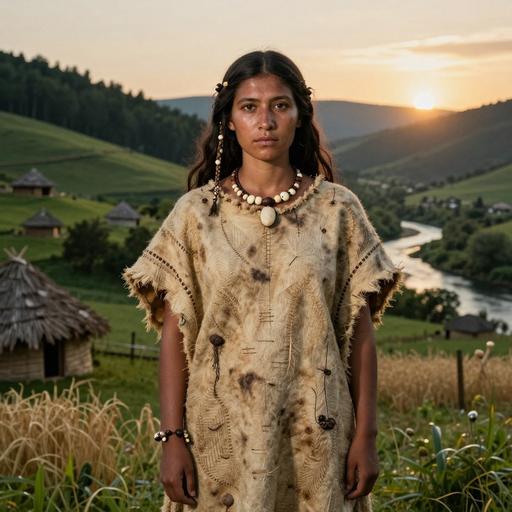
Portrait reconstruction of I0679
Ancient Individual

A woman buried in Bulgaria in the Neolithic era

I0679
5723 BCE - 5623 BCE
Female
Neolithic Krepost, Bulgaria
Bulgaria
Scroll to begin
Chapter I

Identity

The biological and cultural markers that define this ancient individual

Sample ID

I0679

Date Range

5723 BCE - 5623 BCE

Biological Sex

Female

mtDNA Haplogroup

H5

Cultural Period

Neolithic Krepost, Bulgaria

Chapter II

Place

Where this individual was discovered

Country Bulgaria
Locality Krepost
Coordinates 42.0200, 25.6000
Chapter III

Time

When this individual lived in the broader context of human history

I0679 5723 BCE - 5623 BCE
Chapter IV

Story

The narrative of this ancient life

The Neolithic period in Bulgaria, particularly the area known as Krepost, marks a significant era of human development and cultural change, part of the broader Balkan Neolithic tapestry. This era dates back approximately 7,000 to 5,000 BCE and represents a time of profound transformation in human societies, particularly regarding agriculture, architecture, social organization, and artistry.

Geography and Environment

Krepost is located in the eastern part of the Balkan Peninsula, a region characterized by its varied landscape of plains, rivers, and mountains. This region's fertile soils and moderate climatic conditions were crucial in supporting early agricultural activities, making it one of the prominent sites of Neolithic settlement in Southeast Europe.

Economy and Subsistence

A defining feature of the Neolithic culture at Krepost was the transition from a nomadic lifestyle of hunting and gathering to settled agricultural communities. The domestication of plants and animals was pivotal. People cultivated wheat, barley, and legumes, and managed livestock like sheep, goats, cattle, and pigs. This shift not only led to more stable food supplies but also paved the way for population growth and the development of more complex social structures.

Settlement and Architecture

Settlements in the Krepost area were typically small, consisting of single-family dwellings made from mud-brick or wattle-and-daub, with thatched roofs. These homes were organized in clustered arrangements, suggesting close-knit communities. Excavations have revealed evidence of storage pits and communal structures, indicating planning and community cooperation.

Social Organization

The emergence of agriculture led to changes in social organization as well. Settlements likely had a degree of social stratification, although it was not as pronounced as in later periods. The production of surplus food enabled specialization, with some members of the society focusing on tool-making, pottery, or weaving, contributing to the community's overall prosperity.

Art and Culture

Art during the Neolithic Krepost period was both functional and symbolic. Pottery was a significant aspect of their material culture, characterized by intricate designs and varying shapes. The pottery often featured geometric decorations and was typically used for storage, cooking, and rituals.

The Neolithic people of Krepost also produced figurines, usually of clay, representing human and animal forms. These figurines are thought to have had religious or ceremonial significance, possibly related to fertility rites or ancestor worship.

Technology and Tools

The Krepost Neolithic culture was marked by advancements in tool-making. Stone tools, such as sickles for harvesting, and grinding stones for processing grains, reveal a sophisticated understanding of agricultural needs. Moreover, the development of polished stone axes facilitated both agricultural practices and the construction of dwellings.

Religion and Rituals

While specific details about the religious practices of the Krepost Neolithic people remain largely speculative, archaeological evidence suggests a spiritual connection with nature. The emphasis on fertility symbols and possibly ritualistic pottery indicates an early form of animism or shamanism. Burial practices, too, offer insights into their beliefs, with grave goods suggesting an understanding of an afterlife or reverence for the deceased.

Influence and Legacy

The Krepost Neolithic culture plays a crucial role in understanding the spread of agricultural practices across Europe. As part of the broader Balkan Neolithic milieu, it holds evidence of cultural exchanges with neighboring regions, implying the movement and interaction of Neolithic peoples that would shape future European societies.

In summary, the Neolithic era at Krepost, Bulgaria, embodies a transformational period where human society began constructing the foundation for civilization. Through improvements in agriculture, social structures, artistry, and technology, this culture laid groundwork that significantly influenced subsequent European prehistoric developments.

Chapter V

Genetics

The genetic ancestry of this ancient individual

Ancient Genetic Admixture

This analysis compares the DNA profile of I0679 with ancient reference populations, showing the genetic composition in terms of prehistoric ancestral groups.

Neolithic Farmers 75.1%
European Hunter-Gatherers 18.1%
Western Steppe Pastoralists 4.8%
Ancient Oceanians 2.0%

Modern Genetic Admixture

This analysis compares the DNA profile with present-day reference populations, showing what percentage of genetic makeup resembles modern populations from different regions.

Europe 58.7%
Southern European 58.7%
Italian 39.6%
Sardinian 8.8%
Iberian 7.4%
Balkan 3.0%
Asia 40.6%
Northern West Asian 20.8%
Mesopotamian 14.0%
Cypriot 4.7%
Anatolian 2.2%
Arab, Egyptian & Levantine 19.7%
Levantine 16.1%
Arabian 3.7%
Oceania 0.7%
Melanesian 0.7%
Papuan 0.7%

Closest Modern Populations

These are the modern populations showing the closest statistical alignment to A woman buried in Bulgaria in the Neolithic era, ranked by genetic distance. Lower distance values indicate closer statistical similarity.

1
Italian Calabria
2.6046
2
Italian Campania
2.7123
3
Italian Jew
2.8557
4
Ashkenazi France
2.9439
5
Ashkenazi Germany
3.0063
6
Sicilian East
3.0131
7
Greek Deep Mani
3.2199
8
Turkish Jew
3.2288
9
Italian Apulia
3.2425
10
Italian Basilicata
3.2532
Chapter VI

Context

Other ancient individuals connected to this sample

Sources

References

Scientific publications and genetic data

Scientific Publication

The genomic history of southeastern Europe

Authors Mathieson I, Alpaslan-Roodenberg S, Posth C
Abstract

Farming was first introduced to Europe in the mid-seventh millennium bc, and was associated with migrants from Anatolia who settled in the southeast before spreading throughout Europe. Here, to understand the dynamics of this process, we analysed genome-wide ancient DNA data from 225 individuals who lived in southeastern Europe and surrounding regions between 12000 and 500 bc. We document a west-east cline of ancestry in indigenous hunter-gatherers and, in eastern Europe, the early stages in the formation of Bronze Age steppe ancestry. We show that the first farmers of northern and western Europe dispersed through southeastern Europe with limited hunter-gatherer admixture, but that some early groups in the southeast mixed extensively with hunter-gatherers without the sex-biased admixture that prevailed later in the north and west. We also show that southeastern Europe continued to be a nexus between east and west after the arrival of farmers, with intermittent genetic contact with steppe populations occurring up to 2,000 years earlier than the migrations from the steppe that ultimately replaced much of the population of northern Europe.

G25 Coordinates

The G25 coordinates for sample I0679 can be used for detailed admixture analysis in our G25 Studio tool.

I0679,0.10466928,0.15195652,-0.01561756,-0.05695454,0.0147622,-0.0215482,-0.00069158,-0.00156528,0.01295102,0.03304878,-0.0027302,0.0070482,-0.00786166,7.1E-05,-0.00388564,0.00029788,0.00121416,-0.00321948,-0.0001144,-0.00528744,0.00058664,0.0032992,-0.01021054,-0.00462752,-0.00128544
Analyze in G25 Studio
Use code for 40% off Expires Feb 27