Menu
Store
Blog
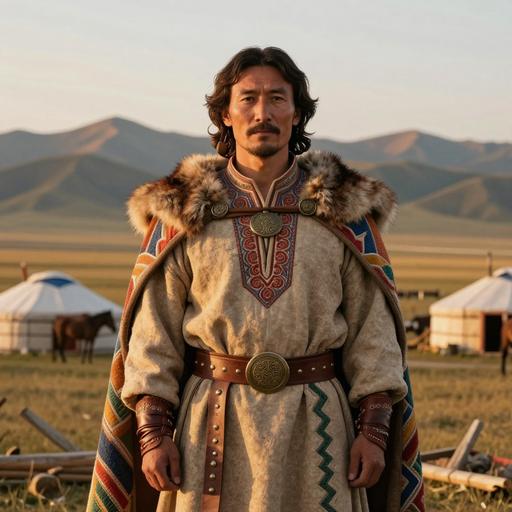
Portrait reconstruction of I10141
Ancient Individual

A man buried in Kazakhstan in the Medieval era

I10141
252 CE - 402 CE
Male
Turk-Kangju Culture in Kazakhstan
Kazakhstan
Scroll to begin
Chapter I

Identity

The biological and cultural markers that define this ancient individual

Sample ID

I10141

Date Range

252 CE - 402 CE

Biological Sex

Male

mtDNA Haplogroup

H

Y-DNA Haplogroup

R-Y52

Cultural Period

Turk-Kangju Culture in Kazakhstan

Chapter II

Place

Where this individual was discovered

Country Kazakhstan
Locality Tian Shan. Central Steppe. Becentshitobe
Coordinates 43.0686, 68.2489
Chapter III

Time

When this individual lived in the broader context of human history

I10141 252 CE - 402 CE
Chapter IV

Story

The narrative of this ancient life

The Turk-Kangju Culture of Kazakhstan represents a fascinating amalgamation of influences from nomadic Turkic tribes and the ancient Kangju people. This cultural phenomenon flourished across the steppes of Central Asia, particularly in the region that now constitutes modern-day Kazakhstan, from around the early centuries AD to the early medieval period. It serves as a pertinent illustration of the dynamic cultural exchanges that occurred over vast expanses of the Eurasian Steppe, which has historically been a melting pot of ethnicities, languages, and traditions.

Historical Context

The Kangju people were an influential polity in Central Asia during the first few centuries AD, contemporary with the Chinese Han Dynasty. They are widely considered to have occupied the region around the Syr Darya river and acted as a pivotal trade connector within the Silk Road network. The Kangju themselves were likely an Indo-Iranian group, although the constant movement and interaction on the steppe would mean they were exposed to a variety of cultural influences.

The Turkic peoples, on the other hand, began their expansion across the Eurasian Steppe from Eastern Asia across to the West around the 6th century. The Göktürks, considered the progenitors of subsequent Turkic polities, began consolidating power across Central Asia after breaking away from the dominance of the Rouran Khaganate. The interaction between these incoming Turkic nomads and the established Kangju population during the early medieval period resulted in the development of the Turk-Kangju Culture.

Cultural Characteristics

Society and Governance: The Turk-Kangju culture was inherently nomadic, with a strong emphasis on kinship ties and tribal affiliations. Governance was typically decentralized, with power lying in the hands of tribal chiefs or Khans, who commanded allegiance based on military prowess and the ability to ensure prosperity through raids or trade. Social stratification was evident, yet there was a significant degree of fluidity as mobility in this nomadic context often allowed for shifts in status based on meritocratic or martial accomplishments.

Economy: The economy of the Turk-Kangju culture was chiefly pastoral, revolving around the rearing of livestock such as horses, sheep, and camels, which were vital for transportation, clothing, and sustenance. The strategic location of their lands meant that they were active participants in the Silk Road trade, exchanging goods such as furs, leather, and metalwork for silk, tea, and other luxury items from China and beyond. They were skilled in metallurgy, which became a cornerstone of trade and cultural exchange with neighboring regions.

Lifestyle and Mobility: Living in the vast and often harsh conditions of the steppes, the Turk-Kangju people embodied a lifestyle of mobility. Yurts, portable round tents made from felt and wood, facilitated their nomadic existence, allowing them to move with the seasons in search of grazing lands. Horses were central not only as beasts of burden but as vital components of social and military life, with a pastoralist lifestyle that prioritized horsemanship from a young age.

Religion and Spirituality: The spiritual life of the Turk-Kangju culture was deeply intertwined with nature and the animistic traditions common to many nomadic societies. Tengrism, a form of shamanistic belief centered around the sky deity Tengri, played a crucial role, fostering a spiritual connection between the people and their environment. Burial practices were elaborate with kurgans (burial mounds), which often contained grave goods meant to accompany the deceased into the afterlife. These practices reflect a worldview where the divine was closely integrated into daily life and natural phenomena.

Art and Symbolism: Artistic endeavors were typically practical and symbolic, reflecting their pastoral and warrior ethos. Metalwork items such as weaponry, armor, and jewelry were crafted with intricate designs, often depicting animals and mythological motifs that symbolized power, fertility, and protection. The art was functional yet conveyed deep cultural narratives, reflecting both the shamanistic beliefs and the influences absorbed from contacts along the Silk Road.

Legacy and Influence

The lasting impact of the Turk-Kangju culture is evident in the enduring traditions of nomadic societies across Central Asia, influenced heavily by Turkic languages, practices, and governance models. As Turkic tribes further spread their influence westward and into regions as distant as Anatolia, elements of the Turk-Kangju culture can be traced in the cultural practices and societal norms of successor states and empires.

In conclusion, the Turk-Kangju Culture in Kazakhstan represents a historical crossroads of nomadic and sedentary influences, illustrative of the larger Eurasian tapestry characterized by dynamic exchanges across peoples and lands. This culture stands as a testament to the resilience and adaptability of nomadic societies in the face of both geographical and political challenges.

Chapter V

Genetics

The genetic ancestry of this ancient individual

Ancient Genetic Admixture

This analysis compares the DNA profile of I10141 with ancient reference populations, showing the genetic composition in terms of prehistoric ancestral groups.

Western Steppe Pastoralists 30.5%
Neolithic Farmers 26.5%
European Hunter-Gatherers 24.1%
Ancient Asians 18.8%

Modern Genetic Admixture

This analysis compares the DNA profile with present-day reference populations, showing what percentage of genetic makeup resembles modern populations from different regions.

Asia 53.8%
Northern West Asian 33.4%
Caucasian 25.8%
Cypriot 4.9%
Anatolian 2.7%
Central Asian, Northern Indian & Pakistani 20.5%
Pakistan 18.8%
Indian 1.7%
Europe 43.7%
Eastern European 29.2%
Northwestern European 14.5%
English 14.5%
America 1.1%
America 1.1%
Native American 1.1%
Oceania 1.0%
Melanesian 1.0%
Papuan 1.0%

Closest Modern Populations

These are the modern populations showing the closest statistical alignment to A man buried in Kazakhstan in the Medieval era, ranked by genetic distance. Lower distance values indicate closer statistical similarity.

1
Tajik Yaghnobi
4.3937
2
Pamiri Rushan
4.4708
3
Pamiri Shugnan
5.3485
4
Tajik Tajikistan Kulob
6.0792
5
Lezgin
6.2550
6
Pamiri Badakhshan
6.4036
7
Tajik Tajikistan Ayni
6.7649
8
Kumyk
6.8211
9
Andian B
6.8377
10
Lak
6.8475
Chapter VI

Context

Other ancient individuals connected to this sample

Sources

References

Scientific publications and genetic data

Scientific Publication

137 ancient human genomes from across the Eurasian steppes

Authors Damgaard PB, Marchi N, Rasmussen S
Abstract

For thousands of years the Eurasian steppes have been a centre of human migrations and cultural change. Here we sequence the genomes of 137 ancient humans (about 1× average coverage), covering a period of 4,000 years, to understand the population history of the Eurasian steppes after the Bronze Age migrations. We find that the genetics of the Scythian groups that dominated the Eurasian steppes throughout the Iron Age were highly structured, with diverse origins comprising Late Bronze Age herders, European farmers and southern Siberian hunter-gatherers. Later, Scythians admixed with the eastern steppe nomads who formed the Xiongnu confederations, and moved westward in about the second or third century BC, forming the Hun traditions in the fourth-fifth century AD, and carrying with them plague that was basal to the Justinian plague. These nomads were further admixed with East Asian groups during several short-term khanates in the Medieval period. These historical events transformed the Eurasian steppes from being inhabited by Indo-European speakers of largely West Eurasian ancestry to the mostly Turkic-speaking groups of the present day, who are primarily of East Asian ancestry.

G25 Coordinates

The G25 coordinates for sample I10141 can be used for detailed admixture analysis in our G25 Studio tool.

I10141,0.1051443,0.0614701,-0.00197512,0.03493498,-0.02926912,0.01576932,0.00893992,0.0026779,-0.0288629,-0.02827814,0.00095836,-9.98E-05,-0.00102628,-0.00812034,0.0050603,-0.00160134,-0.009275,-2.748E-05,-0.00465018,-0.00892486,-0.0022135,0.0027506,-0.00244726,0.00819484,-0.00213411
Analyze in G25 Studio
Use code for 40% off Expires Feb 27