Menu
Store
Blog
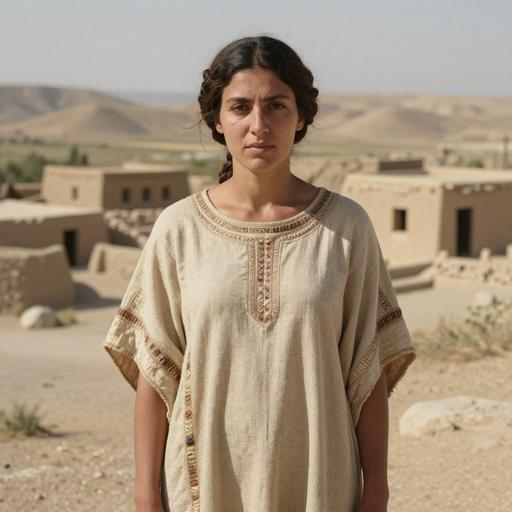
Portrait reconstruction of I14627
Ancient Individual

A woman buried in Turkey in the Copper Age era

I14627
3645 BCE - 3525 BCE
Female
Chalcolithic Kuriki Höyük, Turkey
Turkey
Scroll to begin
Chapter I

Identity

The biological and cultural markers that define this ancient individual

Sample ID

I14627

Date Range

3645 BCE - 3525 BCE

Biological Sex

Female

mtDNA Haplogroup

U8b1a2b

Cultural Period

Chalcolithic Kuriki Höyük, Turkey

Chapter II

Place

Where this individual was discovered

Country Turkey
Locality Kuriki Höyük (Southeast. Batman)
Coordinates 37.7900, 41.0100
Chapter III

Time

When this individual lived in the broader context of human history

I14627 3645 BCE - 3525 BCE
Chapter IV

Story

The narrative of this ancient life

Kuriki Höyük, located in southeastern Turkey, is a notable archaeological site that provides valuable insights into the Chalcolithic period, particularly in the context of the broader Near East. The Chalcolithic period, also known as the Copper Age, is characterized by the use of both stone and copper tools and marks a significant transition between the Neolithic era and the Bronze Age.

Geographical and Environmental Context: Kuriki Höyük is situated near the Tigris River, providing a strategic location for agriculture and trade. The region's fertile plains would have been ideal for early farming communities, and its proximity to water sources ensured a sustainable settlement environment. The climate in this area during the Chalcolithic period was likely similar to today's, with a mixture of semi-arid and riverine landscapes, supporting a variety of plant and animal life.

Archaeological Findings: Excavations at Kuriki Höyük have uncovered a wealth of artifacts and structural remains that shed light on the Chalcolithic culture in this region. The settlement patterns indicate a well-organized community with distinct architectural styles, including rectangular mud-brick houses. These structures often had plastered floors and walls, a feature that speaks to the community's technical abilities and aesthetic preferences.

Material Culture: One of the hallmarks of Kuriki Höyük during the Chalcolithic period is the use of metal, specifically copper. Metalworking evidence suggests that the inhabitants engaged in early metallurgical practices, producing tools and ornaments. This represents a significant technological advancement and suggests trade networks for obtaining and distributing metal ores.

In addition to metal artifacts, pottery is a significant component of the material culture at Kuriki Höyük. The pottery from this era typically features finely made wares with various decorative motifs, including incised geometric patterns and painted designs. These ceramics were likely used for both domestic and ceremonial purposes.

Economy and Subsistence: The economy of Chalcolithic Kuriki Höyük was primarily agricultural, supported by domesticated plants and animals. Archaeobotanical studies indicate the cultivation of cereals such as wheat and barley, alongside legumes and other crops. Animal husbandry was also crucial, with evidence of domesticated cattle, sheep, goats, and pigs.

Supplementary to agriculture, hunting and gathering continued to play a role, providing a diverse diet and contributing to the community's resilience. The settlement's location also facilitated trade, enabling the exchange of goods and ideas with neighboring cultures.

Social Structure and Culture: The social structure at Kuriki Höyük during the Chalcolithic period is inferred from burial practices, architectural organization, and the distribution of goods. There is evidence of increasingly complex social stratification, possibly indicating the emergence of leaders or elite classes. Burial sites often reveal offerings and goods that suggest varying social statuses.

Culturally, the people of Kuriki Höyük engaged in ritualistic practices and art. Although direct evidence of religious beliefs is sparse, the presence of figurines and certain symbolic artifacts suggest a developing spiritual life. These artifacts often depict human and animal forms, possibly representing deities, ancestors, or mythical beings.

Conclusion: Kuriki Höyük provides a fascinating glimpse into the Chalcolithic period's rich and complex tapestry in southeastern Turkey. The community's advances in metallurgy, pottery, agriculture, and social organization highlight a period of significant cultural and technological development. This era laid crucial groundwork for subsequent civilizations in the region, influencing patterns of trade, technology, and cultural exchanges that would persist into the Bronze Age and beyond.

Chapter V

Genetics

The genetic ancestry of this ancient individual

Ancient Genetic Admixture

This analysis compares the DNA profile of I14627 with ancient reference populations, showing the genetic composition in terms of prehistoric ancestral groups.

Neolithic Farmers 80.1%
European Hunter-Gatherers 13.3%
Ancient Oceanians 3.5%
Ancient Asians 3.1%

Modern Genetic Admixture

This analysis compares the DNA profile with present-day reference populations, showing what percentage of genetic makeup resembles modern populations from different regions.

Asia 95.5%
Northern West Asian 58.0%
Mesopotamian 36.9%
Cypriot 13.6%
Anatolian 7.5%
Arab, Egyptian & Levantine 32.5%
Levantine 17.1%
Arabian 15.4%
Central Asian, Northern Indian & Pakistani 5.0%
Indian 3.5%
Pakistan 1.5%
Europe 3.0%
Southern European 3.0%
Sardinian 3.0%
Africa 1.5%
North African 1.5%
Egyptian 1.5%

Closest Modern Populations

These are the modern populations showing the closest statistical alignment to A woman buried in Turkey in the Copper Age era, ranked by genetic distance. Lower distance values indicate closer statistical similarity.

1
Lebanese Druze
1.4205
2
Alawite
1.5384
3
Druze
1.8450
4
Lebanese Muslim
1.8962
5
Karaite Egypt
2.3645
6
Iraqi Jew
2.4744
7
Lebanese Christian
2.5463
8
Kurdish Jew
2.5487
9
Mountain Jew Dagestan
2.5814
10
Nash Didan Jew Urmia
2.7571
Chapter VI

Context

Other ancient individuals connected to this sample

Sources

References

Scientific publications and genetic data

Scientific Publication

The genetic history of the Southern Arc: A bridge between West Asia and Europe | Science

Authors Lazaridis I, Alpaslan-Roodenberg S, Acar A
Abstract

The period from the Copper Age to the Bronze Age marked major social and economic transformations in West Eurasia. To better understand these changes and their genetic impacts, we generated genome-wide data from 727 individuals who lived between 5000 and 1000 BCE in southeastern Europe and southwestern Asia.

G25 Coordinates

The G25 coordinates for sample I14627 can be used for detailed admixture analysis in our G25 Studio tool.

I14627,0.08576218,0.14035836,-0.0541631,-0.06586614,-0.02258564,-0.02071922,-0.00238422,-0.00505326,-0.00530392,0.0048,0.00640466,-0.00468816,0.00840308,0.0008356,-0.00854712,0.00356684,-0.0042346,0.00121356,0.0021657,-0.00051658,-0.00034246,0.00270788,-0.00616032,0.00136146,-0.003988
Analyze in G25 Studio
Use code for 40% off Expires Feb 26