Menu
Store
Blog
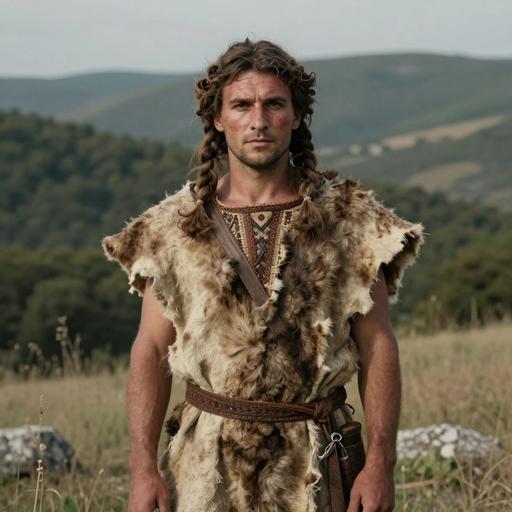
Portrait reconstruction of I16995
Ancient Individual

A man buried in Montenegro in the Late Neolithic era

I16995
3500 BCE - 2500 BCE
Male
Montenegrin Meso-Neolithic
Montenegro
Scroll to begin
Chapter I

Identity

The biological and cultural markers that define this ancient individual

Sample ID

I16995

Date Range

3500 BCE - 2500 BCE

Biological Sex

Male

mtDNA Haplogroup

U5a1c

Y-DNA Haplogroup

Not available

Cultural Period

Montenegrin Meso-Neolithic

Chapter II

Place

Where this individual was discovered

Country Montenegro
Locality Vrbicka
Coordinates 42.8909, 18.8706
Chapter III

Time

When this individual lived in the broader context of human history

I16995 3500 BCE - 2500 BCE
Chapter IV

Story

The narrative of this ancient life

The Montenegrin Mesolithic to Late Neolithic era represents a significant transition period in the history of the Balkans, reflecting broader patterns of human development in Southeast Europe. This time span, generally covering approximately 10,000 to 5,000 BCE, includes gradual changes from a hunter-gatherer lifestyle to more settled agricultural societies. Let's explore the key aspects of this period, focusing on its environment, economy, culture, and social organization.

Environment and Geography

Montenegro's landscape during this period greatly influenced the lifestyle and development of its inhabitants. The region's diverse geography, including coastal areas, river valleys, mountainous regions, and inland plateaus, provided a variety of ecological niches. This diversity in habitats allowed for a wide range of natural resources, which prehistoric communities could exploit. Forests, rivers, and coastal zones provided food sources and raw materials, while the mountains offered protection and strategic advantages.

Economy and Subsistence

During the Mesolithic era, communities in Montenegro primarily engaged in hunting, fishing, and gathering. The rich biodiversity of the region meant that people could hunt a variety of game such as deer, wild boar, and smaller mammals, as well as fish from rivers and the Adriatic Sea. Additionally, they harvested plant foods, including fruits, nuts, and tubers, which were abundant due to the favorable climate and varied environments.

As the Mesolithic period transitioned to the Neolithic, there was a marked shift towards agriculture, which gradually became predominant by the Late Neolithic. This transition involved the domestication of plants and animals, including wheat, barley, lentils, sheep, goats, and cattle. The development of farming allowed for more permanent settlements as people relied less on nomadic lifestyles dictated by the movement of game and wild plant availability.

Cultural Practices and Technology

The technological advancements during this period were significant. In the Mesolithic era, the use of microliths—small flint tools—was common in tools and weapons. These tools facilitated more efficient hunting and processing of natural resources. The Neolithic period heralded the innovation of pottery, which revolutionized food storage and cooking practices. Pottery styles, which may have originated in neighboring regions, were adapted and localized, reflecting the cultural uniqueness of the Montenegrin communities.

With agriculture came other technological advancements, such as polished stone tools for farming, including axes and sickles. These improvements in technology helped increase efficiency in land preparation and harvesting, further supporting the economic shift towards agricultural production.

Social Organization and Settlement Patterns

As the Montenegrin communities transitioned to the Neolithic era, there was a noticeable shift from small, mobile groups to larger, more permanent settlements. The burgeoning practice of agriculture required communities to stay close to their fields throughout the year. Settlements grew in size and complexity, with some evidence suggesting the construction of organized dwellings and communal structures.

This increase in settlement size likely necessitated more complex social organization. Concepts of property, community leadership, and social stratification may have begun to emerge during this time. Burial practices, which can often offer insights into social structures, show variations that may reflect developing hierarchies or social roles within these communities.

Spiritual and Artistic Expressions

Throughout the Mesolithic and into the Neolithic, spiritual beliefs and artistic expression played vital roles in Montenegrin society. Though direct evidence is sparse, it is likely that these early populations engaged in ritualistic activities related to hunting, fertility, and agriculture, reflecting a deep connection to their environment and reliance on natural resources for survival.

Artistic expression, including carved figurines, decorated pottery, and personal adornments such as jewelry, provides insights into aesthetic values and cultural priorities. These items not only served functional purposes but also expressed individual and community identities, religious beliefs, and social statuses.

Conclusion

The Montenegrin Mesolithic to Late Neolithic era marks a transformative period in the region's prehistory. The shift from roaming hunter-gatherer bands to settled agricultural communities laid the foundation for future cultural development in the Balkans. The ingenuity and adaptations made during this period reflect a significant human capacity for innovation and adaptation, setting the stage for the complex societies that would follow in the subsequent Bronze and Iron Ages.

Chapter V

Genetics

The genetic ancestry of this ancient individual

Ancient Genetic Admixture

This analysis compares the DNA profile of I16995 with ancient reference populations, showing the genetic composition in terms of prehistoric ancestral groups.

Western Steppe Pastoralists 65.6%
European Hunter-Gatherers 28.2%
Ancient Asians 3.1%
Ancient Oceanians 3.1%

Modern Genetic Admixture

This analysis compares the DNA profile with present-day reference populations, showing what percentage of genetic makeup resembles modern populations from different regions.

Europe 100.0%
Northwestern European 76.7%
Scandinavian 31.7%
Finnish 25.2%
Northwestern European 11.6%
English 8.1%
Southern European 23.4%
Iberian 23.4%

Closest Modern Populations

These are the modern populations showing the closest statistical alignment to A man buried in Montenegro in the Late Neolithic era, ranked by genetic distance. Lower distance values indicate closer statistical similarity.

1
Swedish
2.2629
2
German Hamburg
2.2640
3
Czech
2.2982
4
German East
2.5240
5
Polish Kashubian
2.7902
6
Polish
2.8857
7
Danish
3.1148
8
Polish Silesian
3.1946
9
Norwegian
3.3255
10
Slovakian
3.3505
Chapter VI

Context

Other ancient individuals connected to this sample

Sources

References

Scientific publications and genetic data

Scientific Publication

The genetic history of the Southern Arc: A bridge between West Asia and Europe | Science

Authors Lazaridis I, Alpaslan-Roodenberg S, Acar A
Abstract

The period from the Copper Age to the Bronze Age marked major social and economic transformations in West Eurasia. To better understand these changes and their genetic impacts, we generated genome-wide data from 727 individuals who lived between 5000 and 1000 BCE in southeastern Europe and southwestern Asia.

G25 Coordinates

The G25 coordinates for sample I16995 can be used for detailed admixture analysis in our G25 Studio tool.

I16995,0.1342212,0.13067408,0.07063728,0.05971498,0.0412103,0.02734662,0.00714748,0.00954984,0.00635336,-0.00890024,-0.0063019,-0.00013012,0.00412524,0.00922154,0.00775406,0.0058324,-0.0072548,0.00336728,0.00279102,0.002581,0.00207086,-0.00198524,0.00713036,0.00320628,0.00142508
Analyze in G25 Studio
Use code for 40% off Expires Feb 27