Menu
Store
Blog
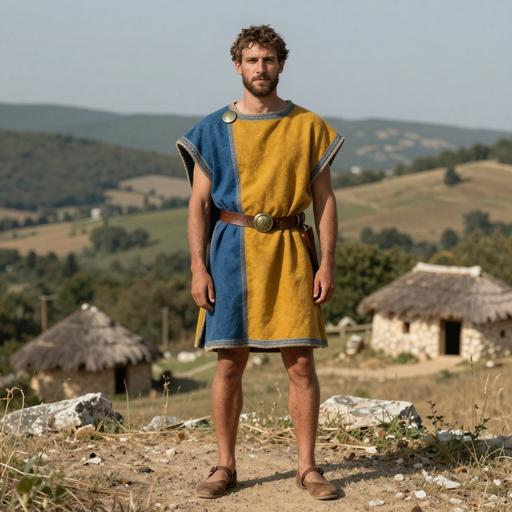
Portrait reconstruction of I18831
Ancient Individual

A man buried in Croatia in the Late Iron Age era

I18831
500 BCE - 1 BCE
Male
Late Iron Age Croatia
Croatia
Scroll to begin
Chapter I

Identity

The biological and cultural markers that define this ancient individual

Sample ID

I18831

Date Range

500 BCE - 1 BCE

Biological Sex

Male

mtDNA Haplogroup

H7

Y-DNA Haplogroup

Not available

Cultural Period

Late Iron Age Croatia

Chapter II

Place

Where this individual was discovered

Country Croatia
Locality Velim-Kosa
Coordinates 43.8874, 15.7253
Chapter III

Time

When this individual lived in the broader context of human history

I18831 500 BCE - 1 BCE
Chapter IV

Story

The narrative of this ancient life

The Late Iron Age in Croatia, particularly during the period when Celtic influences were prominent, is a fascinating era that marks a significant transition in the cultural and social landscape of the region. This period roughly spans the 4th to the 1st century BCE, preceding the Roman conquest. During this time, the territory of modern-day Croatia was inhabited by various Illyrian tribes, but it also experienced substantial cultural influences from the Celts, who had begun migrating into the area.

Cultural Interactions and Influences:

  1. Celtic Invasion and Settlement: Around the 4th century BCE, the Celts began to migrate into southeastern Europe from the north and west. They established themselves in parts of Pannonia, extending their influence into the eastern and northern areas of Croatia. The region saw the settlement of significant Celtic tribes like the Taurisci and the Scordisci, whose cultures were known for their advanced metalwork, particularly in iron and gold.

  2. Illyrian and Celtic Fusion: The interaction between the native Illyrian tribes and the incoming Celts led to a cultural syncretism. While the Illyrians had their own distinct traditions and social structures, the Celts introduced new artistic styles, weaponry, and potentially new social hierarchies. This fusion is evident in the archaeological record, with artifacts showing a blend of Illyrian and Celtic motifs.

Social and Political Structures:

  1. Tribal Societies: Both the Illyrians and the Celts were organized into tribal societies. These tribes were often led by a chieftain or a group of noble elites. The Celts, known for their warrior culture, brought with them their military tactics and weapons, such as the long sword and chainmail armor, which were adopted by local populations.

  2. Fortified Settlements: The Late Iron Age saw the development of fortified settlements known as oppida. These were larger, more complex than earlier settlements, often situated on hilltops for strategic defense purposes. They served as centers of trade, craft production, and political power.

Economy and Trade:

  1. Agriculture and Animal Husbandry: The economy of Late Iron Age Croatia was predominantly agrarian, with communities engaged in farming, livestock rearing, and hunting. The fertile lands of the region supported the cultivation of various crops and the rearing of cattle, sheep, and pigs.

  2. Trade Networks: The Celts were known for their wide-ranging trade networks, and their presence in Croatia facilitated increased trade across Europe. Local products such as salt, livestock, and metal goods were exchanged for luxury items, such as wine, pottery, and fine fabrics from the Mediterranean.

  3. Craft Production: The period saw advances in metalworking, pottery, and textiles. Celtic craftsmen were skilled in ironwork, producing weapons, tools, and ornate jewelry. There is also evidence of pottery workshops, with distinctive Celtic La Tène style pottery being produced and used.

Religion and Beliefs:

  1. Polytheistic Practices: Both the Celts and Illyrians practiced polytheism, with a pantheon of gods and goddesses related to natural elements and human activities. Rituals often involved offerings, feasts, and sometimes human and animal sacrifices.

  2. Sacred Sites: Natural sites such as springs, rivers, and groves were considered sacred. Archaeological findings suggest that some hillforts and settlements also served religious purposes, with altars and ritual deposits being common.

Art and Symbolism:

  1. Celtic Art: The Celts brought with them the distinctive La Tène artistic style, characterized by intricate patterns, swirling motifs, and stylized animal forms. This style influenced local art, appearing in metalwork, pottery, and personal ornaments.

  2. Symbolism: Artifacts from this period often carry symbolic motifs, which might represent tribal identity, religious beliefs, or social status. These symbols played a crucial role in the cultural identity of both the Celtic and the indigenous populations.

Conclusion:

The Late Iron Age in Croatia was a dynamic period of cultural interaction and transformation. The infusion of Celtic elements into the existing Illyrian framework created a unique cultural amalgamation that set the stage for subsequent historical developments, including the Roman conquest. This era is best understood through its rich archaeological record, which continues to offer insights into the complex social, economic, and cultural dimensions of prehistoric Croatia.

Chapter V

Genetics

The genetic ancestry of this ancient individual

Ancient Genetic Admixture

This analysis compares the DNA profile of I18831 with ancient reference populations, showing the genetic composition in terms of prehistoric ancestral groups.

Neolithic Farmers 44.2%
European Hunter-Gatherers 29.3%
Western Steppe Pastoralists 26.6%

Modern Genetic Admixture

This analysis compares the DNA profile with present-day reference populations, showing what percentage of genetic makeup resembles modern populations from different regions.

Europe 96.6%
Southern European 65.6%
Italian 26.9%
Balkan 21.7%
Iberian 13.2%
Sardinian 3.8%
Northwestern European 31.0%
English 12.8%
Northwestern European 11.5%
Scandinavian 6.7%
Asia 2.4%
Northern West Asian 2.4%
Mesopotamian 1.3%
Caucasian 0.9%
Africa 0.5%

Closest Modern Populations

These are the modern populations showing the closest statistical alignment to A man buried in Croatia in the Late Iron Age era, ranked by genetic distance. Lower distance values indicate closer statistical similarity.

1
Spanish Mallorca
1.8904
2
Spanish Penedes
1.9347
3
French Provence
1.9708
4
Spanish Eivissa
2.1747
5
Spanish Camp De Tarragona
2.1952
6
Spanish Terres De L'ebre
2.2307
7
Spanish Girona
2.2445
8
Spanish Baleares
2.2866
9
Spanish Alacant
2.2922
10
Spanish Peri Barcelona
2.3515
Chapter VI

Context

Other ancient individuals connected to this sample

Sources

References

Scientific publications and genetic data

Scientific Publication

The genetic history of the Southern Arc: A bridge between West Asia and Europe | Science

Authors Lazaridis I, Alpaslan-Roodenberg S, Acar A
Abstract

The period from the Copper Age to the Bronze Age marked major social and economic transformations in West Eurasia. To better understand these changes and their genetic impacts, we generated genome-wide data from 727 individuals who lived between 5000 and 1000 BCE in southeastern Europe and southwestern Asia.

G25 Coordinates

The G25 coordinates for sample I18831 can be used for detailed admixture analysis in our G25 Studio tool.

I18831,0.11525428,0.1406275,0.03721768,0.00274194,0.03366908,0.00351666,-0.00293186,0.0010625,0.01270688,0.02173348,-0.0054813,0.00720234,-0.0165269,-0.01105708,0.00860586,-0.00671694,-0.00266774,0.0001396,-0.0004471,0.00062362,0.00375064,-0.0004363,-0.00589076,-0.00235544,0.00065296
Analyze in G25 Studio
Use code for 40% off Expires Feb 26