Menu
Store
Blog
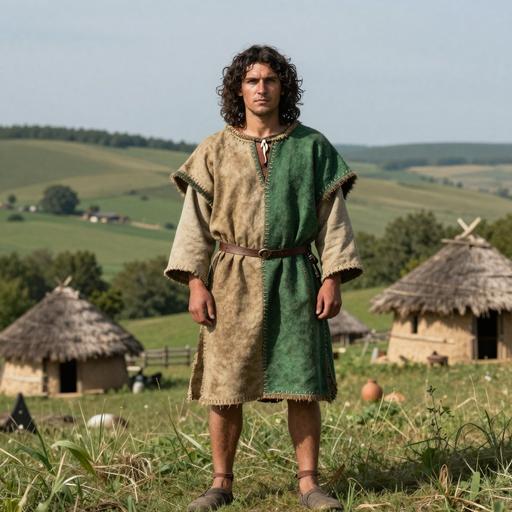
Portrait reconstruction of I20182
Ancient Individual

A man buried in Bulgaria in the Early Bronze Age to Middle Bronze Age era

I20182
3000 BCE - 1300 BCE
Male
Early to Middle Bronze Age Bulgaria
Bulgaria
Scroll to begin
Chapter I

Identity

The biological and cultural markers that define this ancient individual

Sample ID

I20182

Date Range

3000 BCE - 1300 BCE

Biological Sex

Male

mtDNA Haplogroup

J1c+16261

Y-DNA Haplogroup

Not available

Cultural Period

Early to Middle Bronze Age Bulgaria

Chapter II

Place

Where this individual was discovered

Country Bulgaria
Locality Kapitan Andreevo (South)
Coordinates 41.7300, 26.3300
Chapter III

Time

When this individual lived in the broader context of human history

I20182 3000 BCE - 1300 BCE
Chapter IV

Story

The narrative of this ancient life

The Early to Middle Bronze Age in what is now Bulgaria is part of the broader Balkan Bronze Age, a significant period in Southeastern European prehistory that spans roughly from 3300 to 1600 BCE. This era marked a time of profound transformations in social structure, economy, and technology.

Geographical and Chronological Context:

Bulgaria is located in the southeastern part of Europe, bordered by the Black Sea to the east, Greece to the south, North Macedonia to the southwest, Serbia to the west, and Romania to the north. The region's geographical makeup, featuring the Balkan Mountains, the Danube River, and the Thracian Plains, significantly influenced the development of agricultural practices, trade routes, and cultural exchanges.

The Early Bronze Age (EBA) in Bulgaria is generally dated from 3300 to 2100 BCE, while the Middle Bronze Age (MBA) spans from 2100 to 1600 BCE. These temporal markers, however, are approximate as overlaps and transitions between the periods characterized social and material culture evolution.

Cultural and Societal Developments:

Settlements and Architecture:

  • Settlement patterns during this era were typically based around river valleys and fertile plains. There was a mix of both small hamlets and larger, more complex settlements, suggesting a hierarchy or centralization of some kind.
  • Fortifications began to appear as defensive responses to potential threats, indicating increased territoriality or conflicts.
  • House structures varied but were commonly rectangular, built using timber, mud-brick, or wattle-and-daub techniques.

Economy and Subsistence:

  • Agriculture was the backbone of the economy, with evidence of crops such as wheat, barley, and legumes, alongside animal husbandry involving cattle, sheep, goats, and pigs.
  • The Bronze Age saw the continued exploitation of copper and gold, with Bulgaria having some of the richest natural deposits in Europe. Metalworking, particularly bronze smelting, began to play a pivotal role.
  • Trade networks expanded during the Middle Bronze Age, evidenced by the exchange of goods such as amber, pottery, and metal objects with neighboring and distant regions, including the Aegean and Anatolia.

Social Structure:

  • The social hierarchy became more pronounced with the emergence of elites, likely due to control over metal resources and trade routes.
  • Burial practices provide evidence of social stratification, with tumulus graves and rich grave goods indicating the presence of high-status individuals.
  • Artifacts and settlement layouts suggest the existence of emerging complex social structures possibly leading to chiefs or tribal organizations.

Material Culture:

  • Pottery styles evolved from simple geometric designs to more intricate patterns, reflecting both local creativity and external influences.
  • Metalwork, particularly bronze, became more sophisticated, marked by the production of tools, weapons, and ornaments. The Vălčitrăn and Ezerovo treasures are noteworthy examples showcasing exquisite craftsmanship.
  • Artistic expression also manifested in small figurines and sculptures, often depicting anthropomorphic or zoomorphic forms.

Religion and Ritual:

  • The religious practices of this period were likely animistic, with reverence for natural elements and possibly solar and lunar deities.
  • Archaeological evidence of ritual structures or altars suggests complex ceremonial activities, possibly linked to agricultural cycles or social events.
  • Burials with grave goods suggest beliefs in an afterlife, and possibly ancestor worship, indicating a spiritual dimension to societal norms.

Interactions and Influence:

  • The region was a cultural crossroads between East and West. Contacts with the Aegean, Anatolia, and Central Europe facilitated a rich exchange of ideas and technologies.
  • The presence of foreign artifacts in Bulgarian contexts points to significant cultural interactions and the movement of peoples across regions.

The Early to Middle Bronze Age of Bulgaria represents a time of significant growth and development. The transformation in social structures and technological advancements laid the foundations for subsequent cultural expressions in the later stages of the Bronze Age and beyond. The layering of local traditions with new influences created a unique cultural landscape that would continue to evolve in the millennia to follow.

Chapter V

Genetics

The genetic ancestry of this ancient individual

Ancient Genetic Admixture

This analysis compares the DNA profile of I20182 with ancient reference populations, showing the genetic composition in terms of prehistoric ancestral groups.

Neolithic Farmers 48.9%
European Hunter-Gatherers 26.7%
Western Steppe Pastoralists 24.5%

Modern Genetic Admixture

This analysis compares the DNA profile with present-day reference populations, showing what percentage of genetic makeup resembles modern populations from different regions.

Europe 63.4%
Southern European 42.7%
Italian 22.7%
Balkan 14.0%
Iberian 6.0%
Northwestern European 20.7%
English 14.9%
Northwestern European 3.0%
Scandinavian 2.9%
Asia 36.6%
Northern West Asian 34.0%
Mesopotamian 15.7%
Caucasian 15.3%
Cypriot 2.5%
Anatolian 0.6%
Arab, Egyptian & Levantine 2.6%
Levantine 2.6%

Closest Modern Populations

These are the modern populations showing the closest statistical alignment to A man buried in Bulgaria in the Early Bronze Age to Middle Bronze Age era, ranked by genetic distance. Lower distance values indicate closer statistical similarity.

1
Gagauz
4.6359
2
Greek Thessaly
4.7685
3
Greek West Taygetos
4.7765
4
Greek Macedonia
4.8662
5
Italian Marche
4.9792
6
Greek North Tsakonia
5.0168
7
Greek Messenia
5.0176
8
Greek East Taygetos
5.0568
9
Italian Tuscany
5.0929
10
Italian Emilia
5.1055
Chapter VI

Context

Other ancient individuals connected to this sample

Sources

References

Scientific publications and genetic data

Scientific Publication

The genetic history of the Southern Arc: A bridge between West Asia and Europe | Science

Authors Lazaridis I, Alpaslan-Roodenberg S, Acar A
Abstract

The period from the Copper Age to the Bronze Age marked major social and economic transformations in West Eurasia. To better understand these changes and their genetic impacts, we generated genome-wide data from 727 individuals who lived between 5000 and 1000 BCE in southeastern Europe and southwestern Asia.

G25 Coordinates

The G25 coordinates for sample I20182 can be used for detailed admixture analysis in our G25 Studio tool.

I20182,0.1148107,0.13292588,0.00237536,-0.00916684,0.00682264,7.818E-05,0.00251186,-0.00349982,-0.01276836,-0.00190982,-0.00509424,0.00837544,-0.00990752,-0.00226236,0.00951924,-0.01290564,-0.01485392,-0.0004835,0.00153802,-0.00139964,0.0054157,0.00157356,-0.00088444,0.00307164,0.00050042
Analyze in G25 Studio
Use code for 40% off Expires Feb 26