Menu
Store
Blog
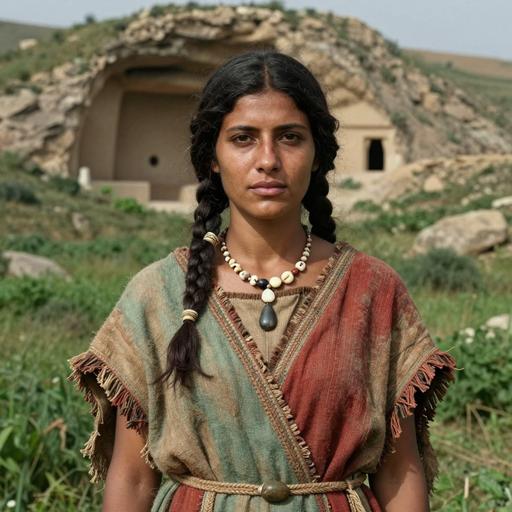
Portrait reconstruction of I2516
Ancient Individual

A woman buried in Iraq in the Paleolithic era

I2516
8271 BCE - 7956 BCE
Female
Shanidar Cave, Iraq
Iraq
Scroll to begin
Chapter I

Identity

The biological and cultural markers that define this ancient individual

Sample ID

I2516

Date Range

8271 BCE - 7956 BCE

Biological Sex

Female

mtDNA Haplogroup

J1d

Cultural Period

Shanidar Cave, Iraq

Chapter II

Place

Where this individual was discovered

Country Iraq
Locality Shanidar
Coordinates 36.8006, 44.2433
Chapter III

Time

When this individual lived in the broader context of human history

I2516 8271 BCE - 7956 BCE
Chapter IV

Story

The narrative of this ancient life

Shanidar Cave, located in the Zagros Mountains of Iraqi Kurdistan, is an archaeological site of great significance due to the evidence it provides regarding Neanderthal habitation during the Paleolithic era. This cave has yielded a wealth of archaeological and paleoanthropological data that has contributed to our understanding of Neanderthal life, their environment, and their interactions with the environment.

Archaeological Significance

Discovery and Excavations

Shanidar Cave was first excavated in the 1950s and 1960s by Ralph Solecki, an American archaeologist, and his team from Columbia University. Their work uncovered several Neanderthal skeletons, alongside numerous artifacts such as stone tools, providing a rich source of information about the Middle Paleolithic period.

Neanderthal Burials

One of the most notable findings at Shanidar Cave is the discovery of several Neanderthal burials, referred to as Shanidar 1 through Shanidar 9. These burials have provided significant insights into the social and perhaps even spiritual lives of Neanderthals. Shanidar 4, in particular, is often cited as evidence of possible ceremonial burial practices. Pollen analysis suggested the presence of flowers in the grave, leading to initial interpretations of ritualistic behavior, although this has been debated among scholars.

Paleobiology

Skeletal Remains

The remains found in Shanidar Cave exhibit a range of physical characteristics typical of Neanderthals, such as robust bone structures, a large cranial capacity, and specific facial features like prominent brow ridges. Analysis of these skeletons has provided evidence of various injuries and pathologies, offering insights into the life challenges faced by Neanderthals and their adaptive strategies.

Shanidar 1

One of the most famous specimens, Shanidar 1, shows evidence of survival despite serious injuries, including a withered arm, leg injuries, and likely blindness in one eye. This has led researchers to suggest that Neanderthals may have engaged in communal care, supporting injured or disabled group members.

Tools and Technology

Mousterian Industry

The stone tools recovered from Shanidar Cave are largely associated with the Mousterian industry, known for its sophisticated flake tools made using the Levallois technique. These tools represent the technological capabilities of Neanderthals, showcasing their ability to adapt to the environment and use available resources effectively.

Environmental Context

Climate and Ecology

During the time Neanderthals inhabited Shanidar Cave, the climate was cooler and likely fluctuated between glacial and interglacial periods. The surrounding region would have been a mixed environment, consisting of open steppes and wooded areas, providing diverse resources for hunting and gathering.

Faunal Evidence

The faunal remains found in the cave, including those of large herbivores like deer, suggest that Neanderthals in this region engaged in hunting and had a diet that was heavily reliant on terrestrial animals. The presence of burnt bones also indicates the use of fire for cooking.

Cultural and Behavioral Insights

Social Structure

The evidence of potential group care and burial practices at Shanidar suggests a level of social complexity in Neanderthal groups. While interpretations of burial rituals remain debated, these practices hint at emotional depth and social bonds among Neanderthals that are more sophisticated than previously thought.

Cognitive Abilities

The lithic and faunal evidence reflects the cognitive abilities of Neanderthals in terms of tool-making, strategic hunting, and adaptation to changing environments. The ability to create and use tools demonstrates problem-solving skills and a capacity for planning.

Modern Interpretations and Research

More recent excavations and analyses, using advanced technologies, have continued to enhance our understanding of the Shanidar Neanderthals. Studies employing methods like DNA analysis and isotopic studies provide deeper insights into their genetics, diet, and lifestyle, contributing to the ongoing reevaluation of Neanderthal intelligence and social behaviors.

Shanidar Cave remains one of the most informative sites for studying Neanderthals, challenging outdated notions of them as primitive and instead highlighting their adaptability, resilience, and complexity.

Chapter V

Genetics

The genetic ancestry of this ancient individual

Ancient Genetic Admixture

This analysis compares the DNA profile of I2516 with ancient reference populations, showing the genetic composition in terms of prehistoric ancestral groups.

Neolithic Farmers 81.5%
Ancient Africans 5.6%
Ancient Asians 5.1%
Western Steppe Pastoralists 4.7%
European Hunter-Gatherers 3.1%

Modern Genetic Admixture

This analysis compares the DNA profile with present-day reference populations, showing what percentage of genetic makeup resembles modern populations from different regions.

Asia 90.7%
Northern West Asian 60.9%
Mesopotamian 48.5%
Caucasian 8.5%
Cypriot 3.8%
Central Asian, Northern Indian & Pakistani 27.1%
Pakistan 27.1%
Arab, Egyptian & Levantine 2.8%
Arabian 2.8%
Africa 9.3%
North African 5.4%
Egyptian 5.4%
Northern East African 3.9%
Ethiopian 3.9%

Closest Modern Populations

These are the modern populations showing the closest statistical alignment to A woman buried in Iraq in the Paleolithic era, ranked by genetic distance. Lower distance values indicate closer statistical similarity.

1
Turkish Erzurum
1.9692
2
Udi
2.4436
3
Azerbaijani Republic Shaki
2.7992
4
Talysh Azerbaijan
2.8081
5
Kurd Zaza Turkey
2.8106
6
Kurd USSR
2.9023
7
Alevi Dersim
2.9061
8
Georgian Kakh
2.9560
9
Andian A
3.0877
10
Armenian Artsakh
3.0886
Chapter VI

Context

Other ancient individuals connected to this sample

Sources

References

Scientific publications and genetic data

Scientific Publication

The genetic history of the Southern Arc: A bridge between West Asia and Europe | Science

Authors Lazaridis I, Alpaslan-Roodenberg S, Acar A
Abstract

The period from the Copper Age to the Bronze Age marked major social and economic transformations in West Eurasia. To better understand these changes and their genetic impacts, we generated genome-wide data from 727 individuals who lived between 5000 and 1000 BCE in southeastern Europe and southwestern Asia.

G25 Coordinates

The G25 coordinates for sample I2516 can be used for detailed admixture analysis in our G25 Studio tool.

I2516,0.0946843,0.11707056,-0.06129946,-0.04596234,-0.04109072,-0.0099784,0.0066706,-0.0039256,-0.0363888,-0.0136095,0.0032671,0.00216926,-0.00484612,0.00119076,-0.00083672,-0.00388014,0.00621094,-0.00181866,-0.00352976,0.00246614,0.00589686,0.00024566,0.0007837,-0.00911538,-0.00286791
Analyze in G25 Studio
Use code for 40% off Expires Feb 26