Menu
Store
Blog
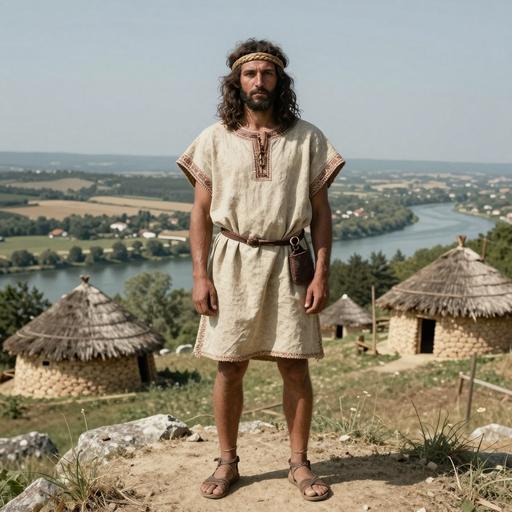
Portrait reconstruction of I3499
Ancient Individual

A man buried in Croatia in the Late Copper Age to Early Bronze Age era

I3499
2885 BCE - 2635 BCE
Male
Late Chalcolithic to Early Bronze Age Vucedol Culture, Croatia
Croatia
Scroll to begin
Chapter I

Identity

The biological and cultural markers that define this ancient individual

Sample ID

I3499

Date Range

2885 BCE - 2635 BCE

Biological Sex

Male

mtDNA Haplogroup

T2e

Y-DNA Haplogroup

R-M12149

Cultural Period

Late Chalcolithic to Early Bronze Age Vucedol Culture, Croatia

Chapter II

Place

Where this individual was discovered

Country Croatia
Locality Beli Manastir-Popova zemlja
Coordinates 45.3388, 18.6989
Chapter III

Time

When this individual lived in the broader context of human history

I3499 2885 BCE - 2635 BCE
Chapter IV

Story

The narrative of this ancient life

The Vučedol culture represents a significant archaeological culture situated primarily in what is now Eastern Croatia, with extensions into parts of modern-day Serbia, Bosnia and Herzegovina, Slovenia, and even Hungary. It spans the transitional period from the Late Chalcolithic to the Early Bronze Age, roughly dated between 3000 and 2200 BCE. Named after the site of Vučedol near the town of Vukovar, it is characterized by distinct cultural practices, technological innovations, and intricate artistic expressions.

Geography and Environment

The Vučedol culture developed along the fertile plains of the Danube River basin. This geographical setting provided abundant natural resources, including access to water routes, fertile soils for agriculture, and a variety of flora and fauna. The strategic location enabled extensive trade and cultural interactions with neighboring regions, fostering a complex society with diverse influences.

Settlement and Architecture

Settlements of the Vučedol culture were typically located on elevated plateaus close to rivers, offering both protection and resources. The architectural remnants suggest semi-permanent villages consisting of single-room, rectangular houses constructed from wattle and daub with thatched roofs. These houses were often organized around central communal spaces or large grain storage pits, indicative of an agrarian society with elements of communal living and collaboration in food production.

Economy and Subsistence

The Vučedol economy was largely based on agriculture, supplemented by hunting, fishing, and animal husbandry. They cultivated cereals such as wheat and barley and domesticated animals, including cattle, sheep, goats, and pigs. Hunting and gathering played supportive roles, with evidence of wild plant collection and the hunting of deer and other game.

Craftsmanship and trade were also vital components of their economy. The Vučedol people were skilled potters, metalworkers, and weavers. They were particularly noted for their advancements in metallurgy, being among the earliest in Europe to smelt copper with arsenic, creating more durable alloys for tools and ornaments. Long-distance trade networks allowed for the exchange of goods such as flint, obsidian, and various crafted items, contributing to economic and cultural dynamism.

Art, Ceramics, and Technology

The Vučedol culture is renowned for its distinctive ceramics, which often featured complex geometric patterns, incised lines, and ornamental motifs that possibly held symbolic or ritual significance. The most famous artifact is the Vučedol Dove, a cultic vessel in the shape of a bird, which has become an iconic symbol associated with this culture.

The technological prowess of the Vučedol people extended to tool-making and textiles. They produced sophisticated weapons, tools, and ornaments. Spindle whorls and loom weights found at archaeological sites indicate a developed textile industry that likely played a role in their trade networks.

Social Structure and Religion

The social organization of the Vučedol culture is inferred from burial practices, settlement layouts, and artistic representations. There appears to have been a hierarchical society with emerging social stratification, potentially led by chieftains or a religious elite. This is supported by the presence of richly equipped graves and ceremonial sites, suggesting the importance of status and ritual in Vučedol society.

Religion and spirituality played a significant role, as evidenced by ritual artifacts and burial practices. The Vučedol culture is associated with sun worship, astronomy, and possibly a solar calendar system. Religious ceremonies likely involved rituals tied to agricultural cycles and celestial events, playing a crucial role in the cultural cohesion and identity of the Vučedol people.

Decline and Legacy

The decline of the Vučedol culture around 2200 BCE is attributed to a combination of environmental changes, shifts in trade networks, and the influx of new cultural elements from migrating populations. Despite its decline, the Vučedol culture left a lasting legacy, influencing subsequent cultures in the region and contributing to the broader tapestry of European prehistoric development.

In summary, the Vučedol culture represents a unique and culturally rich period in European prehistory characterized by its technological innovations, artistic achievements, and complex societal structures. Its influence can be seen in the transition between the Chalcolithic and the Bronze Age, marking a key chapter in the development of human civilization in Southeastern Europe.

Chapter V

Genetics

The genetic ancestry of this ancient individual

Ancient Genetic Admixture

This analysis compares the DNA profile of I3499 with ancient reference populations, showing the genetic composition in terms of prehistoric ancestral groups.

Neolithic Farmers 51.4%
Western Steppe Pastoralists 23.5%
European Hunter-Gatherers 22.7%
Ancient Asians 2.4%

Modern Genetic Admixture

This analysis compares the DNA profile with present-day reference populations, showing what percentage of genetic makeup resembles modern populations from different regions.

Europe 76.9%
Southern European 48.6%
Italian 23.5%
Balkan 12.4%
Iberian 8.4%
Sardinian 4.4%
Northwestern European 28.3%
English 19.2%
Northwestern European 9.1%
Asia 18.4%
Northern West Asian 10.3%
Mesopotamian 10.2%
Arab, Egyptian & Levantine 7.8%
Levantine 7.8%
Africa 3.1%
North African 3.1%
North African 3.1%
Oceania 1.5%
Melanesian 1.5%
Papuan 1.5%

Closest Modern Populations

These are the modern populations showing the closest statistical alignment to A man buried in Croatia in the Late Copper Age to Early Bronze Age era, ranked by genetic distance. Lower distance values indicate closer statistical similarity.

1
Italian Tuscany
2.4287
2
Italian Emilia
2.6028
3
Italian Umbria
2.7196
4
Italian Piedmont
2.8770
5
Italian Marche
2.9515
6
Swiss Italian
2.9994
7
French Corsica
3.1559
8
Italian Lazio
3.2984
9
Italian Liguria
3.3126
10
Italian Lombardy
3.3153
Chapter VI

Context

Other ancient individuals connected to this sample

Sources

References

Scientific publications and genetic data

Scientific Publication

The genomic history of southeastern Europe

Authors Mathieson I, Alpaslan-Roodenberg S, Posth C
Abstract

Farming was first introduced to Europe in the mid-seventh millennium bc, and was associated with migrants from Anatolia who settled in the southeast before spreading throughout Europe. Here, to understand the dynamics of this process, we analysed genome-wide ancient DNA data from 225 individuals who lived in southeastern Europe and surrounding regions between 12000 and 500 bc. We document a west-east cline of ancestry in indigenous hunter-gatherers and, in eastern Europe, the early stages in the formation of Bronze Age steppe ancestry. We show that the first farmers of northern and western Europe dispersed through southeastern Europe with limited hunter-gatherer admixture, but that some early groups in the southeast mixed extensively with hunter-gatherers without the sex-biased admixture that prevailed later in the north and west. We also show that southeastern Europe continued to be a nexus between east and west after the arrival of farmers, with intermittent genetic contact with steppe populations occurring up to 2,000 years earlier than the migrations from the steppe that ultimately replaced much of the population of northern Europe.

G25 Coordinates

The G25 coordinates for sample I3499 can be used for detailed admixture analysis in our G25 Studio tool.

I3499,0.10857626,0.14133014,0.01030894,-0.01501484,0.0253777,-0.01046276,-0.0010991,0.00156892,0.00547982,0.02278286,-0.00177356,0.00745036,-0.01582134,-0.00754366,0.00594308,-0.001908,0.00231386,-0.00250254,-0.00482256,0.00065696,0.0016909,-0.0022066,-0.00285778,-0.0083169,0.00303131
Analyze in G25 Studio
Use code for 40% off Expires Feb 27