Menu
Store
Blog
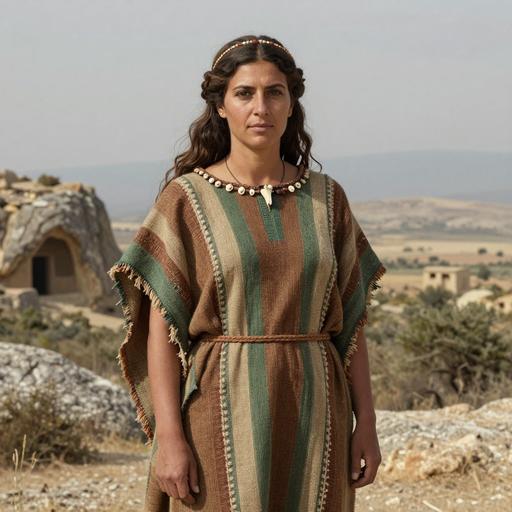
Portrait reconstruction of I3920
Ancient Individual

A woman buried in Greece in the Neolithic era

I3920
3938 BCE - 3658 BCE
Female
Neolithic Peloponnese, Greece
Greece
Scroll to begin
Chapter I

Identity

The biological and cultural markers that define this ancient individual

Sample ID

I3920

Date Range

3938 BCE - 3658 BCE

Biological Sex

Female

mtDNA Haplogroup

H

Cultural Period

Neolithic Peloponnese, Greece

Chapter II

Place

Where this individual was discovered

Country Greece
Locality Diros. Alepotrypa Cave
Coordinates 36.6383, 22.3825
Chapter III

Time

When this individual lived in the broader context of human history

I3920 3938 BCE - 3658 BCE
Chapter IV

Story

The narrative of this ancient life

The Neolithic period in the Peloponnese, part of the greater Aegean Neolithic culture, began around 7000 BCE and lasted until approximately 3000 BCE. This era marked a significant transformation in human history as communities transitioned from nomadic lifestyles to more settled, agricultural-based societies. The Peloponnese, with its fertile land and moderate climate, was well-suited for this pivotal change, making it a vibrant center for Neolithic development.

Geographical Setting

The Peloponnese is a large peninsula located in southern Greece. During the Neolithic period, the region was rich in natural resources — forests, fertile plains, and abundant water sources provided a conducive environment for early agricultural practices. This geographical advantage facilitated the establishment of permanent settlements and the growth of complex communities throughout the area.

Agricultural Developments

The Aegean Neolithic was characterized by the domestication of plants and animals, which significantly impacted the communities in the Peloponnese. People cultivated cereals such as wheat and barley, along with legumes like lentils and peas. The introduction of these staple crops reshaped the economy and diet of the inhabitants. Additionally, the domestication of animals such as sheep, goats, pigs, and cattle provided secondary products like milk, wool, and meat, further stabilizing the food supply and supporting population growth.

Settlement and Architecture

Neolithic communities in the Peloponnese transitioned from temporary shelters to more permanent structures. Excavations reveal that settlements were typically small, with houses constructed from materials such as mud-bricks and wood, often featuring stone foundations. These dwellings were simple, usually comprising one or two rooms, but they demonstrated the early development of architectural skills and a shift in community organization.

Significant sites from this period include Franchthi Cave, which shows continuous human occupation from the Paleolithic to the Neolithic, and the site of Lerna, known for its unique architectural forms, including the \House of the Tiles," showing more complex social and administrative organization.

Social and Cultural Aspects

The Neolithic period in the Peloponnese saw the emergence of more organized social structures. Evidence suggests a shift towards communal living and possibly the development of social hierarchies, as certain individuals or groups may have controlled the production and distribution of resources. This is supported by the presence of collective burial sites, which may indicate emerging social stratification or shared community rituals.

Material culture flourished during this time, with advancements in pottery making, weaving, and tool production. Pottery from this era is particularly notable for its diversity and decoration, with intricate designs and varied forms reflecting both practical needs and aesthetic developments. The presence of figurines and other symbolic artifacts suggest an evolving spiritual and cultural life, with rituals potentially linked to agriculture, fertility, and community identity.

Trade and External Contacts

Despite being relatively isolated geographically, the Neolithic Peloponnese engaged in trade and exchange with other regions in the Aegean. Obsidian from the island of Melos has been found in Peloponnesian sites, indicating long-distance trade networks. These interactions were crucial in the diffusion of technological innovations, material goods, and cultural ideas, enriching the Neolithic experience in the region.

Conclusion

The Neolithic period in the Peloponnese was marked by substantial developments in agriculture, settlement, social organization, and culture. As part of the Aegean Neolithic culture, this era laid the groundwork for the later Bronze Age civilizations that would emerge in Greece. Through archaeological discoveries, we continue to gain insight into the life and legacy of these early communities, whose innovations and adaptions significantly shaped the course of human history in the region."

Chapter V

Genetics

The genetic ancestry of this ancient individual

Ancient Genetic Admixture

This analysis compares the DNA profile of I3920 with ancient reference populations, showing the genetic composition in terms of prehistoric ancestral groups.

Neolithic Farmers 77.1%
European Hunter-Gatherers 20.5%
Western Steppe Pastoralists 2.4%

Modern Genetic Admixture

This analysis compares the DNA profile with present-day reference populations, showing what percentage of genetic makeup resembles modern populations from different regions.

Europe 52.3%
Southern European 52.3%
Sardinian 25.4%
Italian 13.7%
Balkan 9.9%
Iberian 3.3%
Asia 47.7%
Arab, Egyptian & Levantine 29.3%
Levantine 29.3%
Northern West Asian 18.5%
Mesopotamian 14.0%
Cypriot 4.4%

Closest Modern Populations

These are the modern populations showing the closest statistical alignment to A woman buried in Greece in the Neolithic era, ranked by genetic distance. Lower distance values indicate closer statistical similarity.

1
Italian Jew
4.2861
2
Italian Calabria
4.5657
3
Ashkenazi Germany
4.6499
4
Romaniote Jew
4.6581
5
Italian Campania
4.6654
6
Ashkenazi France
4.6850
7
Turkish Sabbatean
4.7184
8
Turkish Jew
4.7450
9
Sephardic Jew
4.9690
10
Bulgarian Jew
4.9986
Chapter VI

Context

Other ancient individuals connected to this sample

Sources

References

Scientific publications and genetic data

Scientific Publication

The genomic history of southeastern Europe

Authors Mathieson I, Alpaslan-Roodenberg S, Posth C
Abstract

Farming was first introduced to Europe in the mid-seventh millennium bc, and was associated with migrants from Anatolia who settled in the southeast before spreading throughout Europe. Here, to understand the dynamics of this process, we analysed genome-wide ancient DNA data from 225 individuals who lived in southeastern Europe and surrounding regions between 12000 and 500 bc. We document a west-east cline of ancestry in indigenous hunter-gatherers and, in eastern Europe, the early stages in the formation of Bronze Age steppe ancestry. We show that the first farmers of northern and western Europe dispersed through southeastern Europe with limited hunter-gatherer admixture, but that some early groups in the southeast mixed extensively with hunter-gatherers without the sex-biased admixture that prevailed later in the north and west. We also show that southeastern Europe continued to be a nexus between east and west after the arrival of farmers, with intermittent genetic contact with steppe populations occurring up to 2,000 years earlier than the migrations from the steppe that ultimately replaced much of the population of northern Europe.

G25 Coordinates

The G25 coordinates for sample I3920 can be used for detailed admixture analysis in our G25 Studio tool.

I3920,0.10457932,0.15324626,-0.01903414,-0.06536742,0.02151124,-0.03035196,-0.00131808,-0.00417904,0.02149162,0.04387646,0.00086844,0.003552,-0.01220828,-0.00734454,-0.01474288,0.00884564,0.00871534,0.0011352,0.00077406,-0.00422494,-0.00051012,0.00501746,-0.00622554,-0.01011602,0.00354866
Analyze in G25 Studio
Use code for 40% off Expires Feb 26