Menu
Store
Blog
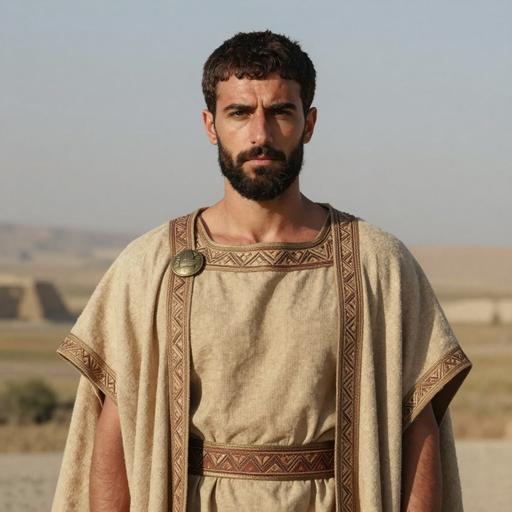
Portrait reconstruction of I4530
Ancient Individual

A man buried in Turkey in the Antiquity era

I4530
241 CE - 362 CE
Male
Roman Period 4 Turkey
Turkey
Scroll to begin
Chapter I

Identity

The biological and cultural markers that define this ancient individual

Sample ID

I4530

Date Range

241 CE - 362 CE

Biological Sex

Male

mtDNA Haplogroup

U3a2a1

Y-DNA Haplogroup

Not available

Cultural Period

Roman Period 4 Turkey

Chapter II

Place

Where this individual was discovered

Country Turkey
Locality Cedit. Basarabya (Black Sea. Samsun. llkadım)
Coordinates 41.3130, 36.3300
Chapter III

Time

When this individual lived in the broader context of human history

I4530 241 CE - 362 CE
Chapter IV

Story

The narrative of this ancient life

The Roman Period 4 in what is now modern-day Turkey marks a significant era in the history of the Roman Empire, characterized by a diverse cultural, political, and economic landscape. This era generally refers to the later stages of Roman rule in the region, when the empire was at its peak and gradually transforming into the Byzantine Empire following the division into Eastern and Western Roman Empires.

Historical Context

During the Roman Period 4, roughly dated from the late 3rd century to the early Byzantine period (around the 5th to 6th centuries AD), Asia Minor (present-day Turkey) was a critical part of the Roman Empire. The region was an essential hub for trade, military strategy, and cultural exchange. It was also a period marked by extensive urbanization, infrastructural development, and the spread of Christianity.

Urbanization and Infrastructure

The Roman influence brought significant urban planning and architectural achievements to Turkey. Many cities, such as Ephesus, Pergamon, Smyrna, and Constantinople (modern-day Istanbul), saw extensive development. Roman engineering prowess was evident in the construction of roads, aqueducts, bridges, and public buildings, contributing to the increased connectivity and prosperity of the region.

  • Ephesus: Home to the famous Temple of Artemis and the Library of Celsus, Ephesus was a major urban center with a theatre, sophisticated aqueduct network, and marble-paved streets.
  • Pergamon: Known for its acropolis and the Asclepion (a healing temple), Pergamon was also an intellectual hub with a massive library rivaling that of Alexandria.
  • Constantinople: Founded by Constantine the Great in AD 330, it became a vital capital of the Eastern Roman Empire and later the Byzantine Empire, representing the era's architectural zenith with structures such as the Hagia Sophia.

Cultural and Religious Transformation

The Roman Period 4 in Turkey was marked by profound cultural and religious transformation. The traditional Greco-Roman pantheon began to give way to Christianity, which was legalized in the early 4th century by the Edict of Milan under Emperor Constantine. Turkey's location made it a crucible for early Christian theology and debate, with critical councils such as the First Council of Nicaea in 325 AD, shaping the development of the Christian Church.

  • Christianity's Rise: Turkey became an influential center for early Christian thought, with many Church Fathers, such as St. Basil of Caesarea and St. Gregory of Nazianzus, contributing to theological discourse.
  • Influence of Pagan Traditions: Despite the rise of Christianity, many Roman and Hellenistic traditions persisted, often blending with new religious practices to form a unique, syncretic culture.

Economic Development

Economically, the region was one of the empire's powerhouses, contributing significantly due to its fertile lands, strategic location, and bustling trade routes.

  • Agriculture and Trade: The Anatolian plains produced wheat, olives, grapes, and other crops essential for feeding urban centers.
  • Trade Routes: The prominence of cities along the Silk Road and other key trade routes facilitated the exchange of goods, ideas, and culture between East and West, bolstering economic stability.

Political Dynamics

Politically, the later Roman Period in Turkey was characterized by both stability under strong emperors and challenges from external and internal pressures.

  • Division of the Empire: The administrative division of the Roman Empire in AD 285 under Emperor Diocletian and its subsequent reunification and redivision influenced governance styles and the political landscape.
  • Military Strategy: The region's strategic importance meant it was heavily fortified, serving as a significant military frontier against Persian and later, barbarian incursions.

Legacy

The Roman Period 4 laid the foundations for the Byzantine Empire, which retained much of the Roman cultural, political, and legal heritage while evolving distinctively. Its legacy is visible through the archaeological sites, architectural marvels, and continued historical and religious impact that shaped not only Turkey but also the broader Mediterranean and Near Eastern regions.

In essence, the Roman Period 4 in Turkey encapsulates a time of transformation, where the confluence of Roman administrative genius, cultural syncretism, and Christian religious innovation conspired to create a complex, enduring legacy.

Chapter V

Genetics

The genetic ancestry of this ancient individual

Ancient Genetic Admixture

This analysis compares the DNA profile of I4530 with ancient reference populations, showing the genetic composition in terms of prehistoric ancestral groups.

Neolithic Farmers 74.3%
European Hunter-Gatherers 20.0%
Western Steppe Pastoralists 5.8%

Modern Genetic Admixture

This analysis compares the DNA profile with present-day reference populations, showing what percentage of genetic makeup resembles modern populations from different regions.

Europe 49.9%
Southern European 49.9%
Italian 36.4%
Balkan 8.7%
Sardinian 4.8%
Asia 48.2%
Northern West Asian 25.6%
Mesopotamian 14.8%
Cypriot 6.5%
Anatolian 4.3%
Arab, Egyptian & Levantine 22.6%
Levantine 22.6%
Africa 1.9%
North African 1.9%
Egyptian 1.9%

Closest Modern Populations

These are the modern populations showing the closest statistical alignment to A man buried in Turkey in the Antiquity era, ranked by genetic distance. Lower distance values indicate closer statistical similarity.

1
Cypriot
1.8865
2
Greek Dodecanese Rhodes
2.0440
3
Greek Dodecanese
2.2682
4
Romaniote Jew
2.4638
5
Greek Kos
2.5628
6
Turkish Jew
2.9102
7
Syrian Jew
2.9527
8
Italian Jew
3.1064
9
Greek Central Anatolia
3.1930
10
Bulgarian Jew
3.2052
Chapter VI

Context

Other ancient individuals connected to this sample

Sources

References

Scientific publications and genetic data

Scientific Publication

The genetic history of the Southern Arc: A bridge between West Asia and Europe | Science

Authors Lazaridis I, Alpaslan-Roodenberg S, Acar A
Abstract

The period from the Copper Age to the Bronze Age marked major social and economic transformations in West Eurasia. To better understand these changes and their genetic impacts, we generated genome-wide data from 727 individuals who lived between 5000 and 1000 BCE in southeastern Europe and southwestern Asia.

G25 Coordinates

The G25 coordinates for sample I4530 can be used for detailed admixture analysis in our G25 Studio tool.

I4530,0.10257844,0.14445664,-0.03540578,-0.06128878,-0.00096872,-0.02461438,0.00030146,-0.00593624,0.00068824,0.01938706,0.0003265,0.00214486,-0.00668792,-0.00129592,-0.0093602,0.00327328,-0.00212924,0.00050862,0.00114134,-0.0033326,0.0020347,0.0044544,-0.00129852,-0.00554012,0.00381647
Analyze in G25 Studio
Use code for 40% off Expires Feb 26